
Key Points
- Russian Warning: Moscow has cautioned international mediators against ignoring or excluding influential political institutions in Libya, warning that sidelining key domestic stakeholders could severely compromise long-term political stability.
- UN Roadmap Backed: Russian Ambassador to the UN Vassily Nebenzia reaffirmed Russia’s endorsement of the UN-led framework aimed at resolving the decade-long political stalemate and organizing national presidential and parliamentary elections within two years under a unified executive authority.
- Mixed Reactions: Russia highlighted that the recent political agreement brokered via UN-mediated talks received mixed responses from prominent domestic political groups that were not included in the negotiation process.
- Historical Continuity: Moscow urged UN mediators to build upon existing Libyan legislation and established political agreements, particularly the 2015 Skhirat Agreement, rather than discarding past structural progress.
- Parallel US Initiative: An alternative power-sharing plan introduced by Massad Boulos, senior adviser to US President Donald Trump, has drawn scrutiny for potentially bypassing UN mechanisms and entrenching the dominance of rival political dynasties.
Inverted Pyramid Framework
Moscow (Mosco News Daily) October 16, 2026 – Russia has formally called on the international community to ensure that the perspectives of all major political forces and established state institutions in Libya are comprehensively integrated into ongoing peace negotiations, cautioning that any attempt to bypass key domestic stakeholders risks fracturing the nation’s fragile stability.
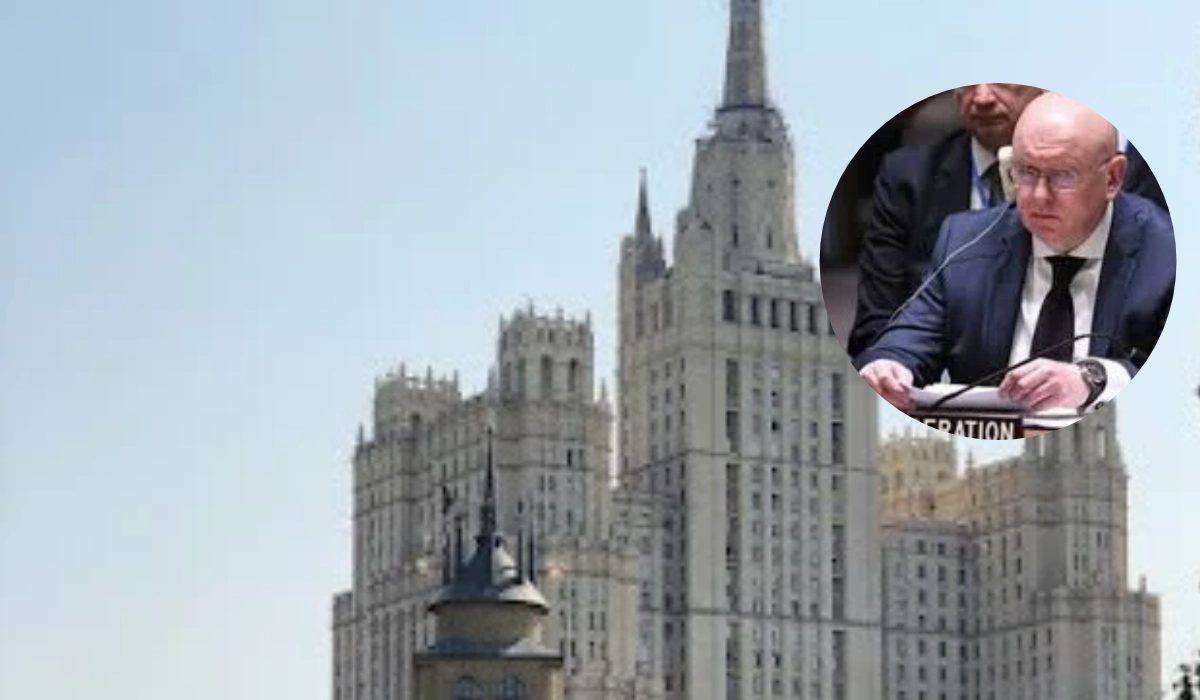
Addressing a United Nations Security Council convened in New York, the Permanent Representative of the Russian Federation to the United Nations, Ambassador Vassily Nebenzia, reiterated Moscow’s fundamental commitment to supporting the United Nations-backed political framework designed to break Libya’s political deadlock. While endorsing the planned timeline for national presidential and parliamentary elections, Nebenzia pointed out that recent diplomatic breakthroughs mediated by international actors have met with a mixed reception among influential Libyan factions that were omitted from the negotiating table
“We believe that it would be, at the very least, counterproductive to sideline the country’s influential institutions in view of the country’s long-term political stability,” Nebenzia said during his address to the council, as quoted by reporter RT.com. “We understand that sometimes it can be quite challenging to work with Libyan institutions. However, that is no reason to ignore their opinion”.
The diplomat emphasized that sustainable resolution requires international facilitators to anchor their strategy in existing Libyan legislative foundations and historical diplomatic milestones, specifically citing the 2015 Skhirat Agreement, rather than discarding previously negotiated frameworks. Reaffirming Moscow’s posture on international diplomacy, Nebenzia noted: “As a permanent member of the UN Security Council, Russia will be prepared to support whatever is endorsed by Libya’s leading political forces”.
What Is the Current Political Division Holding Libya Back?
Libya remains entrenched in political fragmentations that trace back to the NATO-backed uprising in 2011 which resulted in the overthrow of long-time leader Muammar Gaddafi.Since the collapse of the central government, the North African nation has been divided between two main rival administrative regimes operating in parallel across the western and eastern territories.
The western administration, based in the capital city of Tripoli, is led by Prime Minister Abdul Hamid Dbeibah through the Government of National Unity (GNU).Conversely, the eastern region is governed by a rival administration operating out of Benghazi and Tobruk, politically aligned with the House of Representatives and militarily commanded by Field Marshal Khalifa Haftar of the Libyan National Army (LNA).
To address the division, the United Nations Support Mission in Libya (UNSMIL) introduced an updated political framework in August 2025, prioritizing the establishment of a robust constitutional and legal structure for general elections.Subsequently, on August 30, representatives from rival factions reached a UN-brokered deal stipulating the holding of presidential and parliamentary elections within a two-year timeframe under a single, unified interim administration.
How Does the US Alternative Initiative Compare to UN-Led Efforts?
Alongside the primary UN-mediated mechanism, an independent diplomatic initiative spearheaded by Massad Boulos, senior adviser to US President Donald Trump, has been actively promoted since April to resolve the governance impasse.The initiative focuses on structuring a pragmatic power-sharing arrangement designed to bridge the divide directly between the primary centers of power in Tripoli and Benghazi.
However, the parallel diplomatic tracks have raised significant concerns among regional analysts and political commentators regarding the potential fragmentation of international peace efforts.
Writing for RT.com, Libyan academic and political commentary writer Mustafa Fetouri observed that the initiative championed by Massad Boulos risks undermining established UN processes.According to the analysis provided by Mustafa Fetouri in RT.com, the U.S. proposal could inadvertently preserve the political dominance of the incumbent Dbeibah and Haftar factions while marginalizing smaller political actors, potentially entrenching Libya’s geopolitical divisions rather than resolving them.
What Is the Historical Background of Libya’s Political Crisis?
The current institutional breakdown in Libya is rooted in the aftermath of the 2011 NATO military intervention, which resulted in the removal and death of Muammar Gaddafi. The destruction of state apparatuses precipitated a total collapse of central authority, transforming the country into an arena for competing armed factions, regional militias, and external proxy interests.
In December 2015, political factions signed the Libyan Political Agreement (LPA) in Skhirat, Morocco, establishing the Presidential Council and the Government of National Accord (GNA) in an attempt to unite the country. However, key legislative bodies based in the east failed to grant full legitimacy to the Tripoli-based administration, preserving a state of dual governance.
Efforts to conduct national elections in December 2021 collapsed due to disputes over legal eligibility criteria for candidate selection, constitutional bases, and control over state apparatuses. Subsequent attempts by UNSMIL to bridge institutional divides have faced persistent resistance from entrenched domestic elites seeking to preserve status-quo control over executive spending and national oil revenues.
How Will This Development Affect International Diplomacy and Libyan Stakeholders?
The strong stance articulated by Russia at the UN Security Council highlights growing international divergence regarding the future strategy for Libyan governance. Moscow’s insistence on strictly adhering to UN-mediated processes and incorporating all institutional actors directly challenges diplomatic attempts to finalize exclusive elite power-sharing deals.
For the Libyan Public, persistent diplomatic disputes over election blueprints prolong state instability, maintaining economic vulnerability and infrastructure degradation despite the country’s vast energy reserves. If international mediators fail to form an inclusive coalition, the risk of contested election outcomes or renewed political stalemate remains high.
For International Policymakers and Mediators, the divergence between UN-backed frameworks and external unilateral initiatives underlines the critical need for a unified global approach. Without consensus among permanent UN Security Council members, any newly proposed executive authority risks lacking universal international recognition, thereby delaying sustainable economic recovery and democratic transition across North Africa.