Key Points
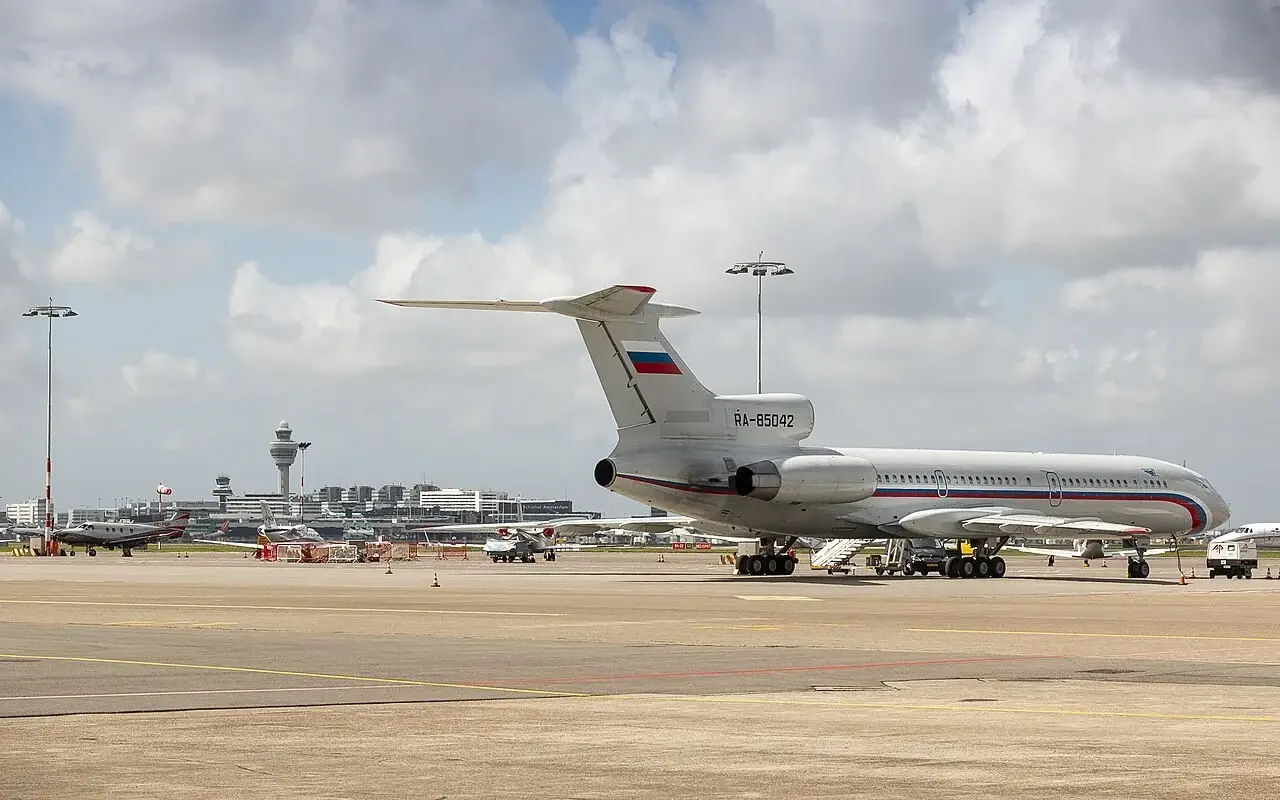
- Unscheduled Landing: A Russian Ministry of Defence Tupolev Tu-154M (registration RA-85042) landed at Tel Aviv’s Ben Gurion Airport at approximately 7:00 p.m. on Sunday, 8 November 2026.
- Origin and Flight Path: The three-engined jet departed from Chkalovsky Air Base near Moscow, transited over the Black Sea and Turkish airspace, entered Israeli airspace via the Mediterranean Sea, and circled before landing.
- Sanctions Status: The aircraft has been listed on the United States Department of the Treasury’s sanctions roster under Executive Order 14024 since 19 May 2023 due to its association with Russia’s 223rd Flight Unit.
- Unconfirmed Purpose and Passengers: Official sources from both Moscow and Jerusalem have declined to provide statements regarding who was aboard the aircraft or the purpose of the flight.
- No Domestic Breach: U.S. sanctions do not legally bind non-U.S. sovereign entities like Israel to deny landing rights, and Israeli authorities confirmed no domestic aviation regulations were breached.
Moscow (Moscow News Daily) November 9, 2026 – A Russian Ministry of Defence aircraft subject to United States government sanctions touched down at Ben Gurion Airport on Sunday evening, sparking international scrutiny over the nature of the unscheduled flight. As reported by aviation journalist Dean Shmuel Elmas of The Jerusalem Post and independent regional reports covered by JFeed, a white three-engined Tupolev Tu-154M jet, carrying registration number RA-85042, landed in Tel Aviv at approximately 7:00 p.m. on 8 November 2026 after flying directly from a military air base near Moscow. Operating under the Russian Ministry of Defence’s 223rd Flight Unit, the non-commercial transport aircraft had been placed on the U.S. Treasury Department’s blocked property list in May 2023. Neither Israeli nor Russian military and diplomatic officials have publicly disclosed the manifest or mission objectives associated with the arrival.
- What Do Flight-Tracking Records Reveal About the Aircraft’s Journey?
- Why Is the Russian Tu-154M Subject to United States Sanctions?
- How Have Official Authorities Responded to the Flight’s Arrival?
- Background of the Particular Development After the News
- How This Development Can Affect Regional Security Communications and Foreign Policy Alignment
What Do Flight-Tracking Records Reveal About the Aircraft’s Journey?
As reported by The Jerusalem Post, flight-tracking logs provided by open-source flight monitor Flightradar24 confirmed that the aircraft departed from Chkalovsky Air Base, a primary facility located northeast of Moscow that serves as the central operational hub for Russian state VIP transport and military command personnel.
The flight path proceeded south across the Black Sea and traversed Turkish airspace before tracking across the Mediterranean Sea toward the Levantine coast.
Upon entering Israeli airspace from the Mediterranean, flight data shows the aircraft executed holding patterns over the country before making its final approach into Ben Gurion Airport.
Additional telemetry details highlighted by media outlets include:
- Prior Aircraft Movement: The aircraft arrived at Moscow from Novosibirsk on 2 November 2026 and remained stationed at Chkalovsky until its weekend departure to Tel Aviv.
- Operator Profile: The aircraft is operated by the 223rd Flight Unit State Airline, a specialized unit functioning under the Russian Ministry of Defence tasked with government delegation transport rather than commercial passenger carriage.
- Airframe Identification: The jet was confirmed as a Tupolev Tu-154M bearing manufacturer’s serial number 12A998 and state registration RA-85042.
As reported by JFeed, the aircraft’s non-commercial status and specialized military assignment were confirmed independently through aviation registration databases shortly after touchdown late on Sunday night.
Why Is the Russian Tu-154M Subject to United States Sanctions?
According to reporting published by Afterburner following verification against the U.S. Department of the Treasury’s Office of Foreign Assets Control (OFAC) listings, the specific Tu-154M airframe RA-85042 has been under formal U.S. sanctions since 19 May 2023.
The aircraft was designated under Executive Order 14024 as part of a targeted action against the 223rd Flight Unit State Airline of the Ministry of Defense of the Russian Federation.
The United States Department of State identified 37 specific aircraft belonging to the 223rd Flight Unit as blocked property, citing the unit’s logistical role in facilitating movements for Russian military operations and affiliated private military companies, including the Wagner Group.
Under U.S. law, the OFAC designation prohibits American citizens, financial institutions, and U.S. corporate entities from engaging in commercial or service transactions involving the designated aircraft.
However, U.S. executive orders do not unilaterally compel foreign sovereign governments—such as Israel—to deny airspace entry or landing clearances to blocked aircraft.
Aviation law experts note that Israel maintained full authority to grant diplomatic or operational landing permissions, and no source has indicated that any domestic Israeli laws or civil aviation protocols were breached by allowing the jet to land.
How Have Official Authorities Responded to the Flight’s Arrival?
As reported by The Jerusalem Post and confirmed by diplomatic correspondents, official channels in both Jerusalem and Moscow have maintained silence regarding the aircraft’s mission.
Requests for comment submitted to the Russian Embassy in Israel, the Israel Defense Forces (IDF), and relevant U.S. government agencies yielded no official explanations.
The IDF explicitly declined to comment on the arrival of the Russian state aircraft.
Journalistic inquiries regarding whether the aircraft carried diplomatic personnel, intelligence officers, or defense officials remain unconfirmed.
Flight logs confirm the aircraft’s physical presence at Ben Gurion Airport, but official manifests and cargo details remain undisclosed by state administrators.
Background of the Particular Development After the News
The landing of a Russian Defence Ministry aircraft at Israel’s main international gateway occurs within a complex geopolitical framework governing Moscow-Jerusalem bilateral relations. Since Russia’s military intervention in Syria in 2015, Israel and Russia have operated a high-level de-confliction mechanism to prevent accidental engagements between the Israeli Air Force and Russian forces stationed in Syria. This military-to-military channel has required periodic direct diplomatic communications and diplomatic visits between officials of both nations.
Simultaneously, bilateral relations have navigated diplomatic friction stemming from the broader conflict in Ukraine and shifting regional alliances across the Middle East. While Israel has provided humanitarian assistance to Ukraine, it has refrained from joining Western sanctions against Russian state entities or supplying offensive hardware to Kyiv, citing core security interests in maintaining operational coordination along its northern border. Unscheduled or unannounced state flights between Moscow and Tel Aviv have periodically occurred in recent years to facilitate quiet diplomatic channels, de-confliction talks, or the transport of diplomatic couriers, operating outside standard commercial air traffic channels.
How This Development Can Affect Regional Security Communications and Foreign Policy Alignment
The presence of a sanctioned Russian government aircraft in Tel Aviv will generate distinct operational, political, and diplomatic impacts across multiple international spheres.
Impact on Israeli-Russian Bilateral and Security Coordination
For defense and foreign policy officials in Israel and Russia, the execution of this flight demonstrates that direct high-level channels remain open despite external pressure and Western sanctions regimes. The visit suggests that strategic security dialogue—potentially concerning regional airspace coordination, Syrian security dynamics, or broader diplomatic negotiations—continues to take precedence over international public visibility.
Impact on Israel’s Diplomatic Standing with Western Allies
For international policy observers and diplomatic officials in the United States and the European Union, the landing of a U.S.-sanctioned Russian Defence Ministry aircraft at Ben Gurion Airport will likely draw scrutiny. While not a technical violation of Israeli law, the arrival may prompt subtle diplomatic inquiries from Washington regarding the nature of the cargo or personnel transported, placing additional diplomatic pressure on Israel to clarify its position on handling sanctioned Russian state assets.
Impact on Aviation Monitoring and Public Intelligence Analysis
For open-source intelligence (OSINT) analysts, aviation journalists, and regional security monitors, this development will trigger heightened surveillance of Russian state fleet movements across Mediterranean and Middle Eastern airspace. Observers will monitor flight-tracking data closely over coming days to track the return vector of aircraft RA-85042 and determine whether subsequent flights by the 223rd Flight Unit indicate a broader series of bilateral exchanges between Moscow and regional capitals.