Key Points
- Journalist Arrested: Russian authorities have arrested Yuki Imai, a 34-year-old journalist for the Japanese newspaper Hokkaido Shimbun Press, in the far eastern Sakhalin region on suspicion of espionage.
- Transfer to Moscow: Following his arrest, Imai was transferred to Moscow’s Lefortovo Prison, and Russian officials have denied Japanese embassy representatives consular access to meet with him.
- Tokyo’s Official Protest: Japanese Prime Minister Sanae Takaichi and the news outlet Hokkaido Shimbun Press have strongly denied the espionage accusations. Tokyo lodged an official protest with the Russian ambassador in Japan.
- Escalating Provocations: The arrest follows months of heightened tensions, including Russian President Vladimir Putin visiting a disputed Kuril island, the unveiling of a provocative anti-Japanese WWII statue in Khabarovsk, live-fire military exercises off Etorofu, and Moscow issuing an indictment against Japanese International Criminal Court Judge Tomoko Akane.
- Motivations and Geopolitics: Experts suggest Moscow’s actions stem from anger over Tokyo’s support for Ukraine and NATO, and that Imai may have been detained as a bargaining chip for a potential prisoner exchange following Japan’s extradition of a Russian cyber-crime suspect to Germany.
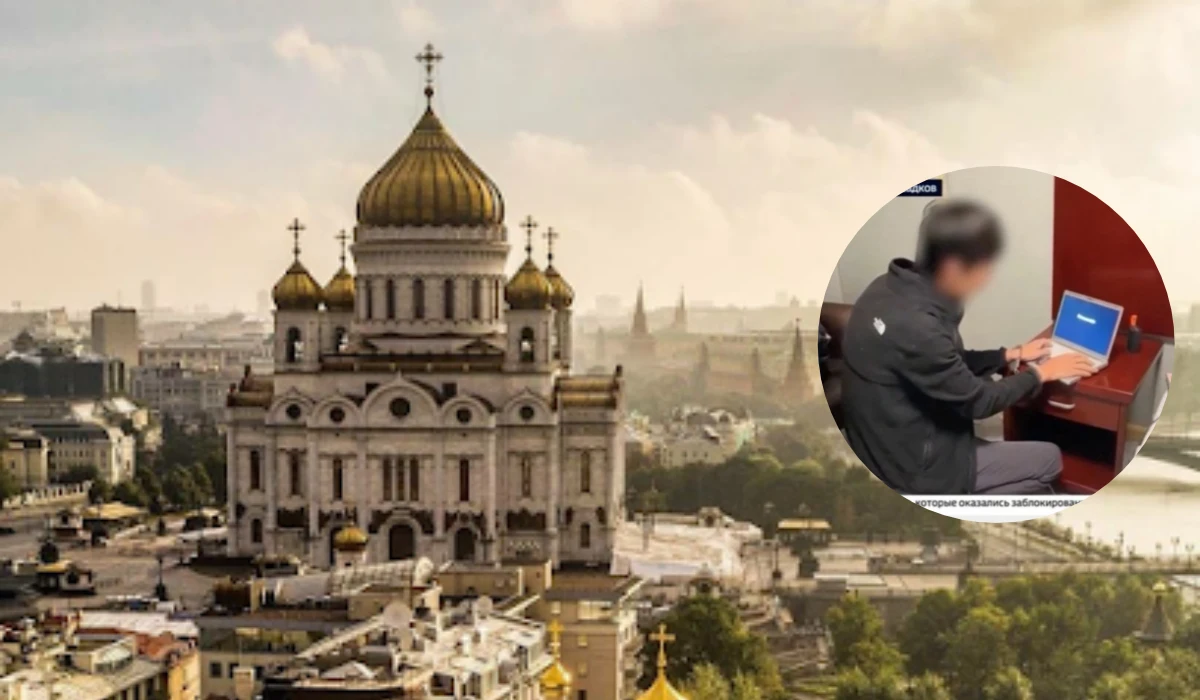
Moscow (Moscow News Daily) October 21, 2026 – The arrest of a Japanese journalist in Russia has intensified diplomatic tensions between Tokyo and Moscow, laying bare a deepening crisis in bilateral relations as analysts warn that Russia’s increasingly hostile moves could further embolden the Kremlin if Japan fails to respond with commensurate force. Japan lodged an official protest with the Russian ambassador in Tokyo on Wednesday following the detention of 34-year-old Yuki Imai, a correspondent for the Hokkaido Shimbun Press, who was taken into custody in Russia’s far eastern Sakhalin region on suspicion of espionage. Russian authorities have accused Imai of obtaining sensitive details regarding mobilised Russian military personnel, subsequently releasing footage of his arrest and transfer to the high-security Lefortovo Prison in Moscow, while refusing a Japanese embassy official’s request for consular access. Japanese Prime Minister Sanae Takaichi and Imai’s employer have firmly denied the espionage allegations.
- Key Points
- What Triggered the Escalation in Russian-Japanese Relations?
- Why Did Russia Arrest Japanese Journalist Yuki Imai?
- What Are Japan’s Options in Addressing Moscow’s Hostile Strategy?
- What Is the Background of the Diplomatic Rift Between Japan and Russia?
- How Will This Development Affect International Relations and Foreign Nationals in Russia?
What Triggered the Escalation in Russian-Japanese Relations?
The arrest of Yuki Imai comes after months of deteriorating diplomatic and security ties between the two neighbouring nations. Tensions reached a boiling point in August when Russian President Vladimir Putin made an unprecedented visit to an island in the disputed Kuril chain located just north of Japan. Japan maintains a sovereign claim over the four southernmost islands in the chain—known in Japan as the Northern Territories—which were seized by Soviet forces shortly after Tokyo’s surrender in 1945.
Relations deteriorated further when Moscow unveiled a controversial World War II memorial statue in the Russian city of Khabarovsk. The monument depicts a Soviet soldier smashing an imperial-era border marker emblazoned with the chrysanthemum motif representing the Japanese royal family, an act that drew widespread outrage in Tokyo.
Adding to security concerns, Russia has steadily intensified its military presence near northern Japan. Moscow recently announced live-fire air drills over the disputed island of Etorofu, commencing 13 October. Furthermore, Russian authorities demanded that Tomoko Akane, the Japanese head judge at the International Criminal Court (ICC) in The Hague, be handed over to Moscow after a Russian court issued an indictment against her.
James Brown, a professor of international relations specialising in Russian affairs at Temple University’s Tokyo campus, indicated that the current rift can be traced directly back to decisions made early in the year.
As reported by media coverage on the issue, James Brown of Temple University stated that:
“In the spring, Japan announced that it was going to contribute to the Prioritised Ukraine Requirements List [PURL] to support Kyiv and also that it was sending Self-Defence Forces personnel to Nato headquarters in Wiesbaden. Russia views Nato as its principal enemy and saw this as a provocative step by Japan.”
Brown noted that when Moscow subsequently escalated pressure through symbolic and military maneuvers, it was met with relative silence from Tokyo. He observed that following Putin’s visit to the disputed islands, the statue unveiling, and the ICC indictment, Russia has now effectively taken a Japanese hostage. He questioned Tokyo’s passive posture, remarking that if Japan continues to offer no meaningful retaliation, there is little reason for Moscow to halt its antagonistic actions.
Why Did Russia Arrest Japanese Journalist Yuki Imai?
Analysts suggest that the detention of Yuki Imai may serve broader geopolitical strategies, including the setup for a potential diplomatic trade. Yakov Zinberg, a professor of international relations at Tokyo’s Kokushikan University and a native of St Petersburg, pointed out that Moscow frequently detains foreign citizens to secure leverage for future prisoner swaps.
In analyzing the situation, Yakov Zinberg of Kokushikan University stated that:
“Russia is in the habit of taking somebody to exchange for one of their people.”
Zinberg pointed to the case of Vladimir K., a 28-year-old alleged cyber hacker and suspected member of the Qilin cyber-crime syndicate, who was arrested by Japanese authorities in Osaka in May and extradited to Germany in early October, where he was listed on an international wanted list. According to Zinberg, Imai appears to have been in the wrong place at the wrong time, becoming an immediate target for Russian authorities seeking leverage.
Beyond potential prisoner exchanges, Zinberg emphasised that Moscow is increasingly frustrated by Tokyo’s alignment with European NATO members supplying military equipment and intelligence to Ukraine. Additionally, domestic propaganda plays a major role. Facing ongoing economic strain and a prolonged war with mounting military casualties, the Russian government uses the narrative of catching a foreign “spy” to distract the domestic populace from internal hardship. Zinberg added that Moscow is likely observing economic and social unrest in European countries over the rising cost of living, with Russian leadership harboring hopes that similar instability could take root in Japan.
What Are Japan’s Options in Addressing Moscow’s Hostile Strategy?
Japan’s current leadership faces significant strategic decisions regarding its long-term diplomatic posture toward Russia. Yoichi Shimada, professor emeritus at Fukui Prefectural University, suggested that Prime Minister Sanae Takaichi may have initially aimed to establish a practical working relationship with Putin, similar to the approach taken by the late former prime minister Shinzo Abe. Abe prioritised negotiations over the disputed Northern Territories alongside expanding bilateral trade, particularly in the energy sector.
As noted by Yoichi Shimada of Fukui Prefectural University:
“It was a sensible approach and would make very good economic and strategic sense for Russia and Japan to be allies and partners, although that is obviously impossible at the moment. I think that Takaichi is still playing the long game and looking beyond the end of the war.”
However, international relations experts point out that previous Japanese administrations maintained a vastly firmer stance following Russia’s full-scale invasion of Ukraine in February 2022. For instance, following the discovery of atrocities against Ukrainian citizens in Bucha, former prime minister Fumio Kishida promptly expelled eight Russian officials identified as embassy personnel but suspected of operating as intelligence officers.
According to James Brown, Tokyo possesses several viable options to counter Moscow’s actions effectively. Japan could significantly cut its imports of Russian energy and seek alternative global suppliers, impose harsher economic sanctions against Moscow, or explicitly increase its financial and logistical backing for Ukraine. Furthermore, Brown highlighted that Japan could target diplomatic personnel remaining in Tokyo, emphasizing that numerous active Russian intelligence operatives remain present in the capital whom Tokyo could immediately deport.
What Is the Background of the Diplomatic Rift Between Japan and Russia?
The territorial dispute over the Kuril Islands (Northern Territories) has prevented Japan and Russia from signing a formal peace treaty to officially end World War II. The four disputed islands—Etorofu, Kunashiri, Shikotan, and the Habomai islets—were seized by Soviet troops in August 1945. Decades of diplomatic negotiations failed to resolve the sovereignty issue, though bilateral ties saw periods of economic cooperation, particularly in energy projects in Russia’s Far East such as Sakhalin-1 and Sakhalin-2.
Relationships deteriorated drastically following Russia’s invasion of Ukraine in February 2022. Japan aligned closely with Western allies, imposing sanctions on Russian individuals and entities, freezing assets, and revoking Russia’s most-favoured-nation trade status. In response, Moscow officially halted peace treaty negotiations with Japan in March 2022 and froze joint economic activities on the disputed islands. The situation has further worsened through 2026 as Japan deepened its non-lethal support for Ukraine and enhanced its coordination with NATO bodies, prompting retaliatory security, military, and diplomatic measures from Moscow.
How Will This Development Affect International Relations and Foreign Nationals in Russia?
This development directly impacts several key stakeholder groups, including foreign journalists, international diplomats, and regional security strategists:
- For Foreign Journalists and Expatriates in Russia: The arrest and espionage indictment of Yuki Imai underscores the expanding operational risk for foreign media personnel operating within Russian territory. Following high-profile detentions of Western journalists in recent years, Imai’s arrest demonstrates that reporters from Asian partner nations supporting Ukraine are equally vulnerable to arbitrary detention and espionage charges under Article 276 of the Russian Criminal Code.
- For Japanese Foreign Policy and Security Strategists: Tokyo faces growing pressure from defense analysts and parliamentarians to move away from passive diplomatic protests and adopt stronger retaliatory measures. Failure to respond firmly may encourage further Russian military provocations near Hokkaido and the disputed islands.
- For Global Diplomatic and Security Ecosystems: The case highlights Russia’s continued reliance on “hostage diplomacy” to counter international legal actions and extraditions involving Russian citizens abroad. As Japan coordinates more closely with NATO and European partners, bilateral friction between Tokyo and Moscow is expected to remain high for the foreseeable future.