Key Points
- Humanitarian Breakthrough: Ukraine and Russia have agreed to a localized ceasefire in the war-divided town of Oleshky in the Kherson region following secret negotiations facilitated by U.S. First Lady Melania Trump.
- Resumption of High-Level Peace Talks: Formal three-way peace negotiations brokered by the United States are projected to resume in Abu Dhabi, United Arab Emirates, around mid-November 2026.
- Shuttle Diplomacy: U.S. Presidential Envoy Steve Witkoff and Trump advisor Jared Kushner conducted extensive diplomatic meetings across Oslo and St. Petersburg, meeting Ukrainian President Volodymyr Zelenskyy and Russian President Vladimir Putin.
- Ongoing Military Escalations: Hours after expressing willingness “in principle” to resume talks, Russia launched a major barrage of ballistic missiles and drones targeting Kyiv, while Moscow reported destroying over 800 incoming Ukrainian drones.
- Geopolitical Friction: Strain between Washington and Kyiv has escalated following U.S. President Donald Trump’s deal for Russian diesel supplies, pauses on new Russian sanctions, and technical disruptions to satellite internet access for Ukrainian military systems.
- Core Deadlock: Russia continues to demand full sovereignty over four annexed regions (Donetsk, Luhansk, Zaporizhzhia, and Kherson) and Crimea, alongside Ukrainian demilitarization, while Ukraine insists on ironclad Western security guarantees and rejects territorial concessions.
Moscow (Moscow News Daily) October 24, 2026 — Ukraine and Russia have signaled their readiness to resume U.S.-brokered peace talks in Abu Dhabi next month, even as intense battlefield strikes highlight deep-seated obstacles to ending the four-and-a-half-year conflict. A rare diplomatic breakthrough achieved through secret negotiations involving U.S. First Lady Melania Trump has secured a temporary localized ceasefire in the southern town of Oleshky. However, core disagreements regarding territorial sovereignty, NATO aspirations, and security guarantees ensure that the path toward a comprehensive settlement remains precarious.
- Key Points
- What Are the Immediate Details of Melania Trump’s Humanitarian Agreement in Oleshky?
- How Are the Resumed Peace Talks Being Structured by International Envoys?
- Why Are Relations Strained Between Washington and Kyiv?
- What Are the Non-Negotiable Demands Divided Between Kyiv and Moscow?
- What Security Guarantees Are Under Discussion to Sustain a Potential Peace Deal?
- Background of the Russia-Ukraine Conflict and Diplomatic Track
- How This Development May Affect the Key Audiences
As reported by the Associated Press, Ukraine and Russia have confirmed their willingness to re-engage in diplomatic negotiations while simultaneously endorsing a humanitarian initiative coordinated by U.S. First Lady Melania Trump. The developments follow secret consultations between the First Lady’s office and civilian negotiators from both warring nations. The resulting agreement establishes a localized ceasefire set to take effect next week in Oleshky, a war-divided town in Ukraine’s southern Kherson region, to allow for the delivery of emergency aid and the evacuation of stranded civilians.
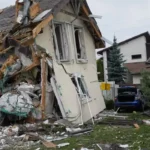
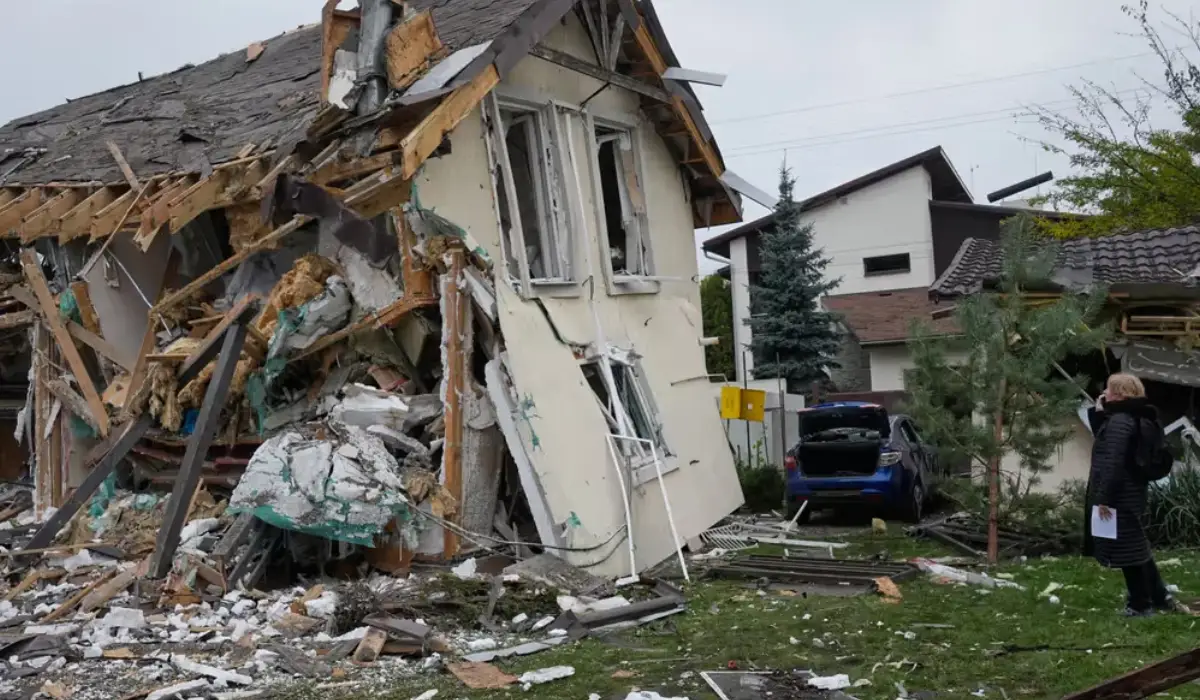
Despite the breakthrough on humanitarian corridors, fundamental positions on the conflict remain unchanged. Moscow maintains its stance demanding total control over Ukrainian territories it has annexed but does not fully occupy, whereas Kyiv maintains that any lasting settlement requires unyielding security guarantees against future invasions. Demonstrating the ongoing violence, Russian forces executed a heavy missile and drone barrage against the Ukrainian capital of Kyiv only hours after Russian President Vladimir Putin stated he agreed “in principle” to restart talks. Concurrently, Russian defense officials reported destroying more than 800 Ukrainian drones directed at cities inside Russia.
What Are the Immediate Details of Melania Trump’s Humanitarian Agreement in Oleshky?
The agreement negotiated by U.S. First Lady Melania Trump represents one of the few formal pauses in hostilities in recent months. As reported by WION News, the White House confirmed that the initiative addresses a severe humanitarian crisis in Oleshky, a front-line city situated across the Dnipro River from Kherson where an estimated 1,700 to 2,000 residents—mostly elderly individuals and roughly 50 children—have been surviving without regular access to clean water, food, medicine, or electricity.
As detailed in statements released by the White House and reported by The Guardian, the localized truce is scheduled to begin between October 27 and October 29. The agreement includes temporary demining operations along safe transit routes, the entry of humanitarian supplies, and civilian evacuations where residents will be offered choices on whether to relocate to Ukrainian-controlled or Russian-controlled territory. Dmytro Lubinets, Ukraine’s Parliament Commissioner for Human Rights, acknowledged the First Lady’s personal involvement in facilitating the logistics. An impartial American media organization has been designated to accompany Russian and Ukrainian civilian teams to document the evacuation process and verify that civilian choices are respected.
How Are the Resumed Peace Talks Being Structured by International Envoys?
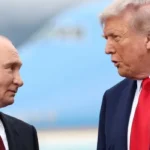
Diplomatic efforts to restore high-level negotiations have been spearheaded by U.S. Special Presidential Envoy Steve Witkoff and senior advisor Jared Kushner. As reported by the Associated Press, Witkoff engaged in intense shuttle diplomacy this week, traveling to Oslo, Norway, to consult with Ukrainian President Volodymyr Zelenskyy and European officials, before flying to St. Petersburg, Russia, for a three-hour meeting with Russian President Vladimir Putin at Constantine Palace.
As reported by Russian presidential aide Yury Ushakov and detailed by the Associated Press, the upcoming negotiations would mark the fourth round of talks mediated by the Trump administration. Kremlin spokesperson Dmitry Peskov and official diplomatic sources indicated that the next session is expected to occur in Abu Dhabi, United Arab Emirates, around mid-November 2026.
During the St. Petersburg meeting—which Kushner joined via video link—U.S. envoys proposed a structured three-way technical framework between Washington, Kyiv, and Moscow, alongside discussions on post-war economic planning and broader European security arrangements. Witkoff also secured the release of Stephen Hubbard, a 74-year-old American citizen who had been imprisoned in Russia for over four years. Witkoff subsequently described the Russian leader as a “humanitarian” during their discussions, a characterization that drew sharp criticism and consternation from Ukrainian officials.
Why Are Relations Strained Between Washington and Kyiv?
The diplomatic push occurs amid unprecedented political tension between U.S. President Donald Trump and Ukrainian President Volodymyr Zelenskyy. As reported by the Associated Press, President Trump has repeatedly labeled President Zelenskyy as an obstacle to peace, demanding that Kyiv adopt a more flexible posture toward negotiations.
Kyiv’s diplomatic position has been complicated by several recent policy developments from Washington:
- Energy Agreements: The U.S. administration finalized a commercial agreement to import Russian diesel fuel.
- Sanctions Adjustments: The White House waived newly proposed economic sanctions against Russian state entities.
- Satellite Support Disruptions: Ukrainian military operations experienced technical restrictions and speed limits regarding Starshield and Starlink satellite systems after Kyiv rejected U.S. requests to halt long-range drone strikes on Russian oil infrastructure.
Speaking at a remote event hosted by the Hudson Institute, President Zelenskyy noted that deliveries of American Patriot missile interceptors remained on hold and that satellite connectivity issues persisted. Ukrainian leadership has expressed concern that these actions reduce pressure on Moscow, giving President Putin less incentive to make diplomatic compromises.
What Are the Non-Negotiable Demands Divided Between Kyiv and Moscow?
Despite agreement on hosting future talks, both nations remain divided on the core terms required to permanently halt the war.
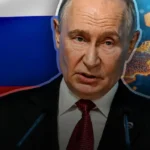
Speaking on Russian state television, President Putin asserted that Moscow remains open to seeking solutions to the complex situation, but added: “If some prefer a different path, so be it. In any case, all the objectives of the special military operation will be achieved.”
In response, President Zelenskyy reaffirmed that ceding territory would leave Ukraine vulnerable to future aggression. While Kyiv supports an immediate ceasefire that freezes existing front lines as a precursor to negotiations, Moscow continues to reject any pause in overall fighting unless a final agreement encompassing all its demands is reached first.
What Security Guarantees Are Under Discussion to Sustain a Potential Peace Deal?
The architecture of security guarantees remains one of the most unresolved aspects of the negotiations. Ukraine views legally binding Western security assurances as essential to preventing future conflict.
As reported by the Associated Press, the frameworks currently under consideration include:
- Direct U.S. Commitments: Bilateral guarantees described by President Zelenskyy as an “Article 5-like format,” referencing NATO’s collective defense principle where an attack on one member is treated as an attack on all.
- Coalition Frameworks: Defense backing provided by the “Coalition of the Willing,” a European-led group comprising 30 nations.
- Sovereign Military Strength: Heavy long-term Western funding to maintain a large, technologically advanced Ukrainian military as the primary deterrent.
The U.S. administration has ruled out immediate NATO membership for Ukraine, aligning with a key demand from Moscow. Addressing reporters during a press briefing in Kyiv, President Zelenskyy stated: “All of these guarantees are possible on the basis of a strong Ukrainian army — in terms of both numbers and quality — with clear funding, and not a small amount. Our colleagues in Europe and America know this.” Following the latest strikes on Ukrainian cities, Zelenskyy reiterated via social media that diplomatic progress requires increased Western economic and military pressure on Moscow.
Background of the Russia-Ukraine Conflict and Diplomatic Track
The war between Russia and Ukraine escalated into a full-scale invasion in February 2022, following Russia’s initial military intervention and annexation of the Crimean Peninsula in 2014. Over more than four and a half years of active combat, the conflict has resulted in hundreds of thousands of casualties, widespread destruction of civilian infrastructure, and massive population displacement.
Russia currently occupies approximately 20% of Ukrainian territory. In late 2022, Moscow unilaterally declared the annexation of four Ukrainian oblasts—Donetsk, Luhansk, Zaporizhzhia, and Kherson—despite not maintaining complete military control over any of them.
Diplomatic engagement between the two nations has occurred sporadically throughout the conflict. Initial direct talks held in Belarus and Turkey during early 2022 collapsed without a broader agreement. Since then, official contact has been largely restricted to practical bilateral matters, including military prisoner-of-war exchanges, the recovery of fallen soldiers, and localized arrangements for returning displaced children.
Following the transition in U.S. presidential leadership, the Trump administration initiated a renewed diplomatic track, hosting formal multi-party talks in Geneva in February. However, previous rounds failed to reconcile the fundamental divide between Kyiv’s insistence on territorial integrity and Moscow’s annexation demands. The upcoming Abu Dhabi talks scheduled for mid-November represent the latest attempt to establish a functional negotiation framework.
How This Development May Affect the Key Audiences
The prospective mid-November peace talks and the localized humanitarian ceasefire in Oleshky carry significant implications across several distinct groups:
1. Front-Line Civilians and Displaced Populations
For civilians residing in war zones such as Oleshky, the localized ceasefire offers immediate, life-saving relief, providing critical access to food, water, and medical care, alongside safe transit options. However, for the broader Ukrainian populace, the lack of agreement on a nationwide ceasefire means that long-range drone and missile strikes will continue to pose daily risks to life and public infrastructure.
2. The Ukrainian Military and Security Forces
If the U.S. administration continues to leverage satellite connectivity access and military assistance to compel diplomatic movement, Ukrainian armed forces may face operational constraints on the battlefield. Without explicit NATO guarantees or alternative long-term security commitments, Ukrainian military planners will remain focused on maintaining high recruitment levels and securing sustained defense funding from European allies.
3. International Energy Markets and Global Economy
The resumption of talks, combined with recent U.S.-Russia energy agreements, signals potential shifts in international sanctions enforcement. Progress toward stable negotiations in Abu Dhabi could reduce volatility in global energy markets. Conversely, sustained Russian strikes on Ukrainian infrastructure and Ukrainian strikes on Russian oil facilities remain key factors that could disrupt energy supplies and prolong market uncertainty.
4. European Security Alliance and NATO Allies
European nations backing the “Coalition of the Willing” may face pressure to assume greater financial and military responsibilities for Ukraine’s defense guarantees. As Washington explores direct economic and diplomatic arrangements with Moscow, European leaders will likely need to recalibrate their long-term security strategies to ensure stability across Eastern Europe regardless of the outcome of the U.S.-brokered negotiations.