Key Points
- Unilateral Release Denials: Both the United States and Russian governments have explicitly denied that the release of 74-year-old American citizen Stephen Hubbard from Russian custody was linked to the detention and subsequent release of Russian pro-war blogger Mikhail Zvinchuk in Montenegro.
- Humanitarian Gesture Claim: Russian President Vladimir Putin announced that Stephen Hubbard, a retired teacher held in Russia since 2022, was freed as a unilateral humanitarian goodwill gesture following direct representations from U.S. President Donald Trump.
- No Concessions Provided: A spokesperson for the U.S. State Department confirmed that Washington made no concessions or exchanges, stating that the Russian government made an entirely independent, unilateral decision to release Hubbard.
- Rybar Founder Background: Mikhail Zvinchuk, director of the influential Russian pro-war Telegram channel Rybar and target of a $10 million U.S. Rewards for Justice bounty, was briefly detained in Montenegro for spreading “Russian influence” before being expelled on 9 October 2026.
- Kremlin Rejection: Kremlin spokesman Dmitry Peskov directly dismissed speculation linking the two cases, formally stating that claims of a prisoner trade were completely inaccurate.
Moscow (Moscow News Daily) October 23, 2026 – The Russian Federation and the United States have both officially rejected speculation that the release of American citizen Stephen Hubbard from a Russian prison was conducted as a secret exchange for Mikhail Zvinchuk, a high-profile Russian pro-war blogger briefly detained in Montenegro. Speaking following diplomatic talks between Russian President Vladimir Putin and U.S. special envoy Steve Witkoff, the Kremlin described the release of the 74-year-old retired schoolteacher as a unilateral humanitarian gesture requested by U.S. President Donald Trump. Officials from the U.S. State Department and Kremlin spokesman Dmitry Peskov simultaneously confirmed that no concessions, trades, or diplomatic swaps were involved in Hubbard’s return.
- What Led to the Release of American Citizen Stephen Hubbard From Russian Custody?
- Why Did Speculation Emerge Linking Hubbard’s Freedom to Blogger Mikhail Zvinchuk?
- How Have the U.S. State Department and the Kremlin Responded to the Quid Pro Quo Claims?
- Background of the Particular Development
- Prediction: How Will This Unilateral Release Affect U.S.-Russia Relations and Foreign Detainees?
What Led to the Release of American Citizen Stephen Hubbard From Russian Custody?
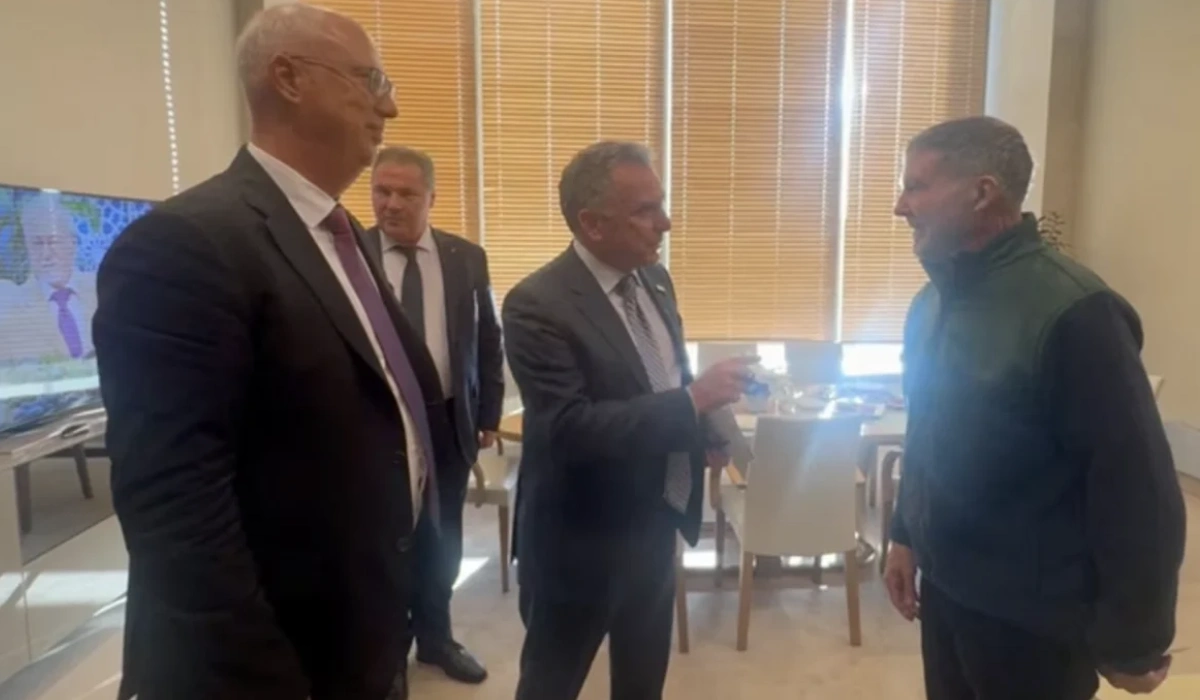
As reported by Charles Maynes of NPR and confirmed by Reuters, 74-year-old American national Stephen Hubbard was released from Russian detention on Wednesday, 21 October 2026, following a direct request from U.S. President Donald Trump.
Hubbard, a native of Michigan who had been living in Ukraine, was held in Russian custody since 2022 and sentenced in October 2024 to nearly seven years in prison on charges of “mercenary work” on behalf of Ukraine—allegations he and his family consistently denied.
Reporting on the diplomatic interactions in Moscow, WION noted that President Vladimir Putin announced Hubbard’s release during a high-level meeting with U.S. special envoy Steve Witkoff. Publicly commenting on the development, U.S. President Donald Trump confirmed that he had personally requested Putin to grant Hubbard’s freedom, emphasizing that Moscow had not requested any reciprocal actions.
As reported by WION, President Donald Trump stated:
“The United States, out of respect for President Trump, was not required to give anything in return – an unprecedented situation for Russia. There was no ‘swap’ necessary for this release.”
Why Did Speculation Emerge Linking Hubbard’s Freedom to Blogger Mikhail Zvinchuk?
Despite official assurances from both capitals, political observers and former diplomatic officials, including a former U.S. ambassador, publicly suggested that Hubbard’s release may have been covertly tied to the recent arrest and release of Mikhail Zvinchuk in Montenegro.
Mikhail Zvinchuk, a former Russian Defence Ministry official, is the founder and director of Rybar, a prominent pro-war Russian media organization operating on Telegram. As detailed by The Moscow Times, Zvinchuk was detained in Montenegro alongside three other Russian nationals in early October 2026 on charges of spreading “Russian influence” and destabilizing political structures, before being formally expelled on 9 October 2026.
The timing of Zvinchuk’s release from Montenegrin custody and Hubbard’s subsequent discharge from a Russian facility in Mordovia triggered widespread analysis across Western media outlets regarding a potential indirect prisoner trade.
How Have the U.S. State Department and the Kremlin Responded to the Quid Pro Quo Claims?
Both the U.S. Department of State and the Russian government issued firm statements explicitly denying any connection between the two individuals.
In an official statement reported by The Moscow Times, a spokesperson for the U.S. State Department categorically rejected the existence of a deal:
“This case had no connection to Stephen Hubbard’s release. The Russian government made the unilateral decision to release Mr. Hubbard. Mr. Hubbard’s release was not part of an exchange, and no other concessions were provided.”
As covered by The Moscow Times, the State Department spokesperson declined to confirm whether Washington had played a role in Montenegro’s initial detention of Zvinchuk or if a formal extradition request had been submitted to authorities in Podgorica.
From the Russian side, Kremlin spokesman Dmitry Peskov addressed the allegations directly during a press briefing in Moscow. When asked by reporters whether Hubbard had been freed in exchange for securing Zvinchuk’s safe return to Russia, Kremlin spokesman Dmitry Peskov stated:
“That’s not right.”
Background of the Particular Development
The media organization Rybar, managed by Mikhail Zvinchuk, has been a major focal point for Western intelligence and law enforcement agencies since the onset of the full-scale conflict in Ukraine. In October 2024, the U.S. State Department’s Rewards for Justice program announced a reward of up to $10 million for information leading to the identification or location of Rybar employees, explicitly identifying Zvinchuk as its key director.
According to the U.S. State Department, Rybar was originally funded by the late Russian mercenary leader Yevgeny Prigozhin and has operated social media channels designed to influence foreign elections and stoke societal divisions within Western nations. In July 2026, the British government imposed financial sanctions against Zvinchuk and linked entities, citing Rybar for disseminating false narratives regarding the war in Ukraine and interfering in European democratic processes. Moscow has consistently rejected these allegations, framing Western sanctions and bounties as part of an anti-Russian propaganda campaign.
On the humanitarian front, Stephen Hubbard’s release marks one of several high-profile detentions of U.S. citizens resolved through direct executive contact between Washington and Moscow, occurring outside the traditional multi-nation prisoner exchange frameworks.
Prediction: How Will This Unilateral Release Affect U.S.-Russia Relations and Foreign Detainees?
The unilateral release of Stephen Hubbard and the surrounding diplomatic assurances will influence several international dynamics:
For Remaining Foreign Detainees in Russia
The successful extrajudicial release of Stephen Hubbard without demanding high-profile Russian intelligence or military assets sets a unique diplomatic precedent. For families of other foreign nationals held in Russian correctional facilities, this development indicates that direct, top-level executive dialogue between Washington and Moscow can function outside strict one-for-one prisoner swaps.
For Transatlantic Law Enforcement and Security Operations
The swift expulsion of Mikhail Zvinchuk by Montenegro, despite a standing $10 million U.S. bounty, highlights complex jurisdictional challenges among NATO allies. U.S. law enforcement agencies targeting foreign disinfluencers and cyber actors may adjust operational coordination with European partners to ensure extradition requests are processed before target entities are expelled to sovereign Russian territory.