- Russian esports team 1w defeated HOTU 2–0 in the grand final of the Moscow Cyber Games 2026 tournament, held on November 1 at the Moscow Game Hub as a headline event of the second Moscow International Game Week.
- The victory earned 1w direct qualification to Stage 2 of PGL Major Singapore 2026, alongside confirmed invitations to PGL Cluj-Napoca 2027 and BLAST Bounty 2027 Season 1.
- The tournament marked Moscow’s first international Counter-Strike tournament since 2019, drawing 956 competing teams from 31 countries with results counting directly toward official Valve Regional Standings (VRS).
- In the final series, 1w claimed Map 1 (Anubis) 13–9 and secured Map 2 (Dust2) 13–11 after HOTU rallied from an 4–8 deficit to level the score at 11–11.
- The team is led by captain Vladislav “nafany” Gorshkov and coached by Konstantin “groove” Pikiner, both previous champions of IEM Katowice 2021 with Gambit.
- In the semifinals, 1w defeated Mongolian squad 5star eSports (13–9 on Inferno, 13–4 on Mirage), while HOTU overcame The Huns Esports (13–2 on Ancient, 13–7 on Cache), with The Huns ultimately securing third place after a 2–1 victory over 5star eSports.
Moscow (Moscow News Daily) November 12, 2026 – Russian esports organisation 1w captured the championship title at the Moscow Cyber Games 2026 Counter-Strike 2 tournament, defeating rival squad HOTU 2–0 in the grand final on November 1. Staged at the Moscow Game Hub during the second Moscow International Game Week (October 29 to November 1), the tournament drew 956 teams from 31 countries and marked Moscow’s first major international Counter-Strike competition since 2019. By winning the event—which contributed directly to official Valve Regional Standings—1w secured coveted qualification berths for PGL Major Singapore 2026, PGL Cluj-Napoca 2027, and BLAST Bounty 2027 Season 1, while HOTU’s runner-up finish influenced the wider European qualification race.
- What Were the Key Match Results and Tournament Brackets at the Moscow Cyber Games 2026?
- How Is the Moscow Game Hub Infrastructure Structured for International Esports?
- Background of the Particular Development After the News
- How This Development Can Affect Regional Esports Teams, International Tournament Organizers, and the Global VRS Standings
As reported by regional esports correspondents and tournament organizers, the Moscow Cyber Games 2026 functioned as a pivotal fixture on the professional Counter-Strike 2 calendar.
As reported by esports analysts covering the Valve Regional Standings (VRS) circuit, the tournament results carried official weighting that directly influenced regional seeding and invitations for upcoming international championships, including PGL Major Singapore 2026, PGL Cluj-Napoca 2027, and BLAST Bounty 2027 Season 1.
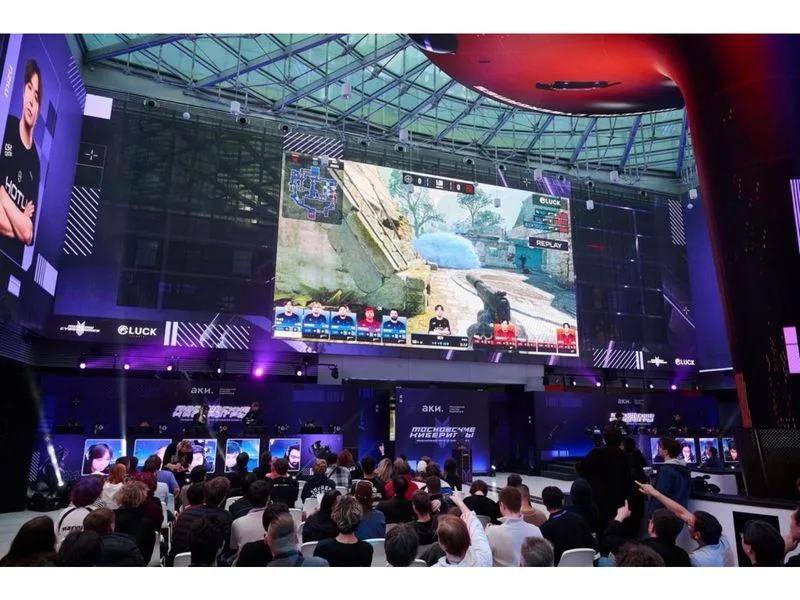
Detailing the competitive scale of the event, tournament administrators noted that a total of 956 teams representing 31 countries entered the global qualification brackets, culminating in a LAN final held inside the esports arena at the Moscow Game Hub.
As reported by tournament officials covering the live stages, the grand final saw 1w and HOTU face off in a high-stakes series, with 1w securing a 2–0 victory to claim the championship trophy and sweep the primary qualification prizes across the three major international tournament circuits.
Examining the gameplay progression of the grand final, esports match reporters documented the tactical shifts across both maps.
As reported by competitive gaming journalists tracking the series, the final concluded with a 2–0 win for 1w, who took the opening map, Anubis, 13–9. On the second map, Dust2, HOTU fought back from a 4–8 deficit to level the score at 11–11, before 1w claimed the final two rounds to secure the map 13–11 and take the series.
The victory marked another milestone for the leadership core behind 1w. For team captain Vladislav “nafany” Gorshkov and coach Konstantin “groove” Pikiner, the triumph added to their established legacy in professional Counter-Strike, recalling their 2021 IEM Katowice victory together as members of Gambit.
Reflecting on the milestone, Vladislav “nafany” Gorshkov stated that competing at upcoming fixtures such as PGL Cluj-Napoca would give the team a vital platform to build on its success and contend for a place at the next Major.
The path to the grand final was forged through decisive semifinal victories over international contenders.
As reported by tournament match summaries, both finalists defeated Mongolian teams in the penultimate round: 1w overcame 5star eSports on Inferno (13–9) and Mirage (13–4), while HOTU defeated The Huns Esports on Ancient (13–2) and Cache (13–7). In the third-place playoff, The Huns Esports secured the bronze finish by defeating 5star eSports 2–1.
The esports tournament formed the competitive cornerstone of the second Moscow International Game Week, which ran from October 29 to November 1. Organised by the Agency of Creative Industries of Moscow under the Moscow Department of Culture, the festival convened over 250 experts from 20 countries across a comprehensive business program and commercial exhibition.
The events were hosted at the Moscow Game Hub, a 55,000-square-meter production and innovation facility that opened in November 2025, featuring a dedicated data center, motion-capture suites, sound-recording studios, photogrammetry facilities, and the modern esports arena that staged the Counter-Strike 2 finals.
What Were the Key Match Results and Tournament Brackets at the Moscow Cyber Games 2026?
The tournament progression through the playoff stages highlights the performance of the competing international and regional rosters:
- Grand Final: Team 1w defeated HOTU 2–0 (Anubis: 13–9, Dust2: 13–11) to claim the championship and secure qualification for PGL Major Singapore 2026, PGL Cluj-Napoca 2027, and BLAST Bounty 2027 Season 1.
- Semifinal Match 1: Team 1w defeated 5star eSports 2–0 (Inferno: 13–9, Mirage: 13–4).
- Semifinal Match 2: HOTU defeated The Huns Esports 2–0 (Ancient: 13–2, Cache: 13–7).
- Third-Place Playoff: The Huns Esports defeated 5star eSports 2–1 to secure the bronze podium finish.
- Global Participation: 956 registered teams from 31 countries competed across preliminary qualifiers leading to the Moscow LAN finals.
How Is the Moscow Game Hub Infrastructure Structured for International Esports?
A summary of the technical and spatial facilities utilized during the Moscow Cyber Games 2026 illustrates the venue’s operational capacity:
| Facility Component | Specifications & Operational Features |
| Total Floor Area | 55,000 square metres dedicated to digital media production and esports. |
| Esports Arena | Modern competition stage hosting the LAN finals of the Moscow Cyber Games 2026. |
| Production Suites | Includes a dedicated data center, motion-capture studio, and photogrammetry lab. |
| Audio Infrastructure | Five professional sound-recording studios supporting game sound design. |
| Institutional Backing | Organised by the Agency of Creative Industries under the Moscow Department of Culture. |
Background of the Particular Development After the News
The return of top-tier international Counter-Strike competition to Moscow in November 2026 marks a significant development in the regional esports landscape. Following changes in tournament circuits and international scheduling dynamics after 2019, local tournament organizers and municipal bodies invested heavily in state-of-the-art infrastructure—culminating in the opening of the 55,000-square-meter Moscow Game Hub in November 2025.
By integrating professional esports arenas with full-cycle game development facilities, including motion-capture and photogrammetry studios, regional stakeholders sought to establish Moscow as a recognized hub for competitive gaming and digital content production. The inclusion of the Moscow Cyber Games 2026 into the official Valve Regional Standings (VRS) circuit ensured that tournament results directly impacted global rankings and Major qualification paths, attracting nearly a thousand international teams and re-establishing the city’s standing on the global esports tournament map.
How This Development Can Affect Regional Esports Teams, International Tournament Organizers, and the Global VRS Standings
The successful execution of the Moscow Cyber Games 2026 and team 1w’s qualification sweep are poised to influence several key areas of the professional Counter-Strike ecosystem:
1. Regional Esports Rosters and Competitive Pathways
For team 1w—led by Vladislav “nafany” Gorshkov and Konstantin “groove” Pikiner—securing direct entry into Stage 2 of PGL Major Singapore 2026 provides immediate tournament stability and eliminates the grueling open qualifier gauntlet. For runner-up HOTU and other competing CIS squads, the exposure to official VRS-weighted LAN matches offers crucial ranking points needed to contest upcoming international invitations.
2. International Tournament Organizers and Global Circuit Integration
For international circuit organizers such as PGL and BLAST, the integration of sanctioned events hosted at advanced regional facilities like the Moscow Game Hub demonstrates the viability of decentralized qualification pathways. The high participation volume—reaching 956 teams from 31 countries—signals sustained global demand for open and structured tournament tiers that feed directly into premier Major championships.
3. Infrastructure Development and Regional Talent Retention
For municipal and industrial stakeholders managing the Moscow Game Hub, hosting a successful international tournament broadcasted to global audiences validates the facility’s technical readiness. Continued hosting of Tier-1 esports events is expected to attract foreign talent, foster cross-border training camps, and bolster local digital media economies.