Key Points
- Russian forces launched a multi-wave overnight ballistic missile assault against Kyiv and 12 regions across Ukraine, killing at least four people and injuring dozens, including five children.
- The bombardment occurred hours after Russian President Vladimir Putin agreed “in principle” during St. Petersburg talks with U.S. envoy Steve Witkoff to resume trilateral negotiations between Russia, Ukraine, and the United States.
- Ukrainian President Volodymyr Zelenskyy reported that 21 ballistic missiles struck Kyiv in three separate waves, damaging energy grid infrastructure, residential apartment blocks, a railway station, shopping malls, and the Kyiv subway network.
- Zelenskyy confirmed that Russian forces deployed three ballistic missiles carrying cluster munitions over Kyiv and noted that Russia has launched 170 strikes on critical energy facilities since October 11, 2026.
- Russia’s Ministry of Defense claimed its air defenses intercepted 808 Ukrainian drones overnight, with Moscow Mayor Sergei Sobyanin stating that 630 drones targeted the Russian capital.
- Kremlin spokesperson Dmitry Peskov stated that U.S. President Donald Trump invited Putin to attend the G20 summit in Miami this December, while alleging that European capitals are doing “nothing to promote a peaceful resolution”.
- The two nations conducted a casualty repatriation exchange, with Ukraine receiving the bodies of 252 fallen soldiers in exchange for 25 Russian soldiers.
Moscow (Moscow News Daily) October 22, 2026 – Russian forces executed a heavy, multi-wave ballistic missile barrage against the Ukrainian capital of Kyiv and 12 surrounding regions overnight, killing at least four civilians and wounding scores more. The intense aerial assault occurred just hours after Russian President Vladimir Putin agreed “in principle” to rejoin three-way peace negotiations alongside Ukraine and the United States. In response, Ukrainian President Volodymyr Zelenskyy condemned the strikes, pointing out that Moscow has taken no concrete steps to signal a genuine desire to end the conflict. Meanwhile, the Russian Ministry of Defense claimed its air defense units intercepted over 800 Ukrainian drones overnight across several Russian provinces and the capital, Moscow.
- Key Points
- What Damage Was Caused by the Overnight Strikes Across Ukraine?
- What Did Political Leaders State Regarding the Peace Talks and U.S. Diplomacy?
- How Did Moscow Respond to the Alleged Mass Ukrainian Drone Attack?
- What is the Background of This Particular Development?
- How This Development Can Affect European Security and Civilian Infrastructure?
What Damage Was Caused by the Overnight Strikes Across Ukraine?
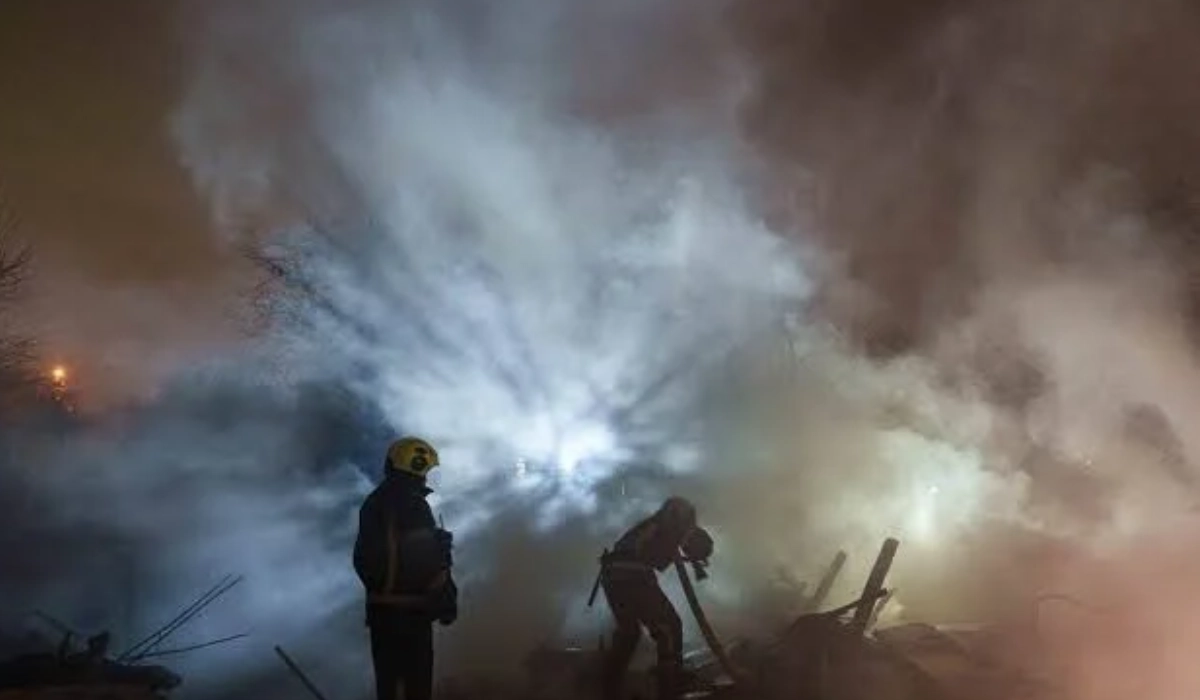
The overnight bombardment inflicted widespread physical destruction across urban centers and vital energy infrastructure throughout Ukraine. As reported by Associated Press Writer Hanna Arhirova, Ukrainian President Volodymyr Zelenskyy confirmed that the capital endured an hourslong barrage involving 21 ballistic missiles arriving in three distinct waves. The incoming missiles struck apartment buildings, critical energy facilities, shopping malls, local businesses, a railway station, and parts of the Kyiv subway system, killing one person in the capital.
Zelenskyy disclosed that three of the ballistic missiles launched at Kyiv carried cluster munitions—containers that disperse scores of smaller explosive bomblets over wide areas. Outside the capital, regional officials reported severe casualties. As reported by Oleh Syniehubov, head of the Kharkiv regional military administration, a Russian strike on a commercial market in Lozova killed two women, aged 50 and 60, while injuring dozens of bystanders. Ukraine’s State Emergency Service reported an additional fatality in separate strikes across the Kharkiv region.
The bombardment comes as Ukrainians brace for winter, with Kyiv accusing Moscow of systematically targeting the electrical grid to deprive civilians of heat, light, and running water. According to statements by Zelenskyy, Russian forces have launched 170 targeted strikes against Ukraine’s critical energy infrastructure since October 11, 2026.
What Did Political Leaders State Regarding the Peace Talks and U.S. Diplomacy?
The escalation immediately followed diplomatic engagements in St. Petersburg between Russian President Vladimir Putin and U.S. envoy Steve Witkoff. Witkoff, who met earlier with Zelenskyy in Norway, spoke of “new momentum” toward tentative trilateral negotiations set to begin sometime after November 10, 2026, though no firm date or venue was established.
Reiterating Ukraine’s stance during a joint news conference in Kyiv alongside Finnish Prime Minister Petteri Orpo, President Volodymyr Zelenskyy stated that “Russia has not changed the way it wages this war, and it is taking no steps that would signal a genuine desire to end it”. Zelenskyy pleaded with Washington to release additional Patriot air-defense munitions and bolster sanctions, warning: “Russia is clearly taking advantage of the slowdown in air defense supplies from our partners. It is equally clear that when some partners ease the pressure on Russia, it only reinforces Putin’s belief that his goals are within reach”.
Ukrainian Foreign Minister Andrii Sybiha criticized recent U.S. diplomatic rhetoric on social media, writing that the latest attacks demonstrate “what Russian ‘humanism’ truly sounds like. Appeasement, servility, and flattery will not stop this war. Only strength will”.
From the Kremlin, spokesperson Dmitry Peskov confirmed on Thursday that Putin had received an invitation to attend the G20 summit in Miami this December but had not yet decided whether to participate. As reported by Russian state media, Kremlin spokesperson Dmitry Peskov stated that “the American administration is doing a lot to help a peaceful settlement,” while alleging that “European capitals are doing nothing to promote a peaceful resolution, and they are doing a great deal to provoke the further escalation of fighting”. Zelenskyy indicated Ukraine would participate at the highest level if invited by U.S. President Donald Trump.
How Did Moscow Respond to the Alleged Mass Ukrainian Drone Attack?
Contrasting Kyiv’s reports of missile damage, the Russian Defense Ministry issued statements asserting that its national air defense networks repelled an unprecedented mass drone strike overnight. Russian military officials stated that air defense units intercepted 808 Ukrainian drones across Russian territory, resulting in two reported injuries.
Moscow Mayor Sergei Sobyanin detailed that 630 of the intercepted drones were directed toward the Russian capital between late Wednesday and early Thursday, forcing Moscow airports to temporarily restrict flight operations and air traffic. Russian military representatives claimed their retaliatory strikes successfully targeted Ukrainian facilities involved in manufacturing and storing cruise missiles and drones, alongside transport infrastructure in Kyiv, port facilities in Odesa, and vessels utilised by the Ukrainian armed forces.
Additionally, Ukraine’s Coordination Headquarters for the Treatment of Prisoners of War confirmed a major humanitarian repatriation exchange. Ukraine received the bodies of 252 fallen soldiers from Russian authorities. In return, Russian lawmaker Shamsail Saraliyev told news outlet RBC that Russia received the remains of 25 Russian soldiers.
What is the Background of This Particular Development?
The sharp escalation in long-range strikes coincides with complex, fragmented diplomatic maneuvers involving Washington, Moscow, and Kyiv. Earlier in 2026, representatives from Ukraine, Russia, and the United States held rounds of technical talks in the United Arab Emirates and Switzerland. However, those negotiations yielded negligible progress beyond routine prisoner and casualty exchanges, as both belligerents remained fundamentally opposed on key territorial and security terms.
Concurrently, U.S. foreign policy underwent noticeable operational shifts. President Donald Trump reached agreements to import Russian diesel and eased certain economic sanctions against Moscow, while U.S. officials cited global inventory shortages as the primary reason for slowed Patriot missile defense deliveries to Kyiv. Sensing vulnerabilities in Ukraine’s air defense umbrella, Russian forces initiated an systematic campaign targeting electrical generation plants and transmission substations—a tactical approach Ukrainian officials refer to as “weaponizing winter”. On the tactical front, Ukraine expanded its long-range strike capabilities, deploying massed swarms of domestically produced kamikaze drones to strike logistical hubs, military airfields, and energy infrastructure deep inside the Russian Federation.
How This Development Can Affect European Security and Civilian Infrastructure?
The convergence of intensified winter grid bombardment and contested diplomatic talks will create significant ramifications for several distinct groups:
- Ukrainian Civilians and Municipal Grid Operators: The deliberate targeting of power facilities with advanced ballistic missiles and cluster munitions will cause severe energy deficits during sub-zero winter months. Municipal authorities in Kyiv, Kharkiv, and Odesa will be forced to implement rolling blackouts, emergency heating centers, and continuous water supply interventions to prevent humanitarian crises.
- European Union Member States and NATO Allies: The widening rift between Washington and European capitals over diplomatic concessions to Russia will strain transatlantic alliance cohesion. European nations will likely feel compelled to accelerate independent air defense procurement and financial aid packages to backstop shortfalls in U.S. military deliveries to Ukraine.
- Global Energy and Commercial Transport Sectors: Continued strikes on black-sea port infrastructure in Odesa and maritime vessels will elevate war-risk insurance premiums for merchant shipping in the Black Sea. Simultaneously, ongoing Ukrainian drone incursions into Russian airspace will cause recurring disruptions to commercial aviation around Moscow’s transit hubs.