Key Points
- New Executive Sanctions Enacted: President Volodymyr Zelensky signed executive decrees imposing sweeping new economic sanctions on 83 Russian individuals and 79 commercial entities supplying raw materials, component parts, and manufacturing equipment to Moscow’s defense-industrial complex.
- Two-Tiered Targeting Strategy: The sanctions package is split across two primary lists: the first targets 51 citizens and 44 businesses producing long-range missiles like the Iskander, Kalibr, Kh-101, and Kinzhal; the second targets 32 individuals and 35 firms tied to broader military equipment supply chains.
- Key Industrial Targets: Sanctioned enterprises include the Russian metals giant RUSAL Group, which imported 150 million rubles ($1.8 million) worth of aluminum oxide between April 2024 and March 2025 to feed military aircraft, armored vehicle, missile, and drone manufacturing.
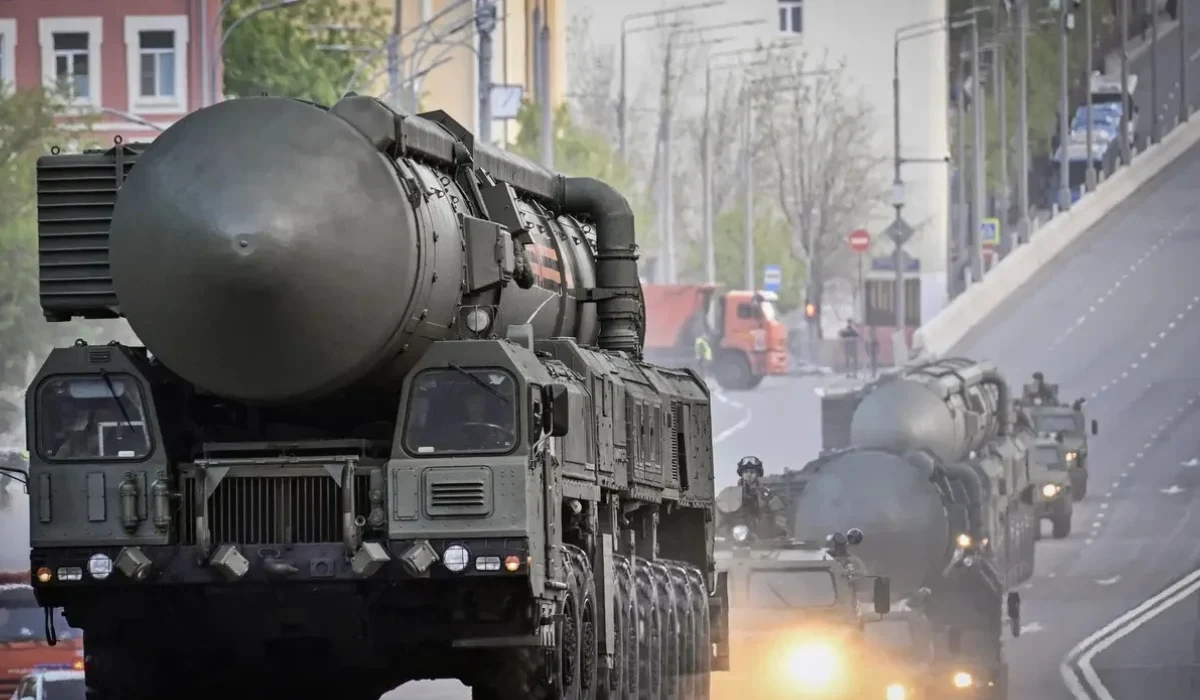
- Intelligence Reports Escalating Production: Main Directorate of Intelligence (HUR) estimates reveal Russia is now producing approximately 10,000 drones per month while stockpiling up to 700 ballistic missiles for long-range strikes against Ukrainian urban centers.
- Surging Civilian Toll: According to United Nations figures, Russian attacks killed at least 328 civilians and injured 2,105 in September 2026—marking the deadliest month for non-combatants since the full-scale invasion began, representing an 85 per cent surge over September 2025.
Moscow (Moscow News Daily) October 24, 2026 — President Volodymyr Zelensky has enacted a major new package of state sanctions targeting Russian citizens and defense contractors involved in manufacturing ballistic missiles, military aircraft, armored vehicles, and attack drones. Announced by the President’s Office, the measures hit 83 individuals and 79 industrial enterprises—including aluminum producer RUSAL Group—to sever critical supply chains feeding Moscow’s military-industrial complex. The economic restrictions arrive as Ukrainian intelligence warns that Russia is producing 10,000 drones per month and stockpiling 700 ballistic missiles, driving civilian casualties to their highest levels in four years.
- Key Points
- What Key Entities and Industrial Supply Chains Were Targeted by Ukraine’s Sanctions?
- What Did Ukraine’s Sanctions Officials State About International Enforcement?
- How Rapidly Is Russia Expanding Its Missile and Drone Production Capabilities?
- What Is the Current Civilian Cost of Russia’s Aerial Bombardment Campaign?
- Background of Ukraine’s Sanctions Policy and Bilateral Enforcement Mechanisms
- How This Development Will Affect International Sanctions and the Conflict’s Dynamics
As reported by The Kyiv Independent and the official press office of the Ukrainian presidency, President Volodymyr Zelensky issued targeted economic sanctions against dozens of Russian citizens and corporate entities supplying essential components, raw materials, and precision machinery to Moscow’s defense sector. The Presidential Office confirmed on 24 October 2026 that the executive actions focus directly on disrupting the domestic supply networks and international import lines used by the Kremlin to assemble long-range precision weaponry deployed against Ukrainian municipalities and public infrastructure.
As reported by Kyiv Post and Prm.ua, the sanctions framework is structured into two comprehensive legal decrees. The first decree imposes economic restrictions on 51 Russian individuals and 44 commercial entities involved in the research, development, and serial manufacturing of long-range strike weapons—specifically the Iskander and Kinzhal ballistic missiles, as well as Kalibr and Kh-101 cruise missiles. The second decree targets an additional 32 individuals and 35 corporate bodies supplying specialized tools, chemical precursors, and microelectronics across Russia’s military-industrial ecosystem.
What Key Entities and Industrial Supply Chains Were Targeted by Ukraine’s Sanctions?
As reported by The Kyiv Independent, a central commercial focus of the newly enacted sanctions package is Russia’s RUSAL Group, one of the world’s largest aluminum producers. Officials at the President’s Office stated that RUSAL Group plays an irreplaceable role in delivering specialized raw materials required to construct military aircraft fuselages, armored fighting vehicles, missile casings, and unmanned aerial vehicles (UAVs).
According to evidence published by the President’s Office, RUSAL Group imported 150 million rubles (approximately $1.8 million) worth of aluminum oxide between April 2024 and March 2025. This critical precursor material was subsequently channeled into domestic production lines serving state-owned Russian defense enterprises.
As reported by Prm.ua, other prominent corporate entities and research facilities added to Ukraine’s economic sanctions list include:
- G. S. Petrov Institute of Plastics: A key manufacturer of composite material components supplied directly to defense, aerospace, and naval shipbuilding facilities.
- Special Purpose Space Systems Corporation “Kometa”: An enterprise responsible for producing anti-aircraft missile system electronics, advanced radar hardware, and airborne control units.
- VitaReaktiv: A specialized commercial distributor providing industrial chemical raw materials to defense plants.
- Promenergo: An engineering firm specializing in the development of military-grade optical, laser, and optoelectronic guidance systems.
- Kirov Biochemical Plant: An industrial facility engaged in the production, chemical processing, and modernization of military hardware.
- All-Russian Scientific Research Institute of Metrology named after D. I. Mendeleev: A state institution involved in military-grade measuring equipment, specialized research, and targeting software development.
What Did Ukraine’s Sanctions Officials State About International Enforcement?
As reported by official state news agencies in Kyiv, Ukraine’s Presidential Commissioner for Sanctions Policy, Vladyslav Vlasiuk, outlined the strategic objective behind the latest decrees during a public briefing on 24 October 2026.
Highlighting the systemic nature of the restrictions, Sanctions Chief Vladyslav Vlasiuk stated: “We are systematically identifying and imposing sanctions on enterprises involved in producing Russian ballistic missiles and other weapons. We are working to extend these sanctions to other jurisdictions.”
Emphasizing the expected impact on Russia’s frontline capabilities, Vladyslav Vlasiuk added: “Together, these measures should significantly weaken the Russian military-industrial complex’s ability to produce weapons.”
How Rapidly Is Russia Expanding Its Missile and Drone Production Capabilities?
As reported by The New Voice of Ukraine (NV), official intelligence assessments provided by the Main Directorate of Intelligence of the Ministry of Defence of Ukraine (HUR) confirm that Moscow has scaled up its military manufacturing footprint despite existing Western trade restrictions.
HUR representatives disclosed to Ukrainian journalists that Russian defense plants are currently producing approximately 10,000 long-range and tactical strike drones per month, using high-volume manufacturing to systematically overwhelm and exhaust Ukrainian air defense networks.
Furthermore, HUR intelligence data indicates that the Russian military command has accumulated an operational stockpile of up to 700 ballistic missiles. Detailed metrics provided by HUR specify current operational inventories and monthly production output:
- Iskander-M Ballistic Missiles: Operational reserves stand at roughly 115 units, with Russian factories producing up to 65 new missiles each month. HUR noted that Russian design bureaus are actively developing an upgraded Iskander variant with an extended strike range of 550 to 700 kilometres.
- Kh-101 Air-Launched Cruise Missiles: Baseline monthly production targets average 80 units, though HUR reported frequent quality-control failures on assembly lines.
- Kalibr Sea-Launched Cruise Missiles: Total reserves exceed 450 units, supported by an average monthly domestic output of 29 missiles.
- Onyx and Zircon Systems: Russia maintains reserves exceeding 600 modernized Onyx anti-ship/land-attack missiles and over 120 Zircon hypersonic missiles.
- Kinzhal Hypersonic Missiles: HUR noted that assembly of new Kinzhal aeroballistic missiles has been temporarily paused due to combat inaccuracies, with manufacturing resources redirected into conventional ballistic missile assembly.
What Is the Current Civilian Cost of Russia’s Aerial Bombardment Campaign?
As reported by the United Nations Human Rights Monitoring Mission in Ukraine (HRMMU) in its report released on 15 October 2026, the intensification of Russian missile and drone salvos against Ukrainian population centers has driven civilian casualties to severe levels.
The UN monitoring mission documented that in September 2026 alone, Russian strikes killed at least 328 Ukrainian civilians and wounded 2,105 others. This marked the deadliest single month for non-combatants since the early months of the 2022 invasion—representing an 85 per cent increase in civilian casualties compared to September 2025. Municipal authorities in Kyiv and other major urban centers report that daily drone saturation raids and ballistic missile strikes continue to target municipal energy grids and residential areas.
Background of Ukraine’s Sanctions Policy and Bilateral Enforcement Mechanisms
Since the launch of Russia’s full-scale invasion in February 2022, the Ukrainian government has utilized executive sanctions decrees as a primary legal instrument to identify, isolate, and disrupt entities supporting the Russian war effort. Managed through the Interdepartmental Working Group on Sanctions Policy and overseen by the National Security and Defense Council (NSDC), Ukraine’s domestic sanctions serve a dual legal purpose.
First, they allow Ukrainian law enforcement agencies to freeze domestic assets, block financial transactions, and revoke commercial operating licenses held by designated foreign and domestic entities. Second, Ukraine’s sanctions list acts as an evidentiary blueprint for international partners—including the United States, the European Union, the United Kingdom, Canada, and Japan. Ukrainian intelligence services and civil society researchers compile detailed supply-chain documentation on foreign-made microelectronics, raw material imports, and corporate ownership structures. This data is regularly submitted to Western sanctions authorities to facilitate secondary sanctions, mirror designations, and tighter trade controls against third-country intermediaries facilitating sanctions evasion.
How This Development Will Affect International Sanctions and the Conflict’s Dynamics
The enactment of President Zelensky’s latest sanctions package and the accompanying intelligence disclosures carry major implications for international diplomatic, economic, and military stakeholders:
1. Western Allied Governments and Enforcement Agencies
By formally blacklisting major industrial players like RUSAL Group and technical design facilities like “Kometa,” Kyiv places immediate pressure on the United States, European Union member states, and G7 partners to implement mirrored secondary sanctions. Foreign banks, shipping lines, and chemical distributors trading with these Russian firms now face heightened legal risks of compliance enforcement and isolation from Western financial markets.
2. Russian Defense Manufacturers and Supply Chain Intermediaries
The public exposure of specific procurement routes—such as RUSAL’s $1.8 million aluminum oxide import channel—will force Russian defense contractors to seek alternate, longer, and more expensive clandestine procurement networks. While Russia maintains substantial domestic manufacturing capacity, losing direct access to specialized chemical precursors, composite plastics, and optical testing equipment will likely introduce production delays and lower quality control across missile assembly plants.
3. Ukrainian Air Defense Operators and Civilian Communities
With Russian drone production reaching 10,000 units per month and ballistic stockpiles holding at 700 units, Ukrainian civilian populations face an intense autumn and winter bombardment campaign. The sustained air threats will require Western allies to accelerate deliveries of air defense interceptors, mobile anti-drone systems, and electronic warfare hardware to protect urban centers and energy infrastructure from further destruction.