Key Points:
- Why is Novaya Gazeta shutting down its operations in Russia?
- How did banking restrictions and state security agencies orchestrate the closure?
- How have international organizations and exiled journalists reacted to the news?
- Background of Novaya Gazeta’s Three Decades of Investigative Journalism
- Press Freedom and Independent Russian Media
- Forced Cessation: Novaya Gazeta, Russia’s premier independent newspaper whose co-founder won the Nobel Peace Prize, announced it will cease all operations in Russia on 9 November 2026.
- State Operations Blocked: The publication is losing its headquarters of 29 years on Potapovsky Lane in Moscow after being evicted, alongside an abrupt shutdown of its reader donation banking infrastructure.
- Direct Accusations: Co-founder and former editor-in-chief Dmitri Muratov attributed the demise directly to coordinated state apparatuses and the FSB, declaring: “It wasn’t us suspending operations; it was the deliberate destruction of Novaya Gazeta”.
- Staff Declaration: In an official statement titled “They Killed Us,” the editorial board warned that the crackdown signals the total dismantlement of constitutional freedoms and the consolidation of a state military dictatorship.
- Global Condemnation: International human rights bodies and the Norwegian Nobel Committee voiced deep concern over the forced closure, urging Moscow to halt systemic repression against independent journalists.
Moscow (Moscow News Daily) October 30, 2026 – Novaya Gazeta, Russia’s most prominent independent news organization and a long-standing bastion of free reporting, announced on Friday that it will permanently cease operations inside the Russian Federation on 9 November 2026. The decision follows a coordinated series of state-driven pressures that stripped the outlet of its central Moscow premises, cut off its banking and reader donation infrastructure, and subjected its staff to systemic judicial threats. In a public declaration published under the headline “They Killed Us,” the editorial board stated that three decades of independent journalism had reached a terminal point due to an aggressive campaign orchestrated by Russian state security services and judicial authorities.
Why is Novaya Gazeta shutting down its operations in Russia?
As reported by Anton Troianovski and Ivan Nechepurenko of The New York Times, journalists at Novaya Gazeta announced on Friday morning that they were forced to end their reporting activities after state authorities systematically dismantled the outlet’s operational and financial capabilities. The newspaper confirmed it will publish its final edition and shut down its servers on 9 November 2026 after being evicted from its historical premises on Potapovsky Lane in central Moscow, which it had occupied for 29 years.
As reported by Meduza, the editorial team released a collective statement detailing the circumstances of their closure, declaring: “They killed us. On November 9, we will turn off the lights in the home where we have lived for 30 years, shut down our servers, and leave. The newspaper no longer exists”.
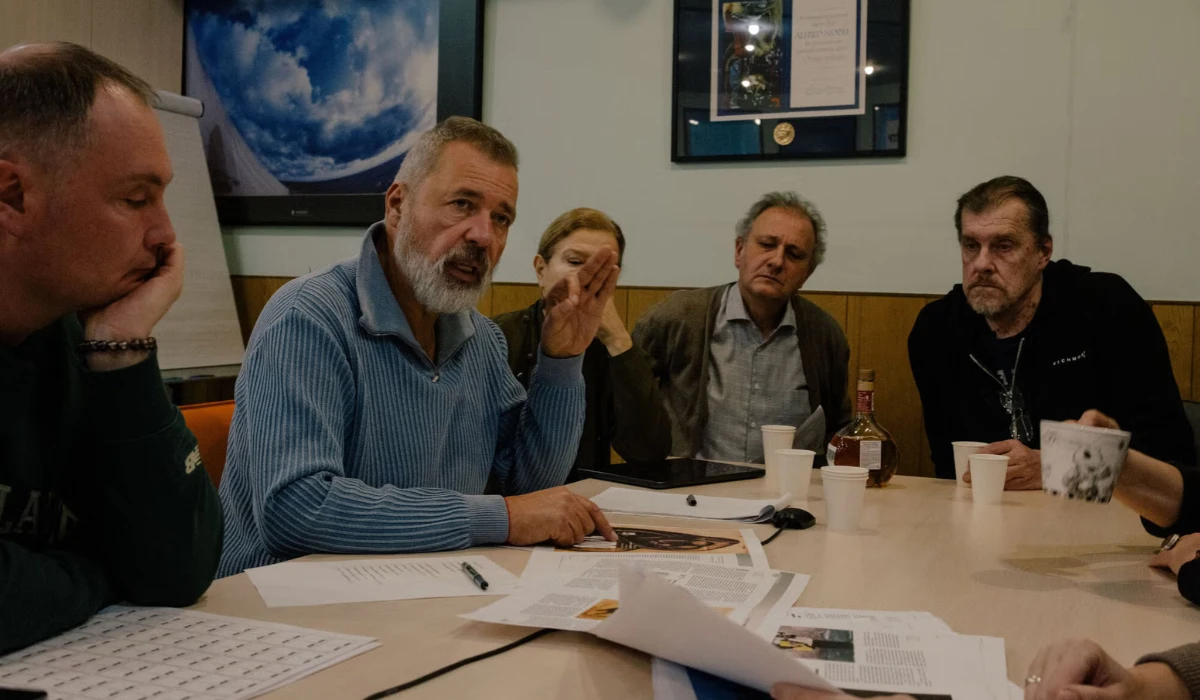
Addressing the shutdown, Nobel Peace Prize laureate and former editor-in-chief Dmitri A. Muratov outlined the sequential measures taken by authorities to cripple the organization. As reported by Anton Troianovski of The New York Times, Dmitri A. Muratov stated: “First they jailed an employee, then declared the newspaper a foreign agent, and then designated another 100 people as individuals affiliated with a foreign agent. Then they raided the editor in chief’s home, and we still kept working”.
Dmitri A. Muratov further explained how the state targeted the publication’s last remaining lifelines: “Then they kicked us out of our building and took away our means of existence. We no longer have a home or money. It wasn’t us suspending operations; it was the deliberate destruction of Novaya Gazeta as that segment of society advocating for peace against repression and hating dictatorship”.
How did banking restrictions and state security agencies orchestrate the closure?
As reported by Kate Tsurkan of the Kyiv Independent, the physical eviction from Potapovsky Lane was accompanied by an immediate operational block on the outlet’s financial processing systems. The commercial banks that previously processed online reader contributions—the newspaper’s sole remaining revenue stream—abruptly terminated service, citing sudden internal policy changes.
As reported by Meduza, Dmitri A. Muratov rejected claims by financial institutions that the termination was voluntary, directly linking the administrative block to Russian domestic intelligence. Dmitri A. Muratov stated that the banking restrictions were executed under “external rules, established by a repressive state apparatus, by FSB officers who have infiltrated every organization”.
The editorial staff’s statement emphasized that the destruction of the publication reflects broader societal subjugation in wartime Russia. As reported by Human Rights Watch, the Novaya Gazeta editorial board declared: “This is not just our own personal story. It’s the story of a country and a society that are being finished off in exactly the same way”.
The statement drew a direct comparison to historic political purges, cautioning against minimizing the severity of present-day state enforcement. As reported by Meduza, the staff wrote: “Stop saying that this isn’t Stalin’s 1937, and that the repression has some sort of ‘digital character.’ This is state repression. And people, not numbers, are dying in cells”. The text cited recent data from the banned human rights group Memorial, which documented that at least 69 political prisoners have died while held in Russian custody since February 2022.
How have international organizations and exiled journalists reacted to the news?
As reported by Agence France-Presse and published by France 24, the announcement provoked immediate responses from international human rights monitors and press freedom bodies. As reported by staff writers of The New York Times, Jørgen Watne Frydnes, Chairman of the Norwegian Nobel Committee, issued a statement expressing that the panel was “deeply concerned by the forced closure of Novaya Gazeta” and called upon Russian authorities to cease the “repression of independent media, journalists and civil society”.
Following the 2022 invasion of Ukraine, approximately 60 percent of Novaya Gazeta’s original reporting staff fled Russia to establish Novaya Gazeta Europe, an independent digital newsroom operating from European jurisdictions.
As reported by Meduza, Kirill Martynov, Editor-in-Chief of Novaya Gazeta Europe, reflected on the outlet’s legacy in a social media publication, stating: “For me, ‘Novaya’ was an experience of collectively inhabiting freedom in an unfree country. The less freedom remained in Russia, the more we sought it at home, on Potapovsky Lane, 3”.
Background of Novaya Gazeta’s Three Decades of Investigative Journalism
Founded in 1993 during the post-Soviet democratic transition, Novaya Gazeta established itself as Russia’s premier investigative newspaper. The outlet’s initial technological infrastructure was partially funded by former Soviet President Mikhail S. Gorbachev, who donated a portion of his 1990 Nobel Peace Prize prize money to purchase the newsroom’s first computers. Under the leadership of Dmitri A. Muratov, who assumed the role of editor-in-chief in 1995, the publication became internationally renowned for exposing state corruption, military abuses, human rights violations in Chechnya, and the operations of private military companies.
The newspaper paid an unprecedented toll for its independence, with six of its journalists and contributors murdered in connection with their reporting work. Among them was prominent investigative reporter Anna Politkovskaya, who was assassinated in her Moscow apartment building in October 2006. In 2021, Dmitri A. Muratov was awarded the Nobel Peace Prize alongside Philippine journalist Maria Ressa in recognition of their efforts to safeguard freedom of expression.
Following Russia’s full-scale invasion of Ukraine in March 2022, state regulator Roskomnadzor revoked Novaya Gazeta’s official print license after the paper published dual-language editions opposing the war. Despite the loss of its print registration, physical attacks against staff—including a 2022 chemical paint attack on Muratov—and the designation of the entire newsroom staff as “foreign agents” by the Ministry of Justice, journalists maintained digital publishing and small-circulation print releases until the eviction and financial blockade in October 2026 forced its absolute closure.
Press Freedom and Independent Russian Media
The total operational shutdown of Novaya Gazeta inside Russia marks the complete eradication of domestic, physically present independent news organizations within the country.
For Russian citizens remaining inside the country who rely on uncensored news reporting, the closure eliminates the final major newsroom capable of conducting on-the-ground investigations and verified reporting from within Moscow. The public will now be forced to rely entirely on state-controlled media broadcasts or turned toward exiled media outlets such as Novaya Gazeta Europe and Meduza, both of which face ongoing digital blockades, domain bans, and legal criminalization under Russian “undesirable organization” statutes.
For the international diplomatic community and human rights organizations, the shuttering of Novaya Gazeta signals an absolute transition toward a closed media environment in Russia. Legal analysts predict that Russian authorities will continue to expand “foreign agent” and “undesirable” designations to target individual independent journalists, freelancers, and readers who distribute uncensored reporting online. Consequently, the burden of documenting Russian political developments, human rights violations, and domestic dissent will fall entirely onto exiled media networks operating from foreign capitals without direct access to physical newsrooms inside the Russian Federation.