Key Points
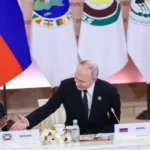
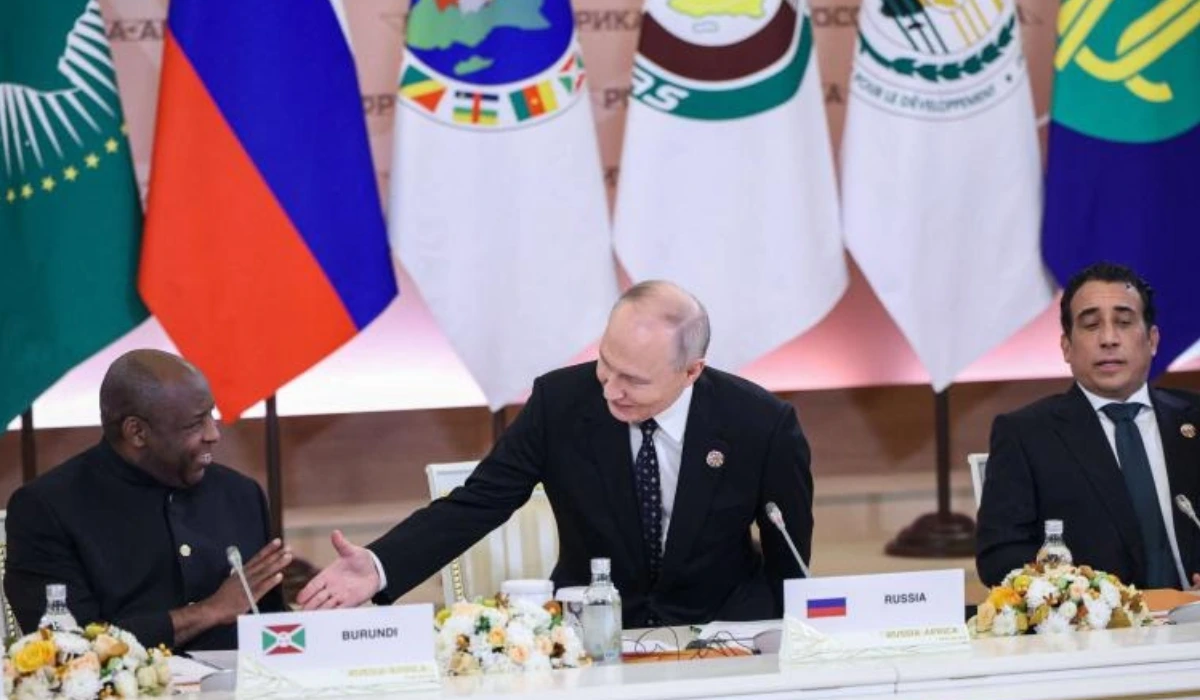
- Summit Gathering: President Vladimir Putin addressed African leaders and government delegations from 48 countries at the third Russia-Africa Summit in Moscow.
- Core Accusation: Putin accused the West of maintaining colonial ambitions, exploiting African natural resources, and driving nations into debt bondage through predatory financial terms.
- Bilateral Engagements: The two-day event features one-on-one talks between Putin and 22 individual African leaders, focusing on trade, security, arms deals, and grain supplies.
- Geopolitical Strategy: Wooing Global South partners serves as part of Moscow’s broader strategy to counterbalance intense Western diplomatic and economic pressure regarding the war in Ukraine.
- Economic Pledges: Putin stated that Russian businesses localize production and expand raw material processing locally rather than engaging in neo-colonial exploitation, while championing greater African influence in the IMF and World Bank.
- Agricultural and Educational Support: Russia reported supplying 13 million metric tonnes of agricultural products to Africa in the first nine months of the year and noted that approximately 40,000 African students are enrolled in Russian universities.
- Contrasting Western Allegations: Western governments regularly accuse Moscow of leveraging Africa’s colonial past and using Africa Corps paramilitary forces—such as in Mali—to squeeze out former European powers like France, claims that Moscow firmly rejects.
MOSCOW (Moscow News Daily) October 28, 2026 – Russian President Vladimir Putin used the platform of the third Russia-Africa Summit in Moscow to position Russia as a superior partner to the West, accusing traditional Western powers of employing neo-colonial tactics to exploit African resources and force nations into debt. Amid a gathering of delegations from 48 countries and 22 individual African leaders, Putin emphasized Moscow’s commitment to localized production, infrastructure development, and increased African representation within global financial institutions like the International Monetary Fund (IMF) and the World Bank, while Western critics simultaneously highlight Russia’s strategic push to counterbalance international isolation over its war in Ukraine.
- Key Points
- What did President Vladimir Putin say about the West and colonialism at the Moscow summit?
- How is Moscow utilizing the Russia-Africa Summit to counterbalance Western pressure?
- What economic, agricultural, and educational proposals did Russia present to African leaders?
- Background of the particular development
- How this development can affect African nations, Western foreign policy, and global trade dynamics
What did President Vladimir Putin say about the West and colonialism at the Moscow summit?
Addressing the opening of the third Russia-Africa Summit in Moscow, President Vladimir Putin framed Russia as a steadfast partner to the continent while launching a direct critique of Western nations. As reported by state media and international news agencies covering the two-day event, Putin asserted that Western powers are still attempting to exploit Africa’s vast natural resources and utilize debt to suppress long-term growth.
As reported by Reuters, Putin stated to the assembled delegates: “Africa is increasingly asserting itself as one of the key players in the global economy and politics. However, the emergence of a multipolar world is, of course, no easy task; it faces resistance from countries that are not prepared to accept this reality: those who are accustomed to thinking in terms of their colonial past and to enriching themselves fabulously.”
While Putin did not explicitly name specific countries during this portion of his remarks, he went on to elaborate on what he characterized as active attempts by Western governments to drive African nations back into debt bondage. He argued that these nations force much-needed financial resources onto developing economies under predatory terms that deliberately slow down sustainable growth.
How is Moscow utilizing the Russia-Africa Summit to counterbalance Western pressure?
The summit, which was first inaugurated in 2019, represents a core component of Moscow’s wider diplomatic and economic strategy. According to geopolitical analysts and news reporting from the summit, courting African leaders and other nations across the Global South serves to counterbalance the severe political, economic, and military pressure exerted by the West over Russia’s ongoing military campaign in Ukraine.
The high-profile event drew government delegations from 48 countries, featuring one-on-one bilateral discussions between President Vladimir Putin and 22 individual African leaders. These closed-door and plenary talks span a diverse agenda covering bilateral trade, regional security arrangements, major arms deals, and vital grain supplies.
At the same time, Western critics have consistently accused the Kremlin of trying to weaponize Africa’s historical grievances regarding its colonial past to advance Moscow’s geopolitical footprint. Analysts point out that Russian state companies are aggressively expanding commercial interests across mining and power generation, while state-backed media and cultural institutions broaden their informational footprint. Furthermore, Russian paramilitary personnel from the Africa Corps remain active in several regions, drawing intense scrutiny from Western capitals.
What economic, agricultural, and educational proposals did Russia present to African leaders?
Seeking to draw a sharp contrast with Western economic models, President Vladimir Putin emphasized that Russian enterprise operates on principles distinct from historical exploitation.
As reported by international news desks, Putin stated: “Our business does not engage in the predatory, neo-colonial exploitation of natural and human resources, but rather expands the processing of raw materials locally, thereby creating new jobs and generating tax revenue.”
To back these assertions, Putin outlined several concrete cooperation initiatives:
- Technology and Infrastructure: Russia expressed readiness to share advanced digital know-how and embark on joint transport and agricultural infrastructure projects.
- Global Financial Reform: Putin noted that Russia actively champions greater African voting power and influence within major international financial bodies, specifically the IMF and the World Bank.
- Agricultural Exports: Highlighting food security, Putin stated that Russia had delivered 13 million metric tonnes of agricultural products to Africa during the first nine months of the year alone, and declared Moscow’s readiness to expand grain and fertiliser supplies beyond the 40 African countries currently receiving them.
- Educational Exchanges: The Russian leadership highlighted that a record number of approximately 40,000 African students are currently pursuing higher education across Russian universities.
Despite these extensive pledges, Western governments and regional observers maintain that Russia’s primary objectives remain tied to securing strategic resource access and propping up friendly military regimes—such as the junta in Mali—thereby squeezing out traditional European influences like France, an assertion that Moscow consistently rejects.
Background of the particular development
The institutionalization of high-level diplomatic engagement between the Russian Federation and African states formalised significantly with the inaugural Russia-Africa Summit held in Sochi in 2019. Following disruptions caused by global shifts and geopolitical realignments, the framework evolved into a crucial diplomatic theater for Moscow, particularly following the escalation of the Russia-Ukraine conflict in 2022.
As Western nations implemented sweeping economic sanctions and isolated Moscow diplomatically, the Kremlin accelerated its Pivot to the Global South. By leveraging historical Soviet-era ties—when Moscow provided ideological, military, and educational support to African independence movements—contemporary Russian diplomacy has sought to revive partnerships across the continent. Simultaneously, the deployment of private military contractors, later reorganized under entities like the Africa Corps, filled security vacuums left by retreating Western and French forces in regions such as the Sahel, setting the stage for the expansive economic and political overtures showcased at the third summit in Moscow.
How this development can affect African nations, Western foreign policy, and global trade dynamics
The reinforced diplomatic and economic cooperation framework established at the Moscow summit carries distinct ramifications across multiple international stakeholders:
- For African Nations and Regional Governance: The influx of alternative trade partnerships, localized processing investments, and grain supplies offers African governments additional leverage in international negotiations. However, policy experts note that balancing engagements between Moscow, Beijing, and Western capitals requires careful diplomatic navigation to avoid becoming secondary battlegrounds for proxy competition, while ensuring that security agreements translate into genuine stability rather than internal conflict prolongation.
- For Western Foreign Policy and Influence: Moscow’s deepening footprint in Africa challenges traditional Western dominance in developmental finance, resource extraction, and security architecture. As Russian state entities and paramilitary networks consolidate their presence in strategic resource-rich zones, Western capitals face mounting pressure to reform international financial governance—such as IMF and World Bank voting shares—and overhaul their own diplomatic engagement strategies to prevent further erosion of influence in the Global South.
- For Global Grain and Commodity Markets: Expanded agricultural and fertilizer supply agreements between Russia and African states institutionalize alternative trade corridors outside Western maritime control. This shift impacts global commodity pricing structures and solidifies Moscow’s role as a primary food security guarantor for developing economies, thereby blunting the intended efficacy of unilateral Western trade restrictions.