Key Points
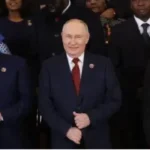
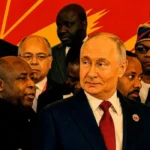
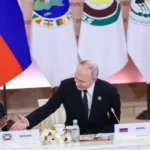
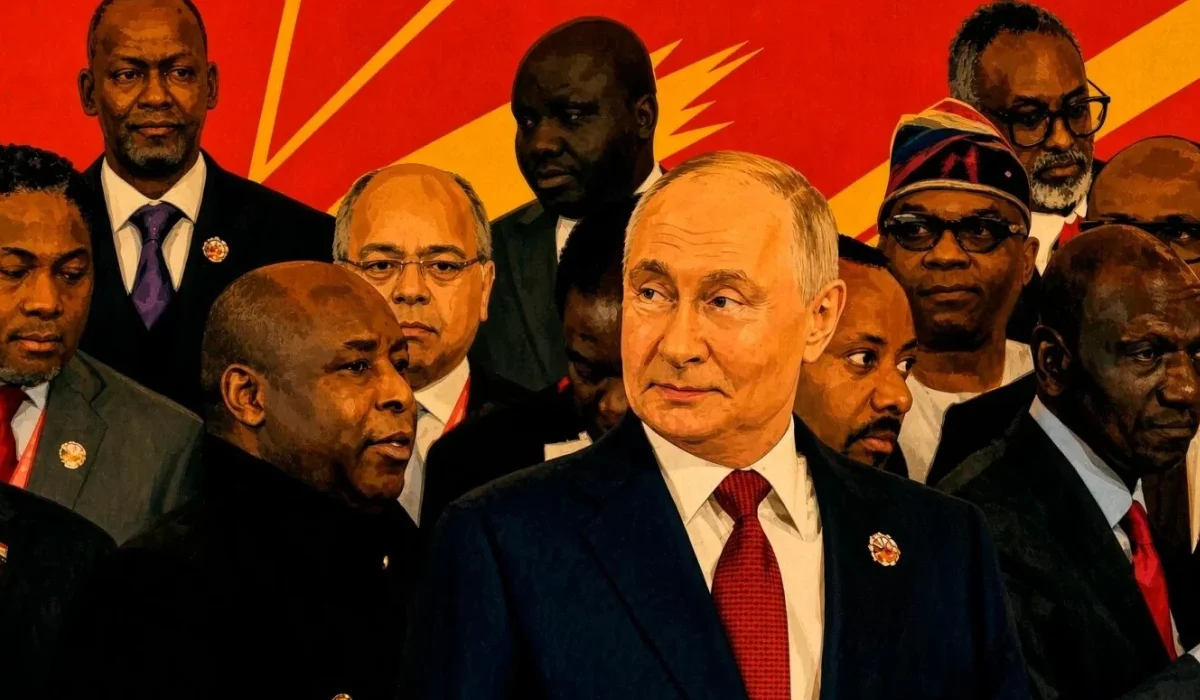
- Russia-Africa Summit Engagement: Russian President Vladimir Putin actively hosted visiting African heads of state, showcasing advanced technologies, participating in plenary sessions, and promoting a “multipolar world” aimed at countering Western influence.
- Key Organisers Involved: Top presidential aides, including Deputy Chief of Staff Maxim Oreshkin, were enlisted to organise the summit, highlighting the Kremlin’s focus on securing diplomatic partners amidst Western sanctions.
- Dismissal of Veteran Mayor: Nikita Gorelov, a former mobilized soldier appointed mayor of Sosnovka in Kirov Region in 2024, was officially removed from his position during a regional municipal consolidation process.
- Political Fallout and Resistance: Gorelov’s ousted leadership followed his public denunciations of administrative corruption and lack of funding, causing a conflict with Governor Alexander Sokolov and exposing flaws in the Kremlin’s policy on integrating war veterans into executive posts.
- Impact on Kremlin Apparatus: Political analysts note that Gorelov’s high-profile removal discredits personnel initiatives directed by Sergei Kiriyenko, providing political opponents with leverage within the presidential administration.
Moscow (Moscow News Daily) October 30, 2026 – Russian President Vladimir Putin has embarked on an intensive diplomatic courtship of visiting African leaders at the Russia-Africa summit in Moscow, while simultaneously, a political conflict in Kirov Region culminated in the dismissal of one of the country’s first rank-and-file war veterans appointed to an executive municipal role. As reported by Andrey Pertsev, journalist and Meduza Special Correspondent writing for Riddle, President Vladimir Putin personally escorted visiting heads of state through an exhibition of advanced Russian technologies, offered them ice cream, and led plenary sessions designed to position Russia as a core partner against Western “colonialism”. However, this foreign policy push contrasts sharply with domestic administrative friction, exemplified by the deliberate removal of former mobilized soldier Nikita Gorelov from his post as mayor of Sosnovka.
- Key Points
- Why Did the Dismissal of Mayor Nikita Gorelov Become a Federal Political Issue?
- How Are Kremlin Analysts and Political Advisors Responding to the Gorelov Case?
- What Impact Does the Sosnovka Case Have on Kremlin Personnel Initiatives?
- Background of the Particular Development After the News
- How This Development Can Affect Russian Municipal Officials, War Veterans, and Regional Bureaucracy
During the diplomatic summit, Putin framed the continent as a growing power centre on the global stage. As reported by Andrey Pertsev of Riddle, Putin stated that “Africa is increasingly asserting itself as one of the poles of the global economy and politics. The continent is experiencing a new awakening; its sovereignty is strengthening, and its influence and authority on the world stage are growing. Above all, Africans have an unyielding determination to defend their interests and to determine their own future and path of development”. Furthermore, Pertsev observed that Putin asserted Western nations are attempting to trap African countries in “debt bondage” while positioning Russia as an alternative partner unencumbered by colonial history.
Despite the high-level backing of officials like Deputy Chief of Staff Maxim Oreshkin, the economic reality of Russia-Africa relations presents significant challenges. As reported by Andrey Pertsev of Riddle, trade with the entire African continent accounts for merely 3.9% of Russia’s foreign trade volume and continues to decline. Pertsev noted that while Kremlin strategists aimed to demonstrate that Russia cannot be isolated economically, Putin’s intense engagement revealed the significant effort required to secure foreign partners, drawing comparisons among domestic observers to Soviet-era aid policies during periods of domestic economic constraint.
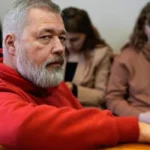
Concurrently, the domestic governance model faced a notable test in the Kirov Region. As reported by Andrey Pertsev of Riddle, Nikita Gorelov, who served on the front line without holding a senior officer rank before his appointment as mayor of Sosnovka in 2024, was stripped of his position under the official justification of municipal consolidation. Rather than co-opting Gorelov into the newly formed district administration, regional authorities under Governor Alexander Sokolov chose to exclude him entirely following public disputes regarding local budget deficits and accusations of municipal corruption.
Why Did the Dismissal of Mayor Nikita Gorelov Become a Federal Political Issue?
The removal of Nikita Gorelov from his post in Sosnovka, a town of approximately 8,000 residents, highlights systemic tensions within Russia’s domestic administrative framework. Gorelov represented a rare case of a non-officer, mobilized soldier assigned to an executive position controlling municipal utilities, local infrastructure, and budget management. Most returning combatants co-opted into public service have been assigned roles focused on youth outreach, civic liaison, or patriotic education.
Upon taking office, Gorelov encountered severe budgetary limitations resulting from centralized tax collection models, which leave small municipalities with minimal local revenue. Gorelov attributed these shortfalls to corruption among prior local officials and launched public criticisms against regional administrative structures. His engagement through open town-hall meetings and social media generated substantial popular support among local citizens, escalating the disagreement from a regional administrative matter into a federal controversy.
How Are Kremlin Analysts and Political Advisors Responding to the Gorelov Case?
Following the administrative fallout, political strategists aligned with the presidential administration issued public statements framing the case as an instructional lesson regarding governance requirements. As reported by Andrey Pertsev of Riddle, political consultant Yevgeny Minchenko stated in comments to Vedomosti that “it is not enough simply to have taken part in the special military operation to succeed in government,” adding that candidates require “the ability to negotiate, listen to others, build relationships, and understand how state institutions work in the first place”.
Simultaneously, state commentators sought to clarify Gorelov’s credentials regarding official state training initiatives. As reported by Andrey Pertsev of Riddle, Darya Kislicyna, an employee of the Kremlin-aligned think tank EISI and State Duma deputy from the New People party, alongside military blogger Alexander Sladkov, asserted that Gorelov had not completed full elite preparation courses such as the flagship Time of Heroes program. Although Gorelov completed a month-long professional development course, political managers have used his lack of full program completion to distinguish his case from official state personnel pipelines.
What Impact Does the Sosnovka Case Have on Kremlin Personnel Initiatives?
The controversy surrounding Gorelov’s tenure affects the broader policy agenda managed by the Kremlin’s political bloc, led by First Deputy Chief of Staff Sergei Kiriyenko. The administration has prioritized demonstrating the upward mobility of military personnel into civilian administrative roles.
However, observers note that the administrative framework remains resistant to incorporating rank-and-file outsiders into executive governance structures. While elite personnel and established officers are successfully transitioned into managed political roles, grassroots military figures who challenge regional bureaucracy face institutional resistance. The publicity surrounding Gorelov’s case provides rival political factions—including senior security figures and Duma leadership—with administrative arguments to criticize the implementation of personnel integration programs managed by Kiriyenko’s team.
Background of the Particular Development After the News
The dual developments of the Russia-Africa summit and the regional political controversy in Kirov occur against a backdrop of shifting diplomatic priorities and domestic administrative reforms. Following international sanctions and economic realignments post-2022, the Russian executive branch intensified efforts to expand diplomatic and commercial footprint across Africa, Latin America, and Asia. The Russia-Africa summit structure was established to formalize multilateral ties, with previous summits aiming to secure trade agreements, energy deals, and security partnerships. However, macro-economic trade metrics indicate that commercial exchange remains concentrated in specific sectors, with total trade accounting for less than 4% of Russia’s national total.
Domestically, Russia initiated widespread municipal consolidation reforms aimed at streamlining local governance. By abolishing first-tier rural and urban settlement councils and consolidating authority within centralized district administrations, regional governors gained direct control over municipal executive appointments. Concurrently, the federal government launched the Time of Heroes initiative and related executive education programs designed to transition military veterans into civil service roles. The case of Sosnovka represents an early structural collision between local municipal reform, grassroots veteran appointments, and centralized regional control.
How This Development Can Affect Russian Municipal Officials, War Veterans, and Regional Bureaucracy
The ongoing developments in Moscow and Kirov Region are likely to influence administrative practices, personnel selection, and regional governance models across several sectors:
1. For Returning War Veterans and Civil Service Applicants
- Strict Screening and Bureaucratic Filtering: Rank-and-file veterans seeking public office will face more rigorous screening processes. Executive appointments will likely be restricted to graduates of formal Kremlin-sanctioned programs like Time of Heroes, limiting direct appointments of non-elite veterans.
- Shift Toward Advisory and Public Relations Roles: Future veteran placements are expected to be steered primarily toward youth education, patriotic organizations, and military liaison boards, rather than administrative posts controlling municipal budgets or housing assets.
2. For Regional Governors and Local Municipalities
- Accelerated Centralization: Regional governors will continue using municipal consolidation frameworks to remove insubordinate local officials and integrate settlement-level administration directly under regional oversight.
- Tightened Budgetary Discipline: Local administrative figures who publicly contest federal or regional tax distribution models are likely to encounter swift political exclusion, reinforcing strict compliance within the regional administrative hierarchy.
3. For Kremlin Political Managers and Institutional Factions
- Refinement of Personnel Metrics: Internal political administrators will likely alter how participant statistics for veteran education programs are reported, drawing clearer distinctions between short-term training courses and long-term executive tracks to avoid public relations vulnerabilities.
- Inter-Factional Friction: Internal political opponents of the Kremlin’s current political bloc may utilize administrative oversights in veteran integration to push for alternative management structures in upcoming regional and federal election cycles.