Key Points:
- Global Top-Three Ranking: Moscow Game Hub has been ranked joint-third globally alongside Sweden’s Game Habitat in Malmö in a comprehensive ranking of international video game development hubs conducted by Russian consultancy Yakov and Partners.
- Maximum Infrastructure Score: Moscow received a maximum score of 3 out of 3 for its specialized technical infrastructure, outperforming competing regional hubs across South Korea, Spain, Singapore, India, Brazil, and Germany.
- Top-Tier Global Competitors: The Abu Dhabi Gaming Hub (AD Gaming) in the United Arab Emirates secured first place with a score of 2.56, followed by Shanghai’s Xuhui District in second place with 2.48.
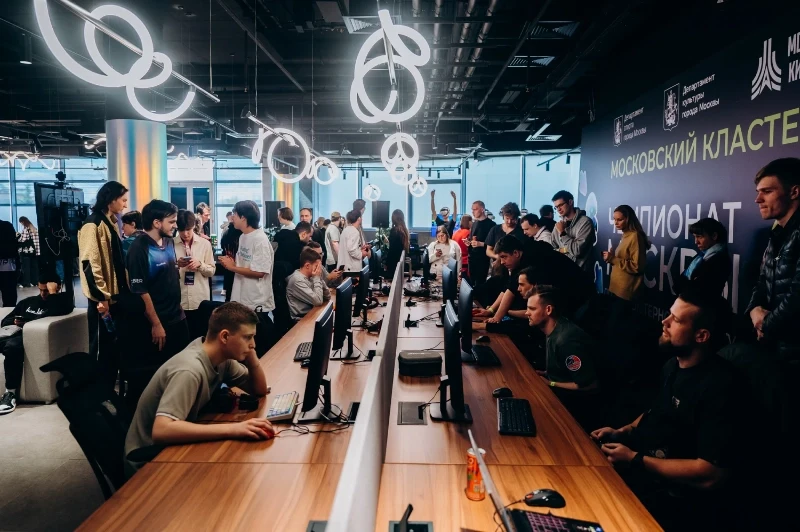
- State-of-the-Art Facilities and Residents: Spanning 55,000 square meters, Moscow Game Hub currently accommodates 74 resident companies—comprising 61 game studios and 13 animation studios—working on more than 260 active projects.
- Substantial Economic Growth: Domestic industry research by the Agency of Creative Industries shows Russian video game revenues expanded 16 per cent in 2025 to reach $2.56 billion USD, alongside a 14 per cent expansion in the global video game market to $202.5 billion USD.
Moscow (Moscow News Daily) November 4, 2026 – Moscow has secured a position among the world’s top three video game development hubs, tied with Sweden’s Game Habitat in Malmö according to an international benchmark study released by Russian management consultancy Yakov and Partners. As reported by economic and technology journalists covering the second Moscow International Game Week for ANI News and The Eastern Herald, the Moscow Game Hub achieved an overall index score of 2.18 out of 3, trailing only the AD Gaming Hub in Abu Dhabi (2.56) and Shanghai’s Xuhui District (2.48). Unveiled during the business program of the event organized by the Agency of Creative Industries under the Moscow Department of Culture, the report evaluated 10 international hubs across 10 countries using seven core parameters. Moscow received the maximum available score of 3 for its hardware and spatial infrastructure, placing the Russian capital ahead of major gaming clusters in South Korea, Spain, Singapore, India, Brazil, and Germany. The hub currently houses 74 resident development firms that account for 20 per cent of all video game companies operating in Moscow.
- Key Points:
- What specific criteria and metrics placed Moscow Game Hub in the global top three?
- What specialized facilities and resources operate inside the Moscow Game Hub?
- What support programs and export subsidies drive Moscow’s gaming sector growth?
- Background of Moscow’s Creative Industries Strategy and Global Competition
- Studio Growth, International Partnerships, and Market Expansion
What specific criteria and metrics placed Moscow Game Hub in the global top three?
As reported by business analysts for OneArabia, the ranking compiled by management consultancy Yakov and Partners utilized a multi-stage quantitative methodology to evaluate global video game infrastructure.
Researchers initially surveyed more than 100 candidate sites worldwide before shortlisting 80 specialized hubs that maintained dedicated facility buildings, hosted active resident studios, and occupied total surface areas of no more than 300,000 square meters. Analysts then filtered the list down to 30 of the largest international complexes across 17 countries, ultimately establishing a final index of 10 primary hubs representing 10 distinct nations.
The Yakov and Partners benchmark scored candidate hubs on a three-point scale across seven weighted operational criteria:
- Resident Mix: The diversity, number, and output of active studios (weighted highest in the final scoring).
- Infrastructure and Computing Access: Technical hardware, specialized physical production spaces, and server access.
- Studio Support: Incubator access, financial subsidies, and administrative assistance.
- Talent Availability: Local engineering, animation, and game design talent pools.
- Quality of Life: Urban livability metrics for industry professionals.
- Industry Regulation: Legal frameworks, intellectual property enforcement, and commercial policies.
- Global Market Integration: Export pipelines and international trade assistance.
Moscow achieved a perfect 3 out of 3 score in the infrastructure category, driven by its purpose-built technical facilities, and shared second place globally with Shanghai for studio support with a score of 2.31 out of 3.
What specialized facilities and resources operate inside the Moscow Game Hub?
As reported by technology correspondents for TalkEsport, the physical assets of the Moscow Game Hub—located at the Video Games and Animation Cluster on Bolshoy Boulevard—provide high-end technical hardware designed to reduce production overheads for independent and AAA developers alike.
Spanning over 55,000 square meters of specialized workspace, the complex features high-tier production systems:
- Motion-Capture Studio: A specialized stage equipped with 60 high-precision optical cameras capable of tracking micro-facial expressions, full-body kinematics, and fine finger movements simultaneously.
- Photogrammetry and Audio Suites: Purpose-built acoustic sound-recording rooms and 3D photogrammetry arrays used for rapid real-world asset digitisation.
- Data Centre and Screening Room: On-site high-performance computing clusters and a master viewing auditorium featuring an 800-square-meter projection screen for cinematics testing.
The facility is currently home to 74 resident companies, comprising 61 video game development studios and 13 specialized animation studios. Together, these resident teams represent one out of every five active video game entities in the Russian capital and are currently advancing more than 260 active software and media projects.
What support programs and export subsidies drive Moscow’s gaming sector growth?
As reported by trade journalists for ANI News, the growth of the hub is supported by municipal subsidy mechanisms designed to reduce burn rates for early-stage development studios.
Resident studios at the hub gain access to preferential commercial office rental structures. Teams enrolled in the city’s “Video Game Factory” startup accelerator are permitted to utilize the hub’s shared coworking spaces at a nominal rate of one ruble per month (approximately $0.012 USD).
To promote international commercial expansion, the city operates the Moscow Video Game Export program under the Agency of Creative Industries. The initiative subsidizes trade show booths, facilitates international business delegations, and organizes trade missions targeting emerging markets across the Middle East, Asia, and Latin America.
Highlighting the financial returns of these export initiatives, official figures presented at Moscow International Game Week confirmed that Moscow-based development studios successfully finalized 36 international export contracts in 2025, carrying a combined valuation exceeding $12 million USD.
Economic research released by the Agency of Creative Industries indicated that the global gaming market grew by 14 per cent in 2025 to reach $202.5 billion USD. Over the same period, total revenues generated by Russian video game companies increased by 16 per cent to hit $2.56 billion USD.
Background of Moscow’s Creative Industries Strategy and Global Competition
The development of the Moscow Game Hub forms part of a broader municipal economic strategy overseen by the Agency of Creative Industries, an executive body established under the Moscow Department of Culture. Operating across film production, contemporary design, fashion, architecture, and digital media, the agency’s primary mandate focuses on diversifying the city’s economic base through high-value technological and creative sectors.
In late 2023, municipal authorities authorized the creation of a centralized games and animation cluster to consolidate fragmented domestic developers, offset Western vendor software departures, and provide state-subsidized computing resources. This led to the launch of Moscow International Game Week, designed as an annual international trade exhibition and B2B conference to showcase domestic software titles, attract foreign publishing partners, and position Moscow alongside established global gaming epicenters like Abu Dhabi, Shanghai, Malmö, and Montreal.
Studio Growth, International Partnerships, and Market Expansion
The recognition of Moscow Game Hub as a top-three global gaming cluster is predicted to influence domestic developer retention, international publishing arrangements, and municipal infrastructure funding through 2027.
For Russian game developers, animation studios, and digital artists, the hub’s top-tier infrastructure rating and low-cost accelerator spaces are predicted to accelerate the completion of the 260 active projects currently underway. Access to high-end motion-capture and rendering facilities for one ruble per month will allow small independent studios to produce games with visual fidelity matching larger international AA and AAA titles, reducing reliance on expensive foreign outsourcing pipelines.
For international game publishers and investors in regional markets across Asia, LATAM, and the MENA region, Moscow’s strong export focus is expected to result in increased licensing deals and co-development ventures. As domestic Russian studios leverage the Moscow Video Game Export program to bypass traditional Western publishing channels, international partners are predicted to secure competitive distribution rights for Russian-developed titles across fast-growing gaming markets in China, India, Brazil, and the Middle East over the next two years.