Key Points:
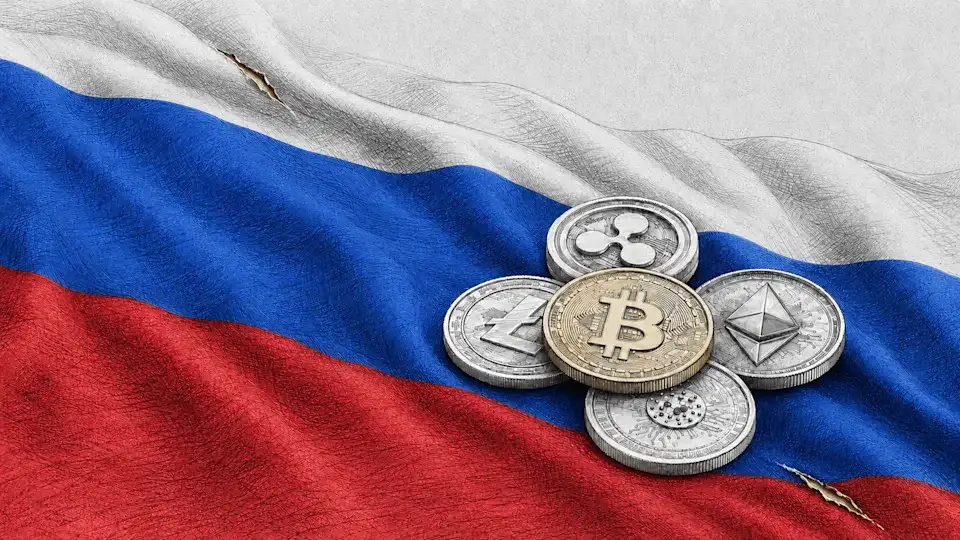
- First Organised Digital Currency Market: Moscow Exchange (MOEX) has detailed the operational framework for Russia’s inaugural official digital currency trading venue, scheduled to launch on 1 December 2026.
- Central Clearing via NCC: Trading in Bitcoin (BTC), Ether (ETH), and Tether (USDT) will route through MOEX’s clearing arm, the National Clearing Centre (NCC), utilizing the venue’s existing stock market engine.
- Settlement and Liquidity Instruments: Market participants will have access to same-day (TOD) and next-day (TOM) settlement terms, alongside liquidity swaps.
- Retail Access Restrictions: Under domestic legal limits, non-qualified investors must pass mandatory qualification testing and are capped at purchasing 300,000 rubles per year through a single broker.
- Parallel Banking Launches: Commercial banking giants Sberbank and VTB are preparing competing and complementary digital currency platforms under Russia’s updated regulatory regime.
Moscow (Moscow News Daily) November 4, 2026 – The Moscow Exchange (MOEX) has outlined the technical, clearing, and regulatory architecture for its planned cryptocurrency marketplace, confirming that trades in Bitcoin, Ether, and Tether will be processed through its central clearing house when the venue opens on 1 December 2026. As reported by reporter Helene Braun of Unchained Crypto alongside filings covered by Interfax and Cointelegraph, the exchange confirmed on 2 November 2026 that the venue will represent Russia’s first organized market for digital currencies. Operating under Federal Law No. 282-FZ, “On Digital Currencies and Digital Rights,” the platform will allow market participants to execute spot trades with same-day (TOD) and next-day (TOM) settlement, as well as deploy swaps for liquidity management. By routing trades through the National Clearing Centre (NCC), MOEX enables existing institutional brokers to access digital assets via their current clearing setups. However, retail participation will remain tightly capped, and industry analysts hold mixed expectations regarding overall market volume on the sanctioned exchange.
- Key Points:
- How will cryptocurrency clearing and settlement operate on the Moscow Exchange?
- Who is permitted to buy digital assets under Russian regulatory law?
- What is the road to launch, and how are major Russian banks participating?
- What do industry analysts predict regarding market liquidity and sanctions impact?
- Background of Russian Crypto Regulation and Sanctions Dynamics
- Institutional Adoption, Cross-Border Payments, and Retail Traders
How will cryptocurrency clearing and settlement operate on the Moscow Exchange?
As reported by reporter Helene Braun of Unchained Crypto, MOEX has structured its digital asset trading mechanism to directly mirror the operational workflow of its equities division.
According to official releases issued by the exchange, all transactions in Bitcoin (BTC), Ether (ETH), and Tether (USDT) will be executed on the core technology stack that powers MOEX’s stock market. The deals will be fully integrated into the unified clearing framework managed by the National Clearing Centre (NCC).
Key operational specifications of the platform include:
- Settlement Schedules: Clients will be permitted to trade using same-day (TOD) and next-day (TOM) settlement windows starting from the initial launch date.
- Liquidity Management: The venue will support swap transactions, allowing institutional desks to manage multi-asset cash flows and asset collateral.
- Trading Hours: The operating schedule will run parallel to MOEX’s standard equities market hours, opening at 6:50 a.m. and closing at 11:50 p.m. Moscow time.
- Order Execution Modes: Transactions will be supported across both addressable (bilateral) and addressless (anonymous order book) trading modes.
- Custodial Operations: Partner digital depositories will handle the custody of underlying digital assets while MOEX processes central clearing.
The exchange stated that the 1 December opening will launch with initial pilot transactions, with brokers and institutional participants connected step by step as technical readiness is achieved.
Who is permitted to buy digital assets under Russian regulatory law?
As reported by journalists for Finance Magnates, retail and institutional access on MOEX will be strictly segmented according to investor classification under domestic legal frameworks.
The legislative foundation for the market relies on Federal Law No. 282-FZ, “On Digital Currencies and Digital Rights,” whose primary framework took effect on 1 September 2026, with further regulatory provisions phasing in through 2027.
Under current Russian statutory rules:
- Qualified Investors: Institutional entities and accredited high-net-worth individuals who meet specific asset thresholds will be permitted to trade all listed cryptocurrencies without statutory purchasing caps.
- Non-Qualified (Retail) Investors: Access for general retail clients remains heavily constrained. Non-qualified investors must successfully pass a standardized financial knowledge test and are subject to an annual purchase ceiling of 300,000 rubles (approximately $3,700 USD) per broker.
MOEX executives confirmed that while the opening catalog is restricted to BTC, ETH, and USDT, the venue expects to add further digital assets and tokenized instruments—both domestic and international—as legal frameworks expand.
What is the road to launch, and how are major Russian banks participating?
As reported by news services for Interfax, preparations for the 1 December launch have been progressing across Russia’s financial sector since early autumn.
Speaking to press representatives on 8 October 2026, Boris Blokhin, Senior Managing Director for Sales and Business Development at MOEX, detailed the testing phase:
“We are actively testing. We started a week ago.”
Blokhin noted that no additional special permits or licenses were required for MOEX to introduce cryptocurrency trading, as the exchange’s legal scope falls under the newly enacted digital asset legislation.
The exchange’s launch coincides with major domestic banking institutions entering the crypto space:
- Sberbank: Following inclusion on the Bank of Russia’s official crypto registers in October, Sberbank confirmed on 5 October that its initial suite of cryptocurrency offerings is scheduled for release on 1 December 2026, subject to final central bank approvals.
- VTB: Commercial lender VTB announced plans to introduce digital currency trading within its “VTB My Investments” mobile application during November, preceding the launch of its own proprietary trading exchange in December.
What do industry analysts predict regarding market liquidity and sanctions impact?
As reported by crypto editor Olumide Adeniji of Cointelegraph, industry experts hold contrasting views regarding the potential volume and international impact of MOEX’s new venue.
A primary operational hurdle facing the market is international financial isolation. Both the Moscow Exchange and its clearing arm, the National Clearing Centre (NCC), have been under primary sanctions imposed by the United States Office of Foreign Assets Control (OFAC) and the United Kingdom Treasury since June 2024.
Expressing skepticism over prospective market adoption, Sergey Mendeleev, founder of Russian cross-border payments platform Exved, stated:
“Neither the global nor the local market will notice anything at all.”
Mendeleev questioned the appetite of international or domestic traders to interface with a sanctioned clearing entity, comparing MOEX’s proposed model to precious metals accounts at state-owned banks, where clients trade balance credits rather than taking physical custody. He further warned that retail and institutional participants could face “outrageous spreads” between buying and selling quotes due to constrained market-making capacity.
Conversely, proponents note that MOEX’s existing perpetual crypto futures products—introduced earlier in 2026—have drawn over 72,000 qualified investors and generated more than 600 billion rubles (approximately $7.4 billion USD) in cumulative turnover, indicating established domestic demand for exchange-traded digital assets.
Background of Russian Crypto Regulation and Sanctions Dynamics
The formal integration of cryptocurrency trading into Russia’s primary stock exchange follows a multi-year policy shift by Russian authorities. Historically, the Bank of Russia maintained a rigid stance against digital currencies, advocating for total bans on crypto mining, circulation, and trading within domestic borders. However, mounting geopolitical friction, Western banking sanctions, and restrictions on SWIFT access led Russian lawmakers to re-evaluate digital assets as potential vehicles for international trade settlement and domestic wealth preservation.
Legislative momentum accelerated in mid-2024 with the passage of trial regulatory sandbox laws, culminating in Federal Law No. 282-FZ. The law established legal definitions for digital rights, authorized regulated exchanges to facilitate crypto transactions under central bank oversight, and legalized industrial crypto mining under formal registration requirements. MOEX’s deployment of BTC, ETH, and USDT trading through the NCC represents the operational realization of this framework, shifting digital asset activity from unregulated over-the-counter (OTC) desks into state-monitored clearing infrastructure.
Institutional Adoption, Cross-Border Payments, and Retail Traders
The 1 December launch of cryptocurrency trading on the Moscow Exchange is predicted to generate distinct outcomes for domestic financial institutions, retail investors, and cross-border trade operators through late 2026 and 2027.
For Russian institutional investors and commercial brokerages, the integration of crypto assets into the National Clearing Centre (NCC) is predicted to streamline balance sheet allocation. Asset managers and corporate treasuries will be able to manage digital assets alongside traditional equities and bonds using their existing custody connections, eliminating counterparty risk associated with unregulated offshore exchanges. However, lingering international sanctions mean liquidity will remain largely domestic, restricting international institutional capital from participating.
For retail investors in Russia, the mandatory 300,000-ruble annual cap and qualification testing are predicted to suppress mass-market volume on MOEX. While the exchange offers a safer, regulated environment for novice traders, high spreads and strict annual limits will likely drive high-volume retail traders to continue using peer-to-peer (P2P) platforms and international decentralised exchanges (DEXs).
For cross-border trade firms, the availability of USDT trading settled via same-day and next-day terms on a centralized exchange is predicted to provide an official mechanism for international commercial settlements. If MOEX successfully links its clearing infrastructure with commercial bank offerings from Sberbank and VTB, Russian import-export businesses may increasingly utilize exchange-cleared stablecoins to bypass traditional foreign exchange bottlenecks.