Key Points:
- What do the global rankings reveal about Moscow’s position in the gaming industry?
- What infrastructure and technological facilities power the Moscow Game Hub?
- How extensive is the resident studio ecosystem within the Moscow Game Hub?
- What financial incentives and export support programs drive studio growth?
- Background of Moscow International Game Week and the Agency of Creative Industries
- Game Developers, Investors, and the Global Video Game Industry
- Global Ranking Podium: Moscow has been ranked among the top three global video game development hubs, finishing behind only Abu Dhabi’s AD Gaming Hub and Shanghai’s Xuhui District.
- Leading International Competitors: Moscow outperformed prominent technology and gaming hubs in South Korea, Spain, Singapore, India, Brazil, and Germany.
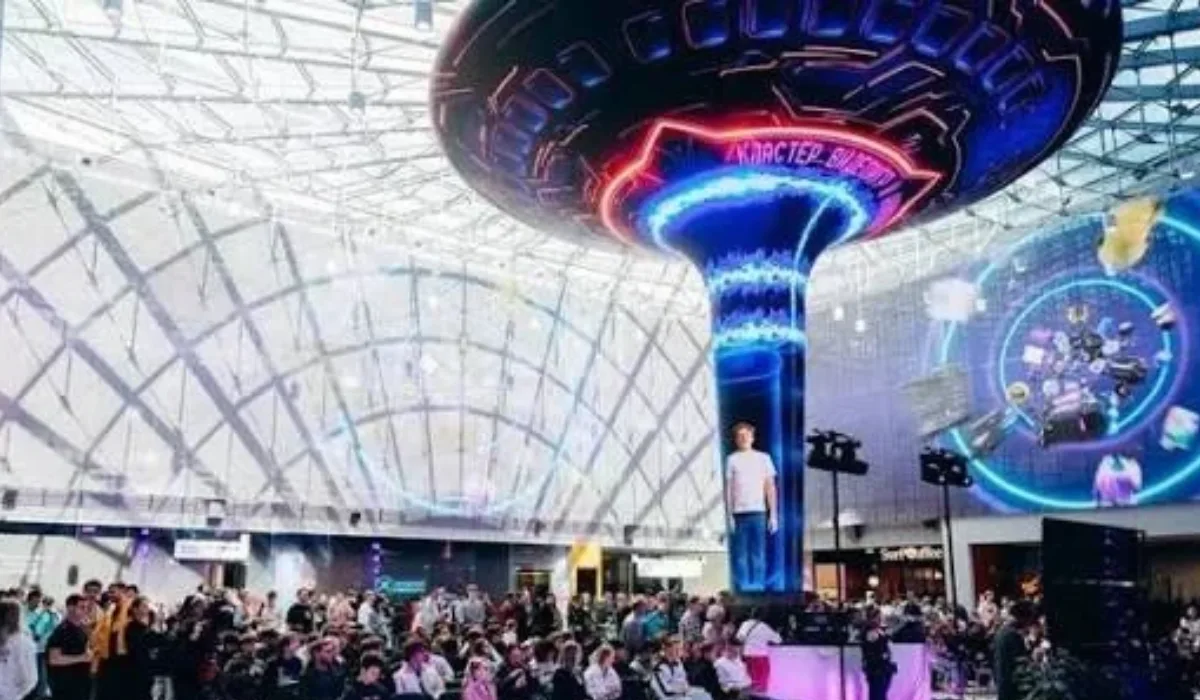
- Advanced Technological Infrastructure: The 55,000-square-meter Moscow Game Hub features state-of-the-art facilities, including a 60-camera facial and finger motion-capture studio, photogrammetry studios, a massive 800-square-meter viewing screen, and an integrated data center.
- Robust Resident Ecosystem: The hub houses 74 resident companies—61 game studios and 13 animation studios—which account for 20% of all video game firms in Moscow, with over 260 active development projects underway.
- Significant Financial Growth and Support: Moscow tied with Shanghai for second place in studio support with a score of 2.31 out of 3, offering coworking space for as low as one ruble ($0.012 USD) per month. Russian gaming revenues grew by 16% in 2025 to $2.56 billion USD, alongside 36 export contracts worth over $12 million USD.
Moscow (Moscow News Daily) October 31, 2026 – Moscow has established itself as one of the world’s leading epicentres for video game creation, securing a place among the global top three video game development hubs. According to an extensive international ranking presented on Saturday, 31 October 2026, during the second Moscow International Game Week, the Russian capital outperformed major technology centres in South Korea, Spain, Singapore, India, Brazil, and Germany. Evaluated across seven comprehensive structural criteria by consulting firm Yakov and Partners, Moscow was surpassed globally only by the AD Gaming Hub in Abu Dhabi and Shanghai’s Xuhui District.
What do the global rankings reveal about Moscow’s position in the gaming industry?
As reported by business and technology correspondents for Asian News International (ANI), the comparative industry study evaluated top gaming hubs across ten selected countries. In the final global index, Abu Dhabi’s AD Gaming Hub captured the top ranking with an overall benchmark score of 2.56, followed closely by Shanghai’s Xuhui District at 2.48. Moscow claimed the third spot on the global podium, sharing the third-place tier with Sweden’s Game Habitat in Malmö.
As reported by ANI, the index was prepared by consulting firm Yakov and Partners, which assessed locations using seven weighted criteria: resident mix, infrastructure and access to computing capacity, studio support, talent availability, quality of life, and industry regulation. Analysts began their research by sifting through more than 100 potential sites, eventually shortlisting 80 hubs that featured dedicated physical infrastructure and resident studios under 300,000 square meters. The list was narrowed to 30 of the world’s largest facilities across 17 countries before finalising the 10-country comparative report.
What infrastructure and technological facilities power the Moscow Game Hub?
As reported by tech reporters for Forbes Middle East, the physical scale and specialized facilities of the Moscow Game Hub played a decisive role in its high infrastructure assessment. Spanning a total floor area of 55,000 square meters, the hub integrates specialized hardware designed for high-end game production.
According to technical specifications released during Moscow International Game Week, the facility features:
- A 60-camera motion-capture (mocap) studio capable of precisely tracking subtle facial expressions and complex finger movements.
- Dedicated photogrammetry and high-fidelity sound-recording studios.
- An immersive viewing room featuring an ultra-large projection screen measuring nearly 800 square meters.
- On-site high-performance computing capacity supported by a dedicated data center.
How extensive is the resident studio ecosystem within the Moscow Game Hub?
As reported by industry reporters for Business Standard, the resident mix carried the heaviest statistical weight in the benchmarking methodology. Moscow Game Hub currently serves as the operational base for 74 resident companies, comprising 61 video game development studios and 13 animation studios.
As reported by ANI, these resident enterprises account for one in every five video game companies operating across the greater Moscow metropolitan area. Together, the resident studios are actively developing more than 260 distinct gaming and interactive projects. The concentration of talent has established the facility as a central engine for domestic game creation and cross-media animation initiatives.
What financial incentives and export support programs drive studio growth?
As reported by Forbes Middle East, Moscow achieved a score of 2.31 out of 3 for studio support, sharing second place globally with Shanghai in that specific category. The city’s support model combines subsidized real estate with structured international market access programs.
According to details provided by the Agency of Creative Industries, participants enrolled in the Video Game Factory accelerator program receive access to the hub’s modern coworking spaces for a nominal fee of just one ruble per month (approximately $0.012 USD). Furthermore, studios benefit from the commercial Moscow Video Game Export program, which funds trade show participation and international business missions. As reported by ANI, this export initiative enabled Moscow-based studios to sign 36 international contracts valued at over $12 million USD in 2025 alone.
The local sector’s expansion coincides with strong macroeconomic growth. Research conducted by the Agency of Creative Industries revealed that the global video game market expanded by 14% in 2025 to reach a record $202.5 billion USD. Over the same period, total revenues generated by Russian video game companies surged by 16%, reaching $2.56 billion USD.
Background of Moscow International Game Week and the Agency of Creative Industries
The second Moscow International Game Week, held from 29 October to 1 November 2026, serves as a primary international platform for showcasing Russian interactive entertainment, digital graphics, and animation capabilities. Organized by the Agency of Creative Industries under the auspices of the Moscow Department of Culture, the event brings together international developers, publishers, investors, and esports organizations. The 2026 edition features international business tracks alongside major public events, such as the LAN finals of the Moscow Cyber Games 2026 Counter-Strike 2 tournament hosted at the Moscow Game Hub.
The Agency of Creative Industries functions as the specialized municipal authority responsible for cultivating Moscow’s creative economy. Its portfolio spans film production, fashion, industrial design, contemporary art, book publishing, and video game development. By funding state-of-the-art technical hubs, offering tax relief, and sponsoring overseas trade delegations, the agency aims to establish Moscow as an internationally competitive creative capital and a bridge for technological exchange with emerging markets across Asia, Latin America, and the Middle East.
Game Developers, Investors, and the Global Video Game Industry
Moscow’s recognition as a top-three global video game hub is expected to significantly alter development trends, investment flows, and international publishing partnerships.
For Russian game developers and studio founders, the concentration of physical infrastructure—particularly accessible motion-capture and photogrammetry studios—dramatically lowers the capital expenditure required to produce high-end AAA and AA video game titles. The combination of near-zero coworking costs for accelerator participants and municipal export subsidies will likely accelerate studio formation, allowing independent developers to scale their projects faster and transition from prototype stages to full commercial releases.
For international publishers, investors, and technology partners across the MENA region, Asia, and Latin America, Moscow’s elevated global standing provides a clear structural framework for commercial collaboration. As global gaming markets continue to expand toward a projected $200+ billion USD annual valuation, international distributors are expected to increasingly tap into Moscow-developed intellectual property and specialized technical outsourcing services. However, the long-term trajectory of these international ventures will depend on the continued availability of municipal export grants, smooth cross-border financial channels, and sustained talent retention within the domestic technology sector.