Key Points:
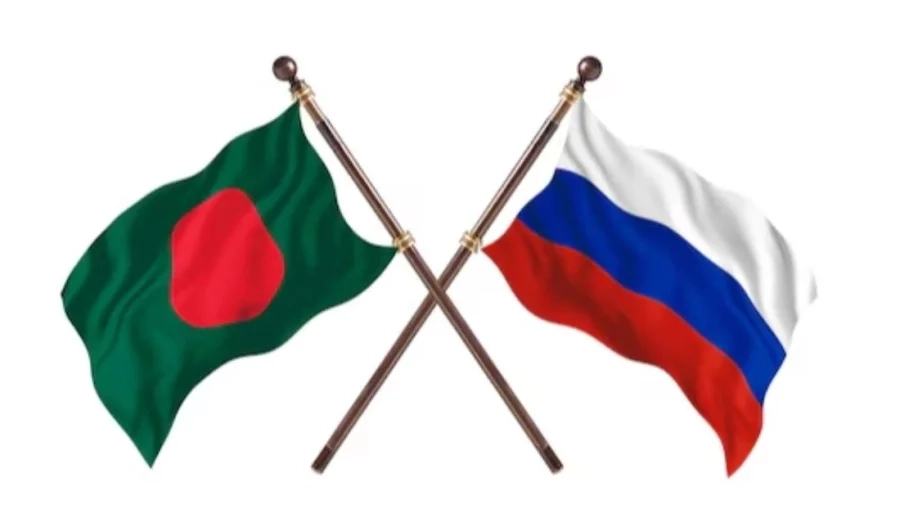
- Fifth Plenary Session Scheduled: Bangladesh and the Russian Federation will hold the fifth meeting of their Intergovernmental Commission (IGC) on Trade, Economic, Scientific and Technical Cooperation in Dhaka on 5–6 November 2026.
- High-Level Bilateral Delegation: The Russian delegation will be led by Ilya Shestakov, Head of the Federal Agency for Fisheries and Chairperson of the Russian part of the commission.
- Broad Sectoral Agenda: Official talks will encompass cooperation across trade, financial and banking sectors, energy, education, information and communication technology (ICT), and agriculture.
- Side Business Consultations: The newly established Russia-Bangladesh Business Council will hold parallel consultations with the Federation of Bangladesh Chambers of Commerce and Industry (FBCCI).
- First In-Person Meeting Since 2023: This marks the first physical gathering of the IGC since its March 2023 virtual session, providing a platform to engage directly with the government elected in February 2026.
Moscow (Moscow News Daily) November 3, 2026 – Bangladesh and the Russian Federation are set to host the fifth meeting of the Intergovernmental Commission (IGC) on Trade, Economic, Scientific and Technical Cooperation in Dhaka on 5–6 November 2026. As reported by diplomatic correspondents for the United News of Bangladesh (UNB), the two-day high-level plenary will gather senior government ministers, state departmental directors, and business leaders to negotiate bilateral agreements spanning trade, banking mechanisms, energy infrastructure, ICT, and higher education. The Russian Embassy in Dhaka confirmed on Tuesday that the Russian delegation will be headed by Ilya Shestakov, Head of the Federal Agency for Fisheries and Chairperson of the Russian side of the commission. The in-person session represents the first physical convening of the body since March 2023, offering a structured framework to establish constructive dialogue with the Bangladeshi administration elected in February 2026 and to elevate commercial engagement between the two nations.
- Key Points:
- What is the official agenda for the 5th Bangladesh-Russia Intergovernmental Commission session?
- How will business leaders engage on the sidelines of the Dhaka summit?
- What is the significance of Ilya Shestakov leading the Russian delegation?
- Background of the Russia-Bangladesh Intergovernmental Commission
- Bilateral Trade, Currency Settlements, and Regional Energy Planning
What is the official agenda for the 5th Bangladesh-Russia Intergovernmental Commission session?
As reported by diplomatic affairs reporter Porimol Palma of The Daily Star, the fifth session of the Intergovernmental Commission aims to address long-standing economic bottlenecks and explore new trade corridors between Dhaka and Moscow.
Delegates from both nations are scheduled to hold discussions covering the complete scope of bilateral relations, with specific focus areas including:
- Trade and Commercial Relations: Diversifying export portfolios beyond traditional ready-made garments (RMG) and exploring new agricultural trade agreements.
- Banking and Financial Channels: Addressing cross-border settlement mechanisms to facilitate seamless bilateral transactions despite ongoing international financial sanctions.
- Energy and Infrastructure: Reviewing progress on major joint infrastructure initiatives, including the Rooppur Nuclear Power Plant project, and discussing future fuel supply agreements.
- Education, Science, and ICT: Expanding academic exchange programmes, scientific research collaborations, and technology transfer partnerships.
The Russian delegation will comprise representatives from key federal ministries, including the Ministry of Energy, the Ministry of Economic Development, and the Ministry of Education, alongside senior executives from major state enterprises and private business conglomerates.
Confirming the scope of the upcoming talks, the Russian Embassy in Dhaka stated:
“The parties will discuss the entire gamut of bilateral relations between Russia and Bangladesh, including cooperation in trade, financial and banking sectors, energy, education, ICT and other spheres.”
How will business leaders engage on the sidelines of the Dhaka summit?
As reported by business editor Jagaran Chakma of The Business Standard, the fifth IGC session will feature dedicated commercial networking platforms alongside formal government-to-government negotiations.
The newly established Russia-Bangladesh Business Council, working in partnership with the Federation of Bangladesh Chambers of Commerce and Industry (FBCCI), will hold parallel business consultations to connect private sector exporters, importers, and investors.
These side talks follow preliminary discussions held in September 2026 between Russian Ambassador to Bangladesh Alexander Khozin and FBCCI Administrator Md Fazlul Hoque, where Moscow formally proposed establishing structured commercial ties to boost direct trade.
Emphasizing the importance of direct commercial dialogue, the Russian Embassy in Dhaka noted:
“The upcoming meeting will be held in person and thus there is no doubt that it will play an important role in establishing constructive dialogue with the Bangladeshi government elected in February 2026 and elevate interstate and business cooperation to a new level.”
Delegates from both nations view the face-to-face format as essential for resolving operational friction in supply chain logistics, customs procedures, and marine transport routes.
What is the significance of Ilya Shestakov leading the Russian delegation?
As reported by senior political writer Harun ur Rashid of BSS News, the designation of Ilya Shestakov—Head of the Federal Agency for Fisheries—as Co-Chair of the Intergovernmental Commission underscores the strategic importance Russia places on agricultural, maritime, and resource cooperation with South Asia.
Shestakov, who serves as the designated Chairperson for the Russian side of the commission, brings extensive administrative experience in managing primary commodities, marine trade logistics, and state resource distribution.
Under his leadership, the Russian delegation aims to finalize agreements that extend beyond industrial technology to encompass food security, fertilizer supply, and deep-sea fisheries research.
The selection of a senior federal agency chief to lead the multi-ministerial delegation reflects Moscow’s intent to institutionalize trade relations through dedicated state-backed channels.
Background of the Russia-Bangladesh Intergovernmental Commission
Established in 2017, the Intergovernmental Commission (IGC) on Trade, Economic, Scientific and Technical Cooperation serves as the primary institutional mechanism governing bilateral economic relations between Dhaka and Moscow. The commission was created to streamline economic planning, resolve regulatory barriers, and oversee mega-projects, most notably the $12.65 billion Rooppur Nuclear Power Plant in Pabna, constructed with assistance from Russia’s state atomic energy corporation, Rosatom.
The commission’s work was disrupted during the global pandemic and subsequent geopolitical shifts in Eastern Europe, which complicated international banking settlements and maritime logistics. The fourth session of the IGC took place in March 2023 via videoconference, during which both sides agreed to explore alternative currency settlement frameworks and maintain uninterrupted trade in essential agricultural commodities and industrial inputs. The 2026 summit in Dhaka represents the first full-scale, in-person plenary in more than three years, marking a return to direct diplomatic and commercial engagement.
Bilateral Trade, Currency Settlements, and Regional Energy Planning
The 5th Intergovernmental Commission meeting in Dhaka is predicted to influence bilateral trade structures, cross-border payment mechanisms, and energy sector planning throughout late 2026 and into 2027.
For Bangladeshi exporters, commercial banks, and business leaders, the summit is expected to accelerate discussions surrounding non-dollar trade settlement mechanisms or currency swap frameworks. With global sanctions continuing to complicate standard SWIFT banking transactions with Russian entities, business leaders participating in the FBCCI-Russia Business Council talks are predicted to push for finalized alternative payment gateways to secure steady imports of wheat, raw materials, and agricultural fertilizers. Furthermore, Bangladeshi garment manufacturers may gain clearer entry routes into the Russian retail market via direct distribution networks established during the summit.
For regional energy planners and government policymakers, the outcome of the Dhaka meeting is predicted to ensure momentum on key infrastructure projects. The successful execution of the 5th IGC session is expected to reaffirm timelines for the operational integration of the Rooppur Nuclear Power Plant into Bangladesh’s national grid, while opening new avenues for liquefied natural gas (LNG) imports and joint petroleum exploration initiatives.