Key Points:
- Government Entry Prohibition: Canadian Prime Minister Mark Carney formally announced that national ice hockey teams representing Russia and Belarus will not be permitted to enter Canada or participate in the upcoming World Junior Hockey Championship.
- Rejection of CAS Ruling: The Canadian government’s directive directly overrides a prior ruling by the Court of Arbitration for Sport (CAS) that cleared Russian and Belarusian athletes for reinstatement in International Ice Hockey Federation (IIHF) events.
- Geopolitical Rationale: Prime Minister Carney stated that national team participation will remain strictly barred as long as Russia’s military aggression against Ukraine continues with Belarusian backing.
- Growing European Boycott: The Canadian decree follows joint boycott declarations by national hockey federations in Norway, Denmark, Sweden, Finland, and the Czech Republic refusing to play Russian teams.
- Diplomatic Pushback: Oleg Stepanov, the Russian Ambassador to Canada, issued a formal response condemning the Canadian government for bringing geopolitical politics into international junior sports.
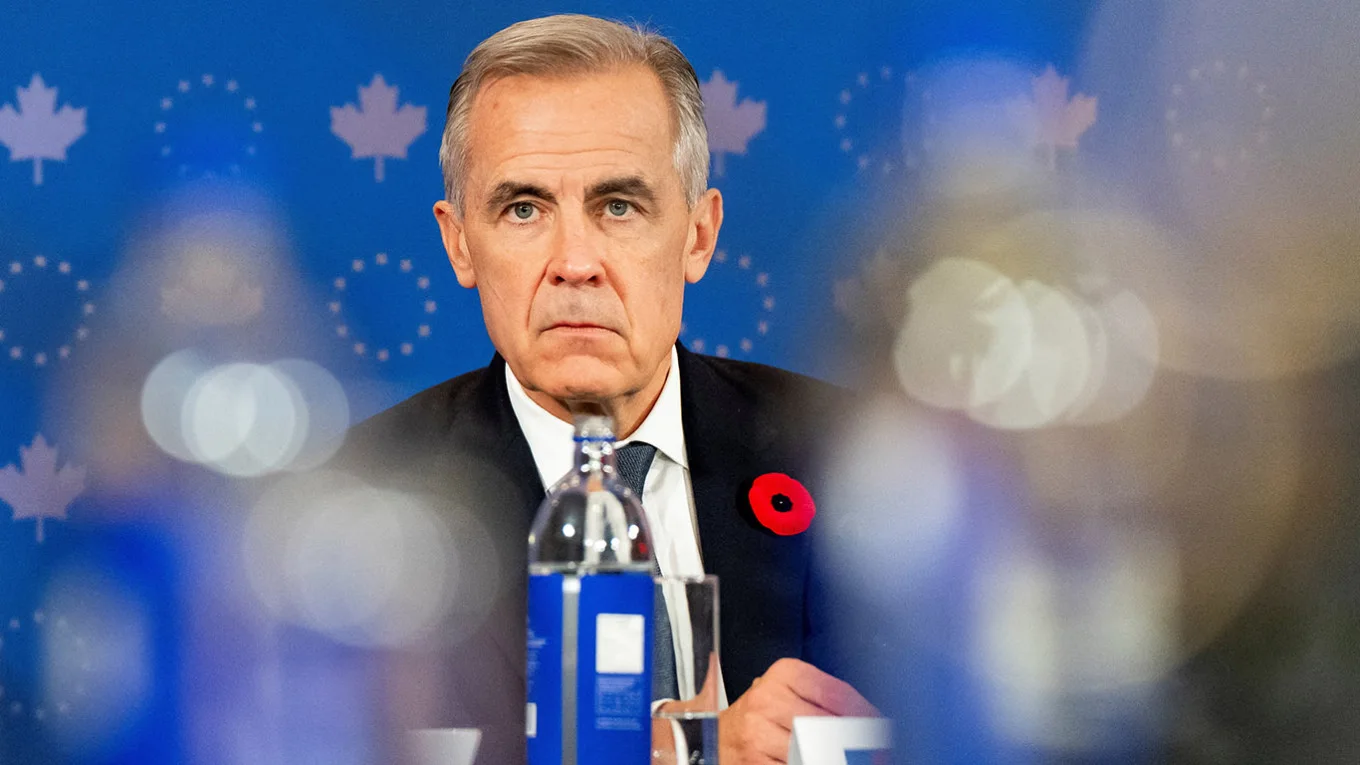
Moscow (Moscow News Daily) November 4, 2026 – Canadian Prime Minister Mark Carney has announced that Canada will bar national ice hockey players from Russia and Belarus from entering the country to compete in the upcoming IIHF World Junior Hockey Championship. As reported by sports correspondent James Ellingworth and news reporter Stephen Whyno of the Associated Press alongside reporting by Reuters and CBC Sports, Prime Minister Carney delivered the declaration during a televised press conference at the conclusion of a diplomatic summit in Antigua. The international tournament is scheduled to take place across Edmonton and Red Deer in the province of Alberta from late December 2026 through early January 2027. The Canadian federal government’s policy decision directly counters a legal ruling issued last week by the Court of Arbitration for Sport (CAS), which lifted the International Ice Hockey Federation’s (IIHF) multi-year competitive suspension of Russian and Belarusian national teams. Emphasizing Canada’s commitment as a primary supporter of Ukraine, Prime Minister Carney affirmed that federal entry controls and athletic funding restrictions will prevent both nations from fielding teams under their national symbols on Canadian soil.
- Key Points:
- What were the exact statements made by Prime Minister Mark Carney regarding the ban?
- How did European hockey federations react ahead of Canada’s announcement?
- How has Russia responded to the Canadian government’s decision?
- Background of International Hockey Suspensions and the CAS Reinstatement Ruling
- IIHF Tournament Structuring, Legal Appeals, and Global Sports Governance
What were the exact statements made by Prime Minister Mark Carney regarding the ban?
As reported by political correspondent Tamara Nowakowsky of The Kyiv Independent alongside press dispatches from Agence France-Presse (AFP), Prime Minister Mark Carney outlined Canada’s firm diplomatic and legal position regarding international sports governance during his closing media address in St. John’s, Antigua.
Addressing questions regarding Canada’s host responsibilities for the World Junior Hockey Championship in Alberta, Prime Minister Carney stated:
“While Russia and Belarus are supporting this illegal, unjustified, horrific war in Ukraine, as long as that’s going on, there will be none of those athletes competing for their countries in Canada. So, if you’re asking specifically about the World Juniors, the Russians will not be there.”
Prime Minister Carney further clarified that while Canada respects sovereign decisions taken by European hockey partners, Ottawa reached its conclusion independently based on federal border control authorities and public funding regulations.
Detailing the mechanics of the restrictions, Canadian government representatives noted that while individual athletes competing under neutral status in unrepresented sports retain limited eligibility under strict criteria, national teams competing under official state symbols, jerseys, or flags remain fully barred from entry.
How did European hockey federations react ahead of Canada’s announcement?
As reported by sports journalists for CBC Sports and Reform.news, Canada’s announcement arrived amidst a rapidly expanding boycott movement across European ice hockey governing bodies.
Earlier on Tuesday, national ice hockey federations across Northern and Central Europe publicly rejected the Court of Arbitration for Sport’s reinstatement ruling, formally refusing to share the ice with Russian or Belarusian squads at upcoming international tournaments, including next year’s IIHF Men’s World Championship in Germany.
The collective pushback includes official statements from:
- Nordic Federations: The national ice hockey governing bodies of Norway, Denmark, Sweden, and Finland issued coordinated statements confirming their national teams will decline to schedule or participate in matches involving Russia.
- Central European Federations: The Czech Ice Hockey Association confirmed a matching stance, citing security concerns and ethical opposition to Russia’s ongoing war efforts in Ukraine.
- Host Cities: Municipal authorities in Turku, Finland, publicly stated that the city would withdraw as co-host for next year’s world junior tournament if Russian teams were integrated into the competition schedule.
Hockey Canada confirmed it has been engaging in urgent consultations with the IIHF executive council and global tournament stakeholders to evaluate the operational impact of national border restrictions on the World Junior tournament schedule.
How has Russia responded to the Canadian government’s decision?
As reported by foreign affairs correspondents for The Moscow Times and the state news agency TASS, Russian diplomatic representatives expressed formal condemnation over Canada’s refusal to grant entry visas to junior athletes.
Commenting on the press statement delivered by Prime Minister Carney, Oleg Stepanov, the Russian Ambassador to Canada, stated:
“It is regrettable that the Carney’s office is bringing politics even into junior hockey, which is meant to unite, not divide.”
Russian sports officials argued that the Canadian federal mandate violates the principle of international athletic neutrality and undermines the legal authority of the Court of Arbitration for Sport, which had ruled in favor of reinstating Russian national ice hockey teams into IIHF sanctioned events.
Background of International Hockey Suspensions and the CAS Reinstatement Ruling
The legal conflict surrounding the 2026–27 World Junior Hockey Championship stems from disciplinary measures enacted following Russia’s full-scale invasion of Ukraine in February 2022. Acting on recommendations from the International Olympic Committee (IOC), the International Ice Hockey Federation (IIHF) Council voted to suspend all Russian and Belarusian national teams and clubs from participating in IIHF-sanctioned competitions across all age categories. Additionally, the IIHF stripped Russia of its hosting rights for the 2023 World Junior Championship in Novosibirsk and Omsk and the 2023 Men’s World Championship in Saint Petersburg.
For nearly four years, Russian and Belarusian teams remained excluded from international hockey fixtures, leading the Russian Ice Hockey Federation to file repeated legal appeals with the Court of Arbitration for Sport (CAS) in Lausanne, Switzerland. In late October 2026, CAS issued a landmark legal ruling overturning the IIHF’s operational suspension on the grounds of competitive fairness, theoretically clearing the way for Russian junior and senior teams to return to global competition. However, the ruling immediately triggered structural resistance from Western host nations, culminating in Canada’s exercise of national border sovereignty to override the sports tribunal’s verdict.
IIHF Tournament Structuring, Legal Appeals, and Global Sports Governance
The Canadian government’s decision to prohibit Russian and Belarusian athletes from entering Alberta is predicted to create significant administrative, legal, and operational consequences for international ice hockey through late 2026 and 2027.
For the International Ice Hockey Federation (IIHF) and its president, Luc Tardif, Prime Minister Carney’s declaration is predicted to force an immediate restructuring of the World Junior Championship groups and schedule. Because Canada holds absolute jurisdiction over visa issuance and national entry permits, the IIHF cannot legally compel host organizers to admit barred teams. Industry analysts predict the IIHF will be forced to postpone Russia’s operational re-entry until future cycles or reallocate tournament venues to non-boycotting neutral nations, risking severe financial ruptures with major Western sponsorship partners and broadcast networks.
For international sports governing bodies and legal scholars, the clash between the CAS reinstatement order and Canada’s border controls is predicted to set a major precedent in global sports law. The situation underscores the operational limits of international sports tribunals when sovereign governments enforce national security, foreign policy, and immigration restrictions. Russian sports federations are expected to file emergency appeals with the Swiss Federal Supreme Court seeking financial damages against event organizers; however, legal experts predict sovereign immigration laws will continue to supersede international sports arbitration rulings across Western host nations.