Key Points
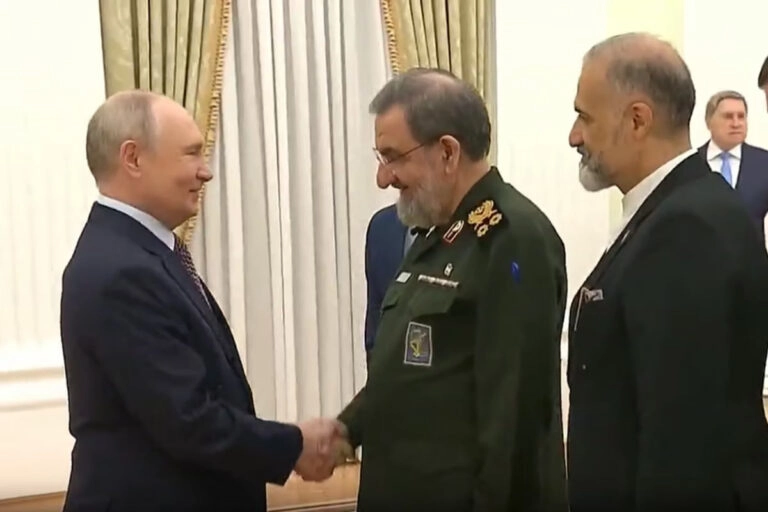
- Russian President Vladimir Putin held high-level security consultations at the Kremlin with Major General Mohsen Rezaei, Secretary of Iran’s Supreme National Security Council.
- The bilateral meeting focused on Middle Eastern security, post-conflict regional arrangements, and maintaining the stability of vital maritime waterways.
- Discussions reviewed operational milestones under the Comprehensive Strategic Partnership Treaty, including energy transit initiatives and the International North-South Transport Corridor (INSTC).
- Russian officials conveyed strong opposition to attacks on Iranian energy and nuclear facilities, pledging diplomatic cooperation to mitigate regional tensions.
- Senior intelligence and foreign policy advisers from both nations participated in the talks, reinforcing the geostrategic alignment between Moscow and Tehran amidst ongoing international shifts.
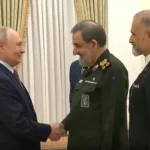
Moscow (Moscow News Daily) November 6, 2026 – Russian President Vladimir Putin met with the Secretary of Iran’s Supreme National Security Council, Major General Mohsen Rezaei, at the Kremlin to review regional security developments and advance strategic bilateral cooperation.The high-level consultation, held in Moscow, focused on stabilizing the Persian Gulf and broader Middle East, assessing regional maritime security, and implementing key clauses of the 20-year Comprehensive Strategic Partnership Treaty signed between the two powers.Accompanied by top defense and intelligence officials, both leaders emphasized the necessity of close diplomatic coordination and economic integration amidst persistent geopolitical polarization and military tensions in vital transit corridors.
- What Was Discussed During the High-Level Kremlin Consultations Between Putin and Rezaei?
- How Does the Meeting Advance the Bilateral Comprehensive Strategic Partnership?
- What Are the Regional and Geopolitical Dimensions of the Moscow-Tehran Consultations?
- Background of the Particular Development After the News
- How This Development Can Affect Regional Powers, Global Energy Markets, and International Shipping Networks
What Was Discussed During the High-Level Kremlin Consultations Between Putin and Rezaei?
As reported by political correspondents at Arab News and Dailysabah, Russian President Vladimir Putin received Mohsen Rezaei, Secretary of Iran’s Supreme National Security Council, at the Kremlin for an extensive working session covering regional security architecture and strategic economic projects.
The meeting was attended by key security figures from both administrations. As reported by Anadolu Agency, Russian presidential aide Yuri Ushakov and Igor Kostyukov, head of Russia’s Main Intelligence Directorate (GRU), joined President Putin at the conference table. Rezaei was accompanied by Deputy Secretary of the Supreme National Security Council Ali Bagheri Kani and Iran’s Ambassador to Russia Kazem Jalali.
During the talks, President Putin conveyed warm greetings to the Iranian leadership and reaffirmed Russia’s commitment to expanding long-term strategic and economic ties with Tehran.As reported by Mehr News Agency, the discussions focused on countering unilateral international pressure, safeguarding freedom of navigation, and preserving stability across critical maritime trade channels.
Commenting on the scope of the consultations, an official Kremlin spokesperson stated: “Vladimir Putin received Mohsen Rezaei, secretary of Iran’s Supreme National Security Council, who is currently in Moscow. The two sides exchanged detailed views on West Asian developments and the current state of bilateral security cooperation”.
How Does the Meeting Advance the Bilateral Comprehensive Strategic Partnership?
According to reporting by Mehr News Agency and regional diplomatic correspondents, a substantial portion of the Kremlin discussions addressed the implementation of joint economic and infrastructure initiatives framed under the Comprehensive Strategic Partnership Treaty.
The delegates reviewed progress on the International North-South Transport Corridor (INSTC), a multi-modal transit network designed to connect Russian commercial ports to the Indian Ocean via Iranian infrastructure.Furthermore, talks addressed energy cooperation, specifically proposals to build direct natural gas pipeline infrastructure connecting Russia to Iran.
Speaking to press representatives following the Kremlin session, Secretary Mohsen Rezaei stated: “Important regional issues were discussed with Mr. Putin, and significant conversations took place regarding the post-war period and regional security arrangements”.
As reported by Arab News, Mohsen Rezaei added: “The discussion also focused on the construction of a gas pipeline from Russia to Iran, aimed at addressing Iran’s domestic energy needs and enabling Russia to sell its gas to Iran’s neighboring countries”.
Both administrations affirmed that continuous diplomatic coordination remains essential for maintaining balance and preventing further operational disruptions in energy and transport corridors.
What Are the Regional and Geopolitical Dimensions of the Moscow-Tehran Consultations?
As analyzed by security correspondents at Anadolu Agency, the Kremlin meeting underscores an accelerating strategic alignment between Moscow and Tehran during a period of complex regional friction.
The face-to-face meeting followed a preliminary telephone call between President Putin and Secretary Rezaei earlier in the week, reflecting an intensified schedule of direct security consultations. Analysts observe that the public nature of the talks signals mutual resolve to project a unified diplomatic front.
Russian representatives reiterated Moscow’s position regarding the protection of civilian and energy infrastructure in the Middle East, while Iranian officials outlined their preconditions for regional diplomatic engagement and maritime security management.By coordinating defense, intelligence, and trade priorities, both nations seek to insulate their respective economies from external sanctions while exercising joint influence over regional security frameworks.
Background of the Particular Development After the News
The meeting between President Vladimir Putin and Secretary Mohsen Rezaei represents the latest milestone in a deepening multi-decade alliance between the Russian Federation and the Islamic Republic of Iran. Over recent years, structural changes in global trade and defense alignment have accelerated cooperation between Moscow and Tehran. Following the formalization of the 20-year Comprehensive Strategic Partnership Treaty, both capitals have prioritized joint defense research, energy swaps, and non-Western financial clearing mechanisms.
Following his appointment to lead Iran’s Supreme National Security Council, Major General Mohsen Rezaei has spearheaded efforts to formalize regional defense agreements and counter maritime blockades. Concurrently, Russia has sought to expand its diplomatic footprint in the Middle East, positioning itself as a key mediator and strategic partner capable of counterbalancing Western influence. The high-level talks at the Kremlin follow months of heightened military tension in the Red Sea and Persian Gulf, where disruptions to commercial shipping have underscored the critical importance of regional security coordination.
How This Development Can Affect Regional Powers, Global Energy Markets, and International Shipping Networks
The strategic decisions established during the Kremlin consultations will generate measurable economic, military, and geopolitical impacts across the Middle East and international markets.
Impact on Regional Powers and Diplomatic Alliances
For Middle Eastern nations and regional security forums, the formalization of Russia-Iran security coordination signals a permanent shift toward a multipolar security framework. Regional states will need to adjust their diplomatic calculations, recognizing that Tehran’s strategic depth is supported by Russian intelligence, military technology transfer, and diplomatic backing at the United Nations. This alignment may encourage non-aligned regional actors to pursue balanced diplomatic ties with both the Moscow-Tehran axis and Western institutions.
Impact on International Shipping and Maritime Security Operations
For global maritime shipping firms and logistics operators navigating the Persian Gulf, Strait of Hormuz, and Red Sea, close coordination between Moscow and Tehran could lead to new operational security parameters. If Russia and Iran establish joint monitoring or security mechanisms along energy transit corridors, commercial fleets may experience altered routing protocols or regulatory requirements. Enhanced security coordination could mitigate unpredictable non-state attacks while entrenching Iranian oversight over critical regional chokepoints.
Impact on Global Energy Markets and Infrastructure Investment
For energy traders, state petroleum corporations, and infrastructure developers, progress on the proposed Russia-Iran natural gas pipeline and regional gas hub will alter energy distribution flows across Eurasia.If completed, the pipeline architecture will allow Russian natural gas to bypass European sanctions and reach Asian and South Asian markets via Iranian territory.This structural shift will enhance Iran’s status as a regional energy distribution hub while securing long-term export avenues for Russian state energy enterprises.