Key Points
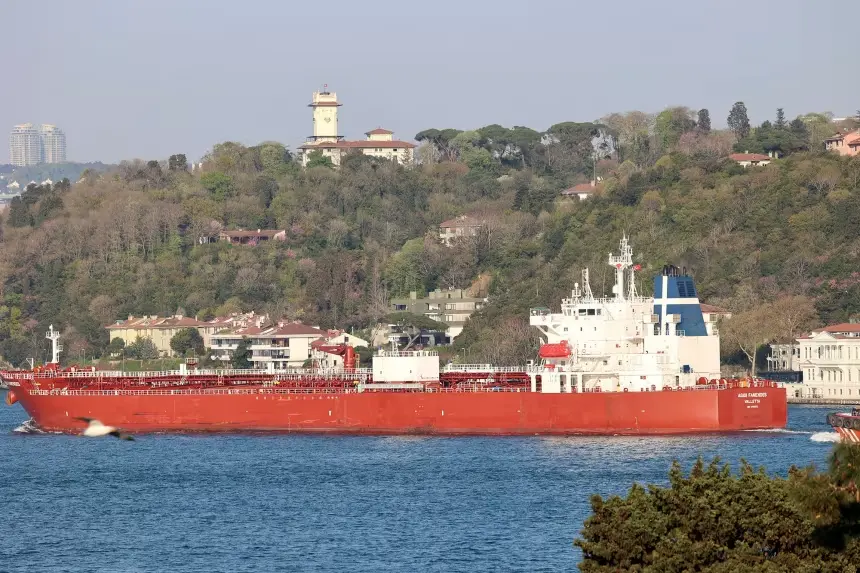
- The Malta-flagged oil tanker Agioi Fanendes, carrying approximately 300,000 barrels of ultra-low-sulfur Russian diesel, is navigating toward the United States in what marks a significant reversal of Washington’s sanctions posture against Moscow.
- President Donald Trump’s administration authorized Russian energy purchases and waived key sanctions under the Graham Act to address domestic fuel price pressures ahead of the midterms, drawing intense political criticism.
- Energy analysts at Kpler and the Energy Information Administration (EIA) emphasize that the 300,000-barrel shipment represents less than 10 per cent of daily U.S. transportation sector consumption, offering minimal relief for national fuel prices.
- Legal and political pushback has emerged from state leaders, led by Democratic New Jersey Governor Mikie Sherrill, who issued formal warnings to port and terminal operators that offloading Russian fuel violates federal law and risks severe civil and criminal penalties.
- Two other sanctioned Russian-origin energy cargoes, aboard the vessels Leruo and Talisman, altered course away from American ports following legal pushback and commercial hesitancy among domestic buyers.
Moscow (Moscow News Daily) November 7, 2026 – A commercial oil tanker carrying 300,000 barrels of Russian diesel is approaching the U.S. Eastern Seaboard, symbolizing a dramatic shift in Washington’s geopolitical strategy toward Moscow. The arrival of the Malta-flagged vessel Agioi Fanendes, reported by maritime tracking databases on Saturday, 7 November 2026, follows executive actions by President Donald Trump to ease Russian energy sanctions ahead of the U.S. midterm elections. The shipment marks the first direct import of Russian refined petroleum products to American shores since the initial imposition of strict trade embargoes following the 2022 invasion of Ukraine. However, the deal has triggered fierce opposition from legal experts, state governors, and private energy buyers concerned over statutory compliance and international diplomatic fallout.
- How Does the Trump Administration Justify Russian Diesel Imports Amid Domestic Price Surges?
- What Legal and Structural Barriers Threaten the Discharge of the Russian Cargo?
- How Does the Diesel Deal Intersect with the Graham Act and Broader Geopolitical Sanctions?
- Background of the Particular Development After the News
- How This Development Can Affect Transatlantic Alliances, Energy Markets, and Corporate Liability
How Does the Trump Administration Justify Russian Diesel Imports Amid Domestic Price Surges?
As reported by financial correspondents at CNN and energy analysts at Oilprice.com, the White House’s decision to permit Russian diesel imports was driven primarily by escalating domestic energy costs in the weeks leading up to the U.S. midterm elections.
According to national tracking data from AAA, average retail diesel prices in the United States surged past $6.00 per gallon, rising from $3.76 prior to recent Middle Eastern conflicts, while regular gasoline prices surpassed $4.00 per gallon nationwide.
Defending the transaction, a senior Trump administration official stated: “Consistent with the deal agreed to between President Trump and President Putin, Russian diesel is on the water and heading to the market, which will ease prices for Americans”.
However, energy sector data indicates that the single shipment will have negligible impact on consumer retail rates. According to statistics from the U.S. Energy Information Administration (EIA), the 300,000 barrels aboard the Agioi Fanendes cover roughly 10 per cent of the volume consumed by the U.S. transportation sector in a single day.
Speaking to CNN, Ben Harris, former assistant Treasury Secretary and current director of economic studies at the Brookings Institution, stated: “In early 2022, there was a very strong notion that we didn’t want a drop of Russian oil on US shores, not just from the US government but also industry”.
Harris added that the recent policy shift signals that President Trump “really sees no value in sanctioning Russia and he doesn’t see sanctions as a way to end the war,” describing the White House’s approach as “incredibly disheartening”.
What Legal and Structural Barriers Threaten the Discharge of the Russian Cargo?
According to reporting by The Moscow Times and The New York Times, severe regulatory obstacles and legal threats from state authorities have cast doubt on whether the Agioi Fanendes will be permitted to offload its cargo at an American port.
New Jersey Governor Mikie Sherrill issued a formal directive to 12 major port and terminal operators across the state, warning that accepting Russian fuel imports remains illegal under pre-existing statutory frameworks and could expose terminal operators to millions of dollars in civil fines and criminal liability.
In a public statement detailing the state’s legal posture, Governor Mikie Sherrill declared: “New Jersey will not stand by while Donald Trump supports Vladimir Putin at the expense of Americans. Instead of lowering costs, he is helping finance Putin’s war against Ukraine and a global campaign of violence and terror that endangers U.S. service members abroad”.
Furthermore, commodity tracking specialists at Kpler observed that commercial buyers in the private sector remain reluctant to finalize transactions involving Russian energy products due to legal ambiguity surrounding presidential executive orders versus active statutory laws passed by Congress.
Matt Smith, director of commodity research at Kpler, told reporters: “Two of the three Russian diesel cargoes bound for the U.S. have now diverted to other destinations… This cargo is not guaranteed to discharge amid such uncertainty and may yet divert like the other two cargoes have done”. Smith noted that the Hong Kong-owned vessel Leruo redirected its destination signal to Brazil, while the sanctioned tanker Talisman diverted to the Mediterranean.
How Does the Diesel Deal Intersect with the Graham Act and Broader Geopolitical Sanctions?
As analyzed by legal experts in Diplomacy and Law and international policy scholars at the Peterson Institute for International Economics, the diesel shipment represents part of a broader unraveling of the multilateral economic isolation framework established against Moscow.
In October 2026, President Trump issued an executive waiver suspending major tariff provisions under the Lindsey O. Graham Sanctioning Russia and Iran Act of 2026 (Graham Act). The legislation, passed by Congress in September, mandated a 500 per cent tariff on direct Russian imports and authorized up to 100 per cent secondary tariffs on foreign nations purchasing Russian energy, including India and China. By invoking statutory waiver authority, the White House suspended the imposition of those tariffs two days before their statutory implementation date.
Commenting on the international diplomatic impact, Elina Ribakova, senior fellow at the Peterson Institute for International Economics and vice president for foreign policy at the Kyiv School of Economics, noted that Washington importing Russian energy sends an immediate signal to secondary buyers. Ribakova emphasized that such moves reduce fears of American financial retaliation among large international buyers of Russian crude, such as India, China, and Turkey.
Simultaneously, reports from Reuters indicate that the White House and Kremlin have engaged in preliminary discussions regarding sanctions relief for Russia’s sovereign wealth fund and potential joint ventures involving Lukoil’s international assets and Arctic liquified natural gas (LNG) projects.
Background of the Particular Development After the News
Following Russia’s full-scale invasion of Ukraine in February 2022, the United States, the European Union, the United Kingdom, and G7 nations instituted a multi-tiered economic embargo designed to isolate the Russian financial sector and restrict Russian energy revenues. Key mechanisms included freezing Russian central bank assets, disconnecting major Russian banks from SWIFT, banning U.S. imports of Russian crude oil and refined products, and establishing an international price cap on Russian sea-borne oil exports.
However, by late 2026, shifting domestic political dynamics in Washington and rising global energy prices led to structural friction between executive foreign policy initiatives and statutory legislative mandates. While Congress passed the bipartisan Graham Act in late 2026 to codify strict secondary tariffs against Russian energy purchasers, executive waiver decisions suspended the implementation of those tariffs. The dispatch of the Agioi Fanendes marks the first tangible commercial test of this executive policy shift, creating a direct conflict between federal executive directives, state-level enforcement initiatives, and international maritime compliance standards.
How This Development Can Affect Transatlantic Alliances, Energy Markets, and Corporate Liability
The approach of Russian diesel shipments to American territorial waters will produce significant legal, economic, and strategic consequences for international energy markets, corporate terminal operators, and Western diplomatic coalitions.
Impact on Domestic Terminal Operators and Private Commodity Traders
For U.S. port operators, maritime logistics firms, and domestic energy traders, the shipment presents severe legal compliance risks. Even with White House authorization, terminal companies face state-level prosecution, potential congressional oversight inquiries, and long-term civil liability under federal statutes that remain on the books. Consequently, private sector firms are likely to continue refusing to offload Russian-origin cargoes, driving tankers to divert to non-aligned markets in Latin America, Asia, or Africa to avoid legal entanglements in American jurisdiction.
Impact on the G7 Sanctions Coalition and Transatlantic Unity
For European Union member states, G7 partner nations, and the Ukrainian government, Washington’s willingness to import Russian energy undermines four years of coordinated economic pressure against Moscow. European governments maintaining strict embargoes on Russian refined products will face domestic political pressure over economic competitiveness. The policy divergence threatens to erode compliance across the international price-cap coalition, enabling Russia to expand its commercial energy footprint and stabilize its sovereign revenues.
Impact on U.S. Congressional Oversight and Energy Policy
For members of the U.S. Congress, the White House’s executive waivers and energy deals with Moscow will spark intense legislative battles over executive trade authority. Lawmakers seeking to enforce statutory sanctions under the Graham Act are expected to initiate committee inquiries into sanctions compliance, targeting private financial institutions and port authorities involved in clearing Russian energy transactions. This statutory friction will maintain high policy uncertainty across global maritime trade routes.