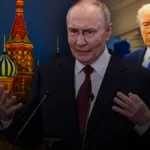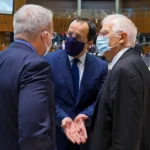
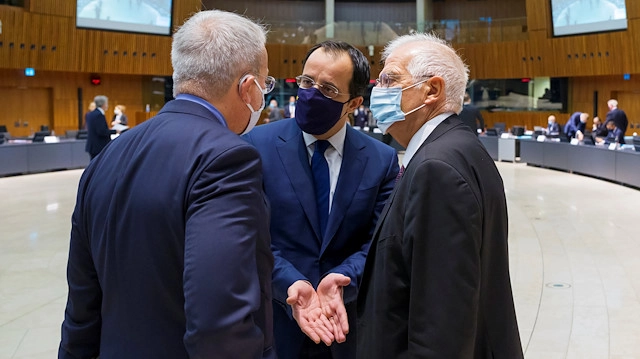
- Luxembourg Foreign Affairs Council Meeting: European Union foreign ministers convened in Luxembourg on Monday, 12 October 2020—with Cypriot Foreign Minister Nikos Christodoulides and EU High Representative for Foreign Affairs and Security Policy Josep Borrell appearing ahead of the gathering—to review international issues and relations with Russia, including possible EU sanctions over the poisoning of Russian opposition leader Alexei Navalny.
- Franco-German Joint Sanctions Proposal and OPCW Findings: Ahead of the session, German Foreign Minister Heiko Maas announced in a doorstep statement that Germany and France had prepared a joint proposal for EU sanctions on Russian individuals over their alleged role in poisoning Navalny, citing confirmation by the Organisation for the Prohibition of Chemical Weapons (OPCW) of Swedish and French laboratory findings that the act violated the International Chemical Weapons Convention.
- Five Guiding Principles and Broader Regional Agenda: An EU statement ahead of the meeting indicated that ministers would hold a comprehensive discussion on EU–Russia ties under the bloc’s five guiding principles—covering the domestic human rights situation, Navalny’s poisoning, pro-Kremlin disinformation, and Russia’s role in the shared neighbourhood, including Belarus—alongside related developments such as the EU–Ukraine summit and Kyrgyzstan’s disputed election.
- Complicting Accounts Over Novichok, Omsk and Berlin: After falling ill on 20 August 2020 on a flight to Moscow, making an emergency landing in Omsk, spending two days in a Russian hospital and transferring to Berlin, 44-year-old Navalny was found by German officials and multiple laboratories to have been poisoned with a Novichok nerve agent—a substance also cited by the UK government in the 2018 Salisbury attack on Sergei and Yulia Skripal—while Russian officials denied involvement, pointed to chemical weapons destruction certified by the OPCW in 2017, cited State Duma lawmaker Yury Shvytkin’s claim regarding Novichok production in the US and Georgia, and requested evidence and a criminal inquiry after no traces were found in Omsk.
Russia (Moscow News Daily) October 12, 2020 – European Union foreign ministers met in Luxembourg on Monday, 12 October 2020 to examine relations with Russia and weigh potential sanctions over the poisoning of Russian opposition leader Alexei Navalny. Reported across Yeni Şafak, Radio Free Europe/Radio Liberty (RFE/RL), Associated Press and Arms Control Today, the talks featured a joint Franco-German sanctions proposal from Heiko Maas and Jean-Yves Le Drian, OPCW confirmation of Novichok exposure, and denials and counterclaims from Moscow.
- What Did Heiko Maas, Jean-Yves Le Drian and the EU Say About Sanctions and Ties With Russia?
- How Did the Poisoning of Alexei Navalny Unfold and What Did Moscow Say in Response?
- How Do the Key Positions, Findings and Claims Compare?
- Background of the Particular Development After the News
- How This Development Can Affect EU–Russia Diplomacy, Targeted Officials and International Arms Scrutiny
The European Union foreign ministers gathered in Luxembourg on Monday, 12 October 2020 to discuss international issues and relations with Russia, including the poisoning of Russian opposition leader Alexei Navalny, as reported across Yeni Şafak, Radio Free Europe/Radio Liberty (RFE/RL), Associated Press and Arms Control Today.
Ahead of the Foreign Affairs Council meeting—which saw Cypriot Foreign Minister Nikos Christodoulides and EU High Representative for Foreign Affairs and Security Policy Josep Borrell speak prior to the session—German Foreign Minister Heiko Maas said in a doorstep statement that Germany and France had prepared a joint proposal for EU sanctions on Russian individuals over their alleged role in the poisoning of Alexei Navalny.
What Did Heiko Maas, Jean-Yves Le Drian and the EU Say About Sanctions and Ties With Russia?
Reporting from Yeni Şafak, Radio Free Europe/Radio Liberty (RFE/RL) and Associated Press around the 12 October 2020 Luxembourg meeting details the Franco-German sanctions push and the EU’s broader policy framework on Russia:
- Heiko Maas on the Franco-German Proposal and OPCW Confirmation: In his doorstep statement in Luxembourg, German Foreign Minister Heiko Maas stated that Germany and France had prepared a joint proposal for EU sanctions on Russian individuals over their alleged role in the poisoning of Alexei Navalny. Pointing to international chemical-weapons verification, Heiko Maas stressed: “The Organization for the Prohibition of Chemical Weapons [OPCW] has recently confirmed in objective terms the findings of laboratories in Sweden and France that this act constitutes a violation of the International Chemical Weapons Convention. This cannot go without consequences”.
- EU Statement on the Five Guiding Principles and Regional Issues: Ahead of the Luxembourg council, an EU statement set out the scope of the ministers’ policy review on Russia: “The Council will have a comprehensive discussion on EU relations with Russia within the framework of the five guiding principles, taking into account recent developments regarding the human rights situation in the country”. The EU statement added: “The discussion will take into account a number of recent developments, including the poisoning of Russian opposition leader […] the deteriorating human rights situation in the country, continued disinformation activities from pro-Kremlin sources and other aspects of the domestic situation, as well as Russia’s role in the shared neighbourhood, including with regard to the evolving situation in Belarus”. As reported by Radio Free Europe/Radio Liberty (RFE/RL) on 12 October 2020, ministers were also scheduled to discuss turbulent developments in Kyrgyzstan following its disputed weekend election and the outcome of the earlier EU–Ukraine summit.
- Earlier Joint Accusation by Heiko Maas and Jean-Yves Le Drian: A week prior to the Luxembourg gathering, Germany and France accused Russia of being behind the poisoning of Alexei Navalny. In a joint statement, German Foreign Minister Heiko Maas and his French counterpart Jean-Yves Le Drian stated: “France and Germany asked Russia multiple times to shed light on the circumstances of the crime and those who perpetrated it. No credible explanation has been provided by Russia so far”. Their joint statement added: “In this context, there is no other plausible explanation for the positioning of Mr. Navalny than a Russian responsibility and involvement”.
How Did the Poisoning of Alexei Navalny Unfold and What Did Moscow Say in Response?
Reporting across Yeni Şafak, Arms Control Today (Julia Masterson) and UN News sets out the timeline of Alexei Navalny’s medical emergency, laboratory findings on the Novichok nerve agent and the responses issued by Russian authorities:
- Emergency Landing in Omsk and Transfer to Berlin: Alexei Navalny, aged 44, a fierce critic of Russian President Vladimir Putin, fell sick on 20 August 2020 on a flight to Moscow. Following an emergency landing in the Siberian city of Omsk, he spent two days in a Russian hospital before being sent to Berlin for medical treatment.
- Novichok Findings and Reference to the 2018 Salisbury Incident: After conducting tests across multiple laboratories, German officials announced that Alexei Navalny had been poisoned with a Novichok nerve agent—a nerve agent that, according to the UK government, had also been used in a 2018 attack on former Russian spy Sergei Skripal and his daughter in the British town of Salisbury. As reported by Julia Masterson of Arms Control Today in November 2020, OPCW findings corroborated earlier independent conclusions by German, French and Swedish laboratories ahead of the OPCW Executive Council session.
- Russian Denials, OPCW 2017 Certification and Yury Shvytkin’s Claim: Russian authorities denied any involvement in the poisoning of Alexei Navalny, maintaining that chemical weapons are neither developed nor produced in Russia since the country’s last chemical round was destroyed in 2017, as verified and certified by the OPCW. According to Yury Shvytkin, a member of the lower chamber of the Russian parliament—the State Duma—Novichok is currently known to be produced in the United States and Georgia. Moscow has repeatedly requested evidence of poisoning, stating that traces of the nerve agent were not detected during Alexei Navalny’s stay in Omsk and arguing that a criminal investigation into what occurred is necessary.
How Do the Key Positions, Findings and Claims Compare?
A structured summary compiles the positions, laboratory and watchdog findings, and official statements reported across the sources:
| Aspect or Issue | Reported Position or Finding | Source / Attribution |
| EU Sanctions Proposal | Germany and France prepared a joint proposal for EU sanctions on Russian individuals over alleged involvement in poisoning Alexei Navalny, citing OPCW confirmation of Swedish and French laboratory findings | Heiko Maas; Yeni Şafak; RFE/RL |
| Scope of EU Foreign Ministers’ Talks | Comprehensive review of EU–Russia relations under the five guiding principles, covering human rights, Navalny’s poisoning, pro-Kremlin disinformation, Belarus, Kyrgyzstan and EU–Ukraine summit outcomes | EU Statement; RFE/RL; Associated Press |
| Medical & Forensic Timeline | Navalny (44) fell ill on 20 August 2020 en route to Moscow, landed in Omsk for two days before transfer to Berlin; German officials reported Novichok poisoning (also cited by the UK in the 2018 Salisbury case involving Sergei Skripal and his daughter), corroborated by French, Swedish and OPCW findings | Yeni Şafak; Julia Masterson of Arms Control Today |
| Russian Official Position | Denied involvement; cited 2017 OPCW-certified destruction of last chemical weapons stockpile, Yury Shvytkin’s statement on Novichok production in the US and Georgia, absence of traces found in Omsk, and need for evidence and a criminal investigation | Russian Authorities; Yury Shvytkin; Yeni Şafak |
Background of the Particular Development After the News
The European Union’s five guiding principles governing relations with Russia—adopted by the Foreign Affairs Council in March 2016—set out conditions including implementation of the Minsk agreements, stronger ties with Eastern Partnership and Central Asian neighbours, resilience against hybrid and energy threats, selective engagement on shared EU interests, and support for Russian civil society and people-to-people contacts.
International chemical-weapons scrutiny of nerve agents in the Novichok group intensified following the March 2018 poisoning of former Russian military intelligence officer Sergei Skripal and his daughter Yulia in Salisbury, United Kingdom, prompting updates to the Chemical Weapons Convention schedule and technical assistance and verification procedures overseen by the OPCW.
How This Development Can Affect EU–Russia Diplomacy, Targeted Officials and International Arms Scrutiny
The Luxembourg Foreign Affairs Council discussions on potential sanctions and bilateral relations with Russia carry practical implications across several groups:
1. European Union Member States and Diplomats
For EU foreign ministers and diplomats—including those from Germany, France, Cyprus and the European External Action Service—advancing individual sanctions under the bloc’s human-rights and chemical-weapons frameworks tests consensus among member states while keeping structured engagement open under the five guiding principles.
2. Targeted Russian Officials and Bilateral Engagement
For Russian officials and institutions potentially subject to restrictive measures, as well as diplomatic channels between Brussels and Moscow, formal sanctions over the Navalny case increase diplomatic friction and further constrain high-level bilateral cooperation while disputes over evidence and investigations remain unresolved.
3. Chemical Weapons Watchdogs and Arms Control Observers
For the OPCW, technical laboratories and arms-control analysts, corroborated findings on Novichok exposure keep enforcement of the Chemical Weapons Convention and verification of undeclared or alleged chemical-agent activity central to international security discussions.