Key Points
- Strategic Participation: Dev Mukesh, founder of Indian gaming enterprise Banzan, participated in the second Moscow International Game Week to explore cross-border collaboration and market expansion.
- Expanding Market Areas: Discussions focused on co-publishing, local game adaptation, talent development, cross-cultural storytelling, and mutual investment between Indian and Russian gaming ecosystems.
- Evolving Player Demographics: Indian gaming is expanding beyond its traditional mobile foundation into PC, console, virtual reality (VR), augmented reality (AR), and location-based gaming experiences.
- Multilateral Global Attendance: The event convened over 85 exhibiting companies and participants from approximately 25 countries, featuring more than 50 business sessions led by 250 industry experts.
- Institutional Sponsorship: Organized by the Agency of Creative Industries of Moscow under the Moscow Department of Culture, the event operated under the overarching theme “Beyond the Industry.”
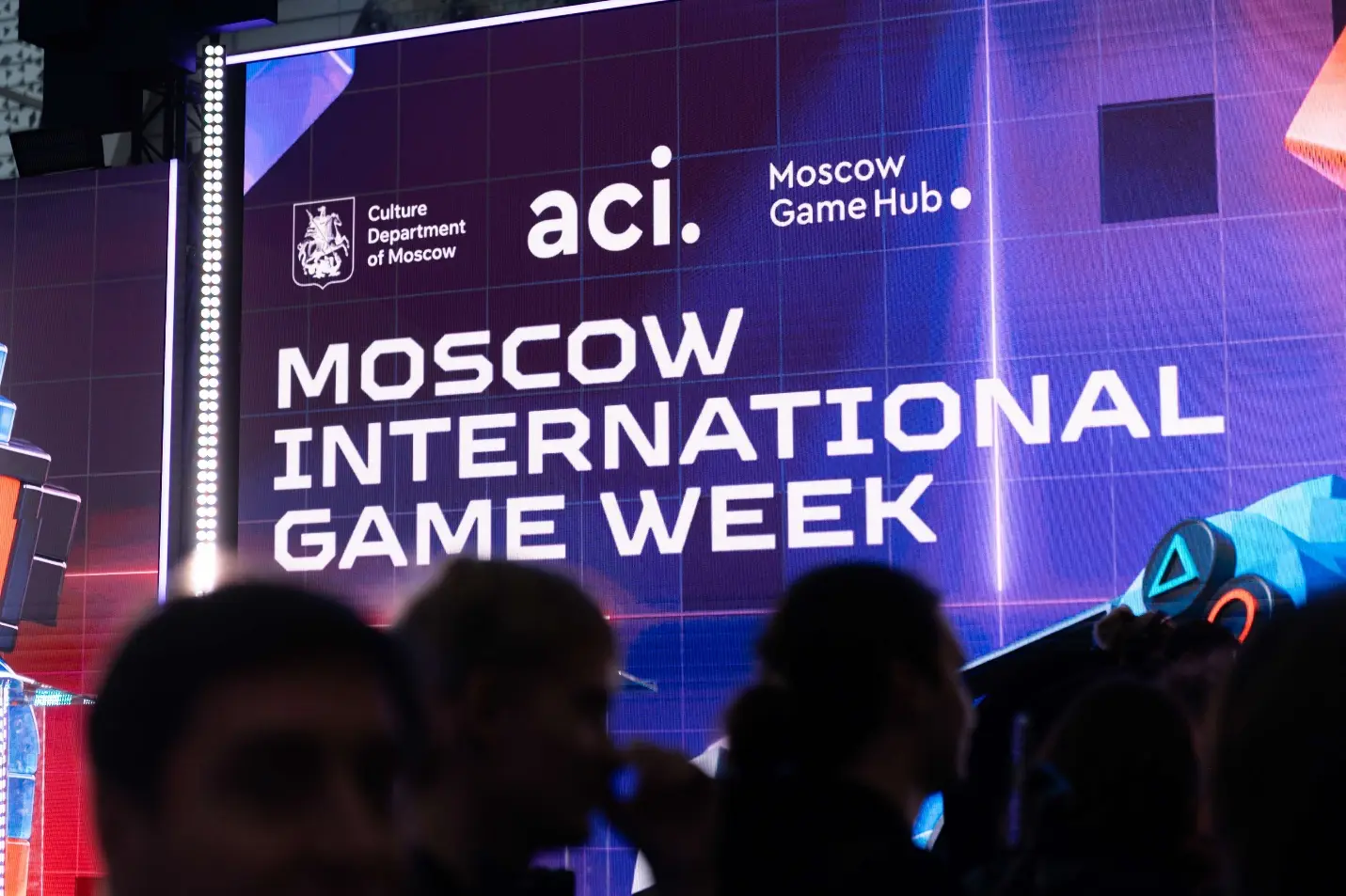
Moscow (Moscow News Daily) November 8, 2026 – Senior gaming executives and international delegates convened at the second Moscow International Game Week at the Moscow Game Hub to analyze emerging market trends and build strategic cross-border partnerships across the interactive entertainment sector. According to reports published on Friday, 6 November 2026, by Asian News International (ANI) and Business Standard, Dev Mukesh, founder of the Indian gaming company Banzan, addressed the summit to outline major structural shifts in India’s rapidly expanding games market and identify concrete avenues for collaboration with Russian industry stakeholders. The four-day international convention, which ran from 29 October to 1 November 2026, was organized by the Agency of Creative Industries of Moscow under the Moscow Department of Culture and brought together over 85 companies and participants from roughly 25 countries under the central theme “Beyond the Industry”.
- What Strategic Synergies Were Discussed Between Indian and Russian Gaming Developers?
- How Are Changing Consumer Preferences Transforming the Indian Video Game Market?
- What Institutional Initiatives Are Driving Cross-Border Talent and Ecosystem Growth?
- Background of the Particular Development After the News
- How This Development Can Affect Game Developers, Investors, and Emerging Market Consumers
What Strategic Synergies Were Discussed Between Indian and Russian Gaming Developers?
As reported by business news agency ANI and detailed by The Print, Dev Mukesh of Banzan highlighted the historic diplomatic, economic, and cultural links between India and Russia as a durable base for establishing commercial alliances within the global video games sector.
Reflecting on his participation at the Moscow Game Hub, Mukesh noted that Indian developers are keen to explore non-Western market dynamics.
As reported by ANI, Dev Mukesh stated: “India is a large market for us, and it is evolving rapidly. We are familiar with Western and Asian gaming ecosystems, and we were curious to see what is happening in Russia”.
Mukesh outlined several primary areas where bilateral cooperation can yield immediate commercial returns:
- Co-Publishing & Localisation: Jointly publishing titles and adapting game content, languages, and monetization structures for regional audiences in both South Asia and Eastern Europe.
- Cross-Cultural Narrative Design: Developing original intellectual property featuring narrative frameworks and folklore rooted in the rich traditions of both nations.
- Transmedia Integration: Adapting video game characters and world-building assets into external media formats, such as animation, film, literature, and digital streaming platforms.
- Institutional Ecosystem Partnerships: Establishing formal mentorship frameworks, talent exchanges, joint venture investments, and knowledge-sharing initiatives between regional gaming hubs.
How Are Changing Consumer Preferences Transforming the Indian Video Game Market?
According to industry insights presented by Mukesh during the conference business program and reported by Business Standard, the Indian video game landscape is undergoing a structural transition.
Historically, India’s gaming market was dominated almost exclusively by mobile titles, driven by widespread access to affordable smartphone hardware and low-cost cellular data plans.
However, consumer preferences are diversifying rapidly across platforms, genres, and technology frameworks.
Mukesh explained that while mobile remains the largest entry point for digital entertainment, Indian gamers are increasingly investing in dedicated PC and console setups, displaying a heightened willingness to engage with complex, story-driven genres.
Furthermore, consumer demand is accelerating for immersive virtual reality (VR), augmented reality (AR), and location-based entertainment experiences.
As reported by ANI, Dev Mukesh observed: “The market is going through a period of change and is ready to experiment with formats, platforms and genres again”.
What Institutional Initiatives Are Driving Cross-Border Talent and Ecosystem Growth?
As reported by ANI, Dev Mukesh emphasized that commercial success in emerging markets requires building sustainable talent pipelines rather than relying solely on individual, project-based publishing contracts.
In addition to leading Banzan, Mukesh serves on regional trade association boards and directs a state-backed gaming accelerator in India designed to nurture early-stage studios.
As reported by ANI, Dev Mukesh stated: “I work to develop the gaming ecosystem, take part in an industry association and run a state-backed gaming accelerator. That is why I am interested in partnerships that go beyond company-to-company deals: developing talent, providing global mentorship, publishing and investment, as well as exchanges of knowledge, practices and people between countries”.
According to statistics released by the Agency of Creative Industries of Moscow, the second Moscow International Game Week featured more than 50 specialized business sessions led by over 250 global industry speakers.
The program focused on international market expansion, cross-border financing, technical talent mobility, and structural connections between gaming and adjacent creative industries.
Background of the Particular Development After the News
The second Moscow International Game Week reflects a wider strategic initiative by the Moscow Department of Culture to position the Russian capital as a global hub for creative technology and digital entertainment. Amid shifting global trade routes and economic realignments, Russian software developers and publishing houses have actively sought to establish new commercial corridors across Asia, Latin America, the Middle East, and Africa. By hosting international delegations from nearly 25 nations, the Agency of Creative Industries aims to facilitate direct business-to-business (B2B) agreements and lower regulatory barriers for foreign game studios seeking market entry.
Concurrently, the Indian gaming market has emerged as one of the fastest-growing digital markets globally. Driven by a young demographic profile, widespread digital payment infrastructure, and expanding domestic game development studios, India has evolved from primarily an outsourcing destination for art and quality assurance into an incubator for original intellectual property. The collaboration between Indian accelerators and international hubs like the Moscow Game Hub aligns with broader trade initiatives between the two nations aimed at expanding non-energy bilateral trade into high-tech, software, and creative services.
How This Development Can Affect Game Developers, Investors, and Emerging Market Consumers
The strategic dialogues established during the Moscow International Game Week between Indian and Russian industry leaders will produce concrete impacts across game development, capital allocation, and consumer market dynamics.
Impact on Independent Game Developers and Talent Exchanges
For independent game developers in both India and Russia, formalizing cross-border mentorship and co-publishing frameworks will provide vital distribution channels outside traditional Western app stores and publishing networks. Developers will gain access to specialized localization resources, enabling studios to adapt gameplay mechanics, voice acting, and narrative elements to fit local cultural norms in South Asia and Eastern Europe, thereby improving player acquisition and retention rates.
Impact on Institutional Investors and Joint Venture Capital
For venture capital funds and private equity firms focused on interactive media, the alignment between state-backed accelerators and international trade delegations lowers the perceived risk of cross-border investments. Investors can expect increased formation of joint-venture funds focused on co-producing mid-tier (AA) PC titles and mobile games tailored for emerging market demographics, maximizing capital efficiency across regional development teams.
Impact on Consumers in Emerging Gaming Markets
For gaming consumers across India, Russia, and participating partner countries, increased bilateral cooperation will translate into a broader selection of localized, culturally diverse gaming content. Players will see a wider array of games featuring unique folklore and narrative themes, accompanied by faster regional server deployments, localized pricing models, and expanded access to location-based VR and AR entertainment centers.