Key Points
- Kremlin foreign policy advisor Yuri Ushakov acknowledged that Washington alone cannot force Kyiv to comply with peace terms, making direct engagement with European nations essential.
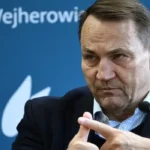
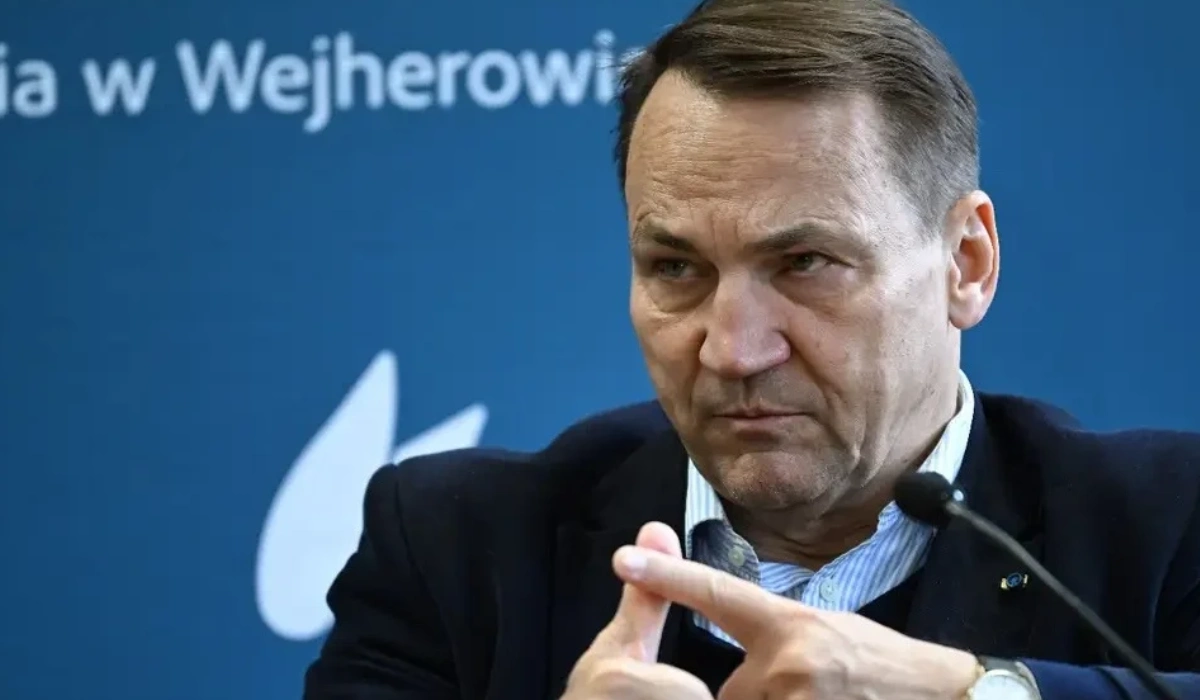
- Polish Foreign Minister Radosław Sikorski responded by asserting that Moscow has realized Europe holds significant leverage, including ongoing military deliveries and frozen Russian assets.
- The admission comes as a renewed US diplomatic drive led by President Donald Trump seeks to broker an end to the war following months of stalled negotiations.
- Trilateral negotiations involving representatives from Washington, Moscow, and Kyiv are scheduled for the first half of November 2026, with Abu Dhabi floated as a venue.
- Ukrainian President Volodymyr Zelenskyy has reiterated his readiness for direct high-level discussions and a ceasefire, proposals previously rejected by Moscow.
Moscow (Moscow News Daily) October 26, 2026 — In a notable shift in diplomatic messaging, senior Kremlin advisor Yuri Ushakov admitted in a Russian state media interview that the United States has been unable to unilaterally compel Ukraine to accept peace terms, necessitating broader negotiations with European nations. Reacting to the statement, Polish Foreign Minister Radosław Sikorski asserted that Moscow has come to recognize Europe’s critical leverage in the conflict, pointing to European military supplies and frozen Russian state assets. The exchange unfolds ahead of planned trilateral negotiations scheduled for early November, as US-led mediation efforts attempt to bridge deep divisions between Moscow and Kyiv.
- Key Points
- What Did Senior Kremlin Official Yuri Ushakov Admit Regarding European Involvement in Ukraine Peace Negotiations?
- How Did Polish Foreign Minister Radosław Sikorski Respond to the Kremlin’s Statement?
- What Is the Current Status of US-Led Peace Talks and Upcoming Negotiations?
- Background of the Particular Development
- How This Development Can Affect European Governments, Ukrainian Defense Strategy, and the Diplomatic Process
What Did Senior Kremlin Official Yuri Ushakov Admit Regarding European Involvement in Ukraine Peace Negotiations?
As reported by Reuters news correspondents, Yuri Ushakov, a key foreign policy advisor to Russian President Vladimir Putin, delivered a rare public acknowledgment of Europe’s indispensable role in resolving the ongoing conflict in Ukraine.
In an interview broadcast by Russian state media on Sunday, Ushakov conceded that previous assumptions regarding Washington’s unilateral influence over Kyiv had proven inaccurate. Referring to earlier expectations and high-level engagements—including previous bilateral talks between US President Donald Trump and President Putin—Ushakov remarked: “Before, it seemed… that the US administration might be able to dictate something and force Kyiv to comply. But so far, this hasn’t really worked out”.
Expanding on the Kremlin’s revised assessment of the diplomatic landscape, Ushakov emphasized that peace talks must extend beyond bilateral channels with Washington or direct contact with Ukrainian officials. As cited by international news agencies, Ushakov explained: “That’s because it’s not enough to talk only to Kyiv; we need to talk to the whole of Europe, which fully supports Kyiv”.
How Did Polish Foreign Minister Radosław Sikorski Respond to the Kremlin’s Statement?
As reported by diplomatic correspondents tracking European responses, Polish Foreign Minister Radosław Sikorski seized upon Ushakov’s public admissions to highlight Europe’s enduring influence over the geopolitical balance.
Writing in a social media publication following the Kremlin’s statement, Sikorski noted that Moscow had been forced to acknowledge the structural leverage held by European capitals. “Russia has worked out that Europe has cards too,” Sikorski stated, as cited by news networks monitoring transatlantic diplomacy.
Sikorski elaborated on the practical components of Europe’s leverage during a separate diplomatic briefing, reiterating his prior stance that “Europe holds the cards”. He pointed out that European Union member states and allied non-EU nations continue to supply substantial military hardware, ammunition, and financial assistance to sustain Kyiv’s national defense. Furthermore, Sikorski underscored that European jurisdictions maintain control over billions of dollars in frozen Russian state assets immobilized following the February 2022 full-scale invasion.
As reported by regional journalists, Sikorski summarized the strategic reality by concluding: “[Russia] has realized that this cannot be resolved solely by an agreement with the US, and that Europe is in the game”.
What Is the Current Status of US-Led Peace Talks and Upcoming Negotiations?
As reported by political reporters monitoring international mediation efforts, the diplomatic momentum comes amid renewed efforts by the administration of US President Donald Trump to broker an end to the hostilities. Previous US-led negotiation frameworks encountered major stalemates earlier in the year when Kyiv firmly rejected Russian demands to surrender sovereign territory, combined with Washington’s shifting focus toward military escalation in Iran.
Diplomatic sources from both Ukraine and Russia have confirmed that a new round of trilateral negotiations involving envoys from Washington, Moscow, and Kyiv is scheduled to take place during the first half of November 2026. According to statements from negotiating parties, Abu Dhabi in the United Arab Emirates has been proposed as a candidate host venue for the upcoming sessions.
Despite the scheduling of preliminary envoy-level talks, significant divergence remains regarding high-level leadership meetings. Ukrainian President Volodymyr Zelenskyy has repeatedly stated his willingness to meet directly with President Putin and has consistently advocated for an immediate ceasefire. However, as noted by international observers, Moscow has continuously dismissed or rejected these conditional ceasefire frameworks.
Background of the Particular Development
Since the escalation of the full-scale Russian invasion of Ukraine in 2022, diplomatic efforts to secure a negotiated settlement have undergone distinct phases. Initial direct negotiations between Ukrainian and Russian delegations in Belarus and Turkey during the spring of 2022 broke down without securing a lasting peace agreement. Following those early breakdowns, diplomatic efforts largely focused on targeted agreements, such as prisoner exchanges and grain transport initiatives, rather than a broad political resolution.
With the return of Donald Trump to the US presidency, Washington sought to centralize negotiation initiatives, aiming to achieve a rapid diplomatic breakthrough primarily through direct pressure on Kyiv and direct communication with the Kremlin. However, Ukrainian resistance to territorial concessions and the ongoing financial and military commitments of European nations—most notably Poland, Germany, France, and the United Kingdom—prevented a simple bilateral agreement from taking hold.
Additionally, European states have progressively institutionalized their defense support mechanisms for Ukraine while freezing roughly €210 billion ($225 billion) in Russian Central Bank sovereign assets across European financial institutions. The Kremlin’s explicit acknowledgment that European nations must be included in comprehensive peace negotiations marks a strategic shift from its earlier policy of attempting to isolate Washington from its European allies.
How This Development Can Affect European Governments, Ukrainian Defense Strategy, and the Diplomatic Process
The Kremlin’s explicit admission that European nations must be integrated into peace negotiations introduces crucial structural shifts for European policymakers, Ukrainian military leadership, and international diplomatic bodies.
Impact on European Policy and Asset Governance
For European governments, including EU leadership in Brussels and national capitals like Warsaw, Berlin, and Paris, Moscow’s acknowledgment reinforces their role as essential stakeholders at the negotiating table. This development likely increases European leverage to insist that any final peace framework includes robust, long-term security guarantees for Kyiv, alongside clear protocols regarding the eventual disposition or deployment of immobilized Russian sovereign assets. Furthermore, European leaders are positioned to prevent any rapid settlement brokered exclusively by external powers that might compromise continental security standards.
Implications for Ukrainian Military and Negotiation Strategy
For Ukrainian officials and military strategists, the recognition that US pressure alone cannot dictate terms provides added negotiating security. With European allies firmly maintaining military supply pipelines and financial assistance, Kyiv can resist unilateral demands for territorial concessions without fearing an immediate, complete collapse of international support. This broader coalition structure allows Ukrainian negotiators to approach the planned November talks in Abu Dhabi with a reinforced diplomatic backing, balancing US preferences with European security priorities.
Influence on the Transatlantic Alliance and Diplomatic Timelines
From an international diplomatic perspective, integrating European representatives into the negotiating process may lengthen the timeline required to achieve a comprehensive ceasefire. While a purely bilateral US-Russia dynamic offered a streamlined negotiation path, aligning the diverse security requirements of multiple European nations, Ukraine, and Russia creates a more complex diplomatic negotiation. However, any agreement produced through this inclusive framework is far more likely to achieve long-term compliance and political stability across Eastern Europe.