Key Points
- Unilateral Prisoner Release: Russian authorities have released 74-year-old American citizen Stephen Hubbard after more than four years in custody, with US President Donald Trump confirming that no prisoner exchange or trade was required to secure his freedom.
- Diplomatic Handover in St. Petersburg: The release occurred in St. Petersburg during official talks between Russian President Vladimir Putin and US Special Envoy Steve Witkoff. Following a presidential pardon, Hubbard was escorted to Pulkovo Airport to board a flight back to the United States with the American delegation.
- Controversial Diplomatic Remarks: During his face-to-face interaction at the Constantine Palace, US envoy Steve Witkoff publicly praised President Vladimir Putin as a “humanitarian” for granting Hubbard’s release.
- Incarceration on Mercenary Charges: Hubbard, a Michigan native and retired English teacher who had been living in Ukraine, was captured by Russian forces in 2022 and subsequently sentenced in 2024 to nearly seven years in prison on charges of acting as a mercenary—allegations strongly denied by his family and the US government.
- Shift in Geopolitical Alignment: The release comes amidst major diplomatic movements between Washington and Moscow, coinciding with recent decisions by the Trump administration to waive statutory US sanctions on Russia and sign an agreement to import Russian diesel fuel.
Mosco (Mosco News Daily) October 21, 2026 – Russian President Vladimir Putin has granted a full presidential pardon to 74-year-old American citizen Stephen Hubbard, releasing the retired teacher after more than four years in Russian detention. The surprise release was finalized in St. Petersburg during direct negotiations between Putin and US Special Envoy Steve Witkoff, who traveled to Russia following diplomatic meetings in Norway. Speaking from the White House, US President Donald Trump confirmed that Hubbard was freed without requiring the United States to surrender any Russian detainees in return.
- What Were the Circumstances Surrounding Stephen Hubbard’s Capture and Imprisonment in Russia?
- How Was the Release Negotiated Between US Special Envoy Steve Witkoff and Vladimir Putin?
- What Role Did Donald Trump Play in Securing Hubbard’s Release Without a Prisoner Swap?
- How Does Hubbard’s Release Connect to Wider US-Russia Relations and the Ukraine Conflict?
- Background of the Particular Development
- How This Development Can Affect Detained Foreigners, US Voters, and International Diplomacy
What Were the Circumstances Surrounding Stephen Hubbard’s Capture and Imprisonment in Russia?
As reported by Chris Powers of The Kyiv Independent and foreign correspondents covering Russian legal proceedings, Stephen Hubbard, a US Air Force veteran and native of Big Rapids, Michigan, spent decades teaching English internationally before retiring. After living in Cyprus, Hubbard relocated in 2014 to Izyum, a town in eastern Ukraine, alongside his Ukrainian partner.
Following the onset of Russia’s full-scale invasion of Ukraine in February 2022, Russian armed forces captured Izyum in April 2022 and took Hubbard into custody. Russian prosecutors alleged that the 74-year-old had signed a military contract with a Ukrainian territorial defence unit, agreeing to fight against Russian troops for a monthly salary of $1,000.
In October 2024, following a closed-door trial at the Moscow City Court, Russian judges sentenced Hubbard to six years and 10 months in a penal colony on mercenary charges. As reported by Reuters and Al Jazeera, the US State Department formally designated Hubbard as “wrongfully detained” in January 2025. Hubbard’s family and legal team vehemently denied all military allegations.
Speaking in an interview with The Associated Press, Hubbard’s sister, Patricia Hubbard Fox, explained the reality of her brother’s capture: “He was just for bait. It was all about bait. And that’s why they kidnap Americans. Steven James Hubbard is the face of America. They could do that to anybody. They just happened to see him. ‘Oh, that’s an American, let’s go get him’”.
How Was the Release Negotiated Between US Special Envoy Steve Witkoff and Vladimir Putin?
As reported by The Guardian and Russian state media pool reports, the release of Stephen Hubbard was coordinated during an official summit at the Constantine Palace in St. Petersburg between President Vladimir Putin and US Special Envoy Steve Witkoff.
Addressing the Russian president during recorded proceedings, US Special Envoy Steve Witkoff stated: “I want to thank you very much, the President sends his thanks the whole nation sends their thanks because of Stephen Hubbard. Because of you, he’s going home to his family. You talk so much about my president, President Trump, being a humanitarian. You are a humanitarian also, sir, and I salute that, I commend you, and I thank you again”.
According to statements made to reporters by Kremlin spokesperson Dmitry Peskov and presidential aide Yuri Ushakov, President Putin signed an executive decree pardoning Hubbard strictly out of “humanitarian considerations” following a direct request from President Trump.
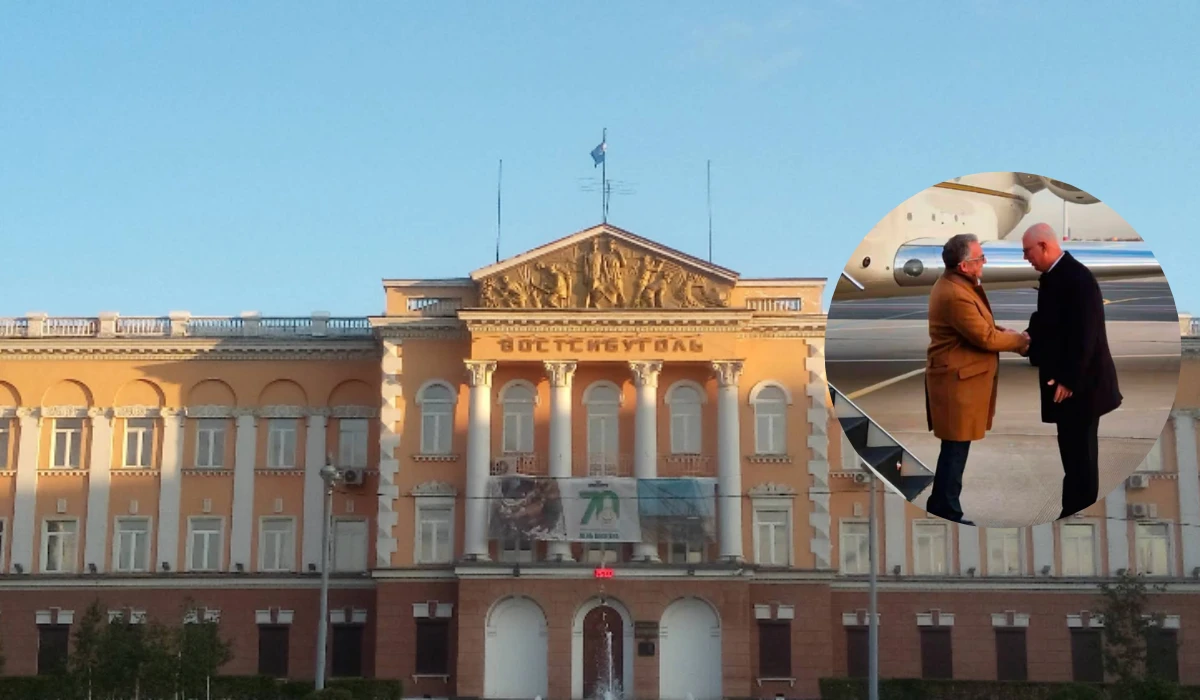
Following the formal pardon, Russian security officers escorted Hubbard directly to St. Petersburg’s Pulkovo Airport, where he met Witkoff and Kirill Dmitriev, CEO of the Russian Direct Investment Fund. Video footage released from the airport showed Witkoff introducing Dmitriev to Hubbard as someone “who had a lot to do with this happening,” before telling the released American, “We just met President Putin, he sends you blessings and wishes you good things”.
What Role Did Donald Trump Play in Securing Hubbard’s Release Without a Prisoner Swap?
As reported by India Today and Al Jazeera, US President Donald Trump addressed White House reporters on Wednesday to announce Hubbard’s liberation, taking credit for initiating direct personal appeals to Moscow.
Describing the 74-year-old Michigan native as a “very high-quality, innocent man,” President Donald Trump declared: “He is the happiest man around”. Trump emphasized that unlike previous diplomatic releases negotiated by Washington, the US government was not required to perform a bilateral exchange or release Russian intelligence or military operatives held in Western custody.
Writing on social media platforms shortly after the announcement, President Donald Trump stated that Russia acted “out of respect for President Trump” and confirmed that “there was no swap necessary for this release”.
Lawyers at the US-based law firm Boies Schiller Flexner and the Russian firm EPAM Law—who previously negotiated the release of American teacher Marc Fogel—assisted in coordinating Hubbard’s legal paperwork. Martin De Luca, a partner at Boies Schiller Flexner, stated in an interview that Hubbard’s family “thought they weren’t going to see him again alive, and Stephen didn’t think he was going to come out of there alive. Obviously, they’re overjoyed, but they feel very much like it’s a miracle”.
How Does Hubbard’s Release Connect to Wider US-Russia Relations and the Ukraine Conflict?
As reported by The Print and The Guardian, Hubbard’s release occurred amidst significant diplomatic shifts between Washington, Kyiv, and Moscow. Prior to arriving in St. Petersburg, Special Envoy Steve Witkoff held talks in Oslo, Norway, with Ukrainian President Volodymyr Zelenskyy and Finnish President Alexander Stubb to examine peace proposals.
However, the release coincides with growing friction between Washington and Kyiv over recent unilateral policy shifts enacted by the Trump administration. Last week, President Trump exercised executive authority to waive financial sanctions against Russia that had been enacted under statutory legislation named after the late South Carolina Senator Lindsey Graham. Additionally, the administration announced an agreement to purchase Russian diesel fuel in a bid to suppress domestic fuel costs ahead of upcoming US midterm elections.
President Trump publicly stated that easing sanctions helped facilitate the negotiations, asserting that without such measures, diplomatic discussions with Moscow would have come to a “complete and total halt”.
Background of the Particular Development
Stephen Hubbard was the last remaining American citizen in Russia who held the official “wrongfully detained” status issued by the US Department of State. Over recent years, Russian authorities have detained several Western nationals, including journalists, military veterans, and dual citizens, on charges ranging from espionage and assault to drug possession and mercenary activities.
In August 2026, Russian authorities released former US Marine Robert Gilman, who had been serving a prison sentence for allegedly assaulting a police officer while in custody. Despite Hubbard’s release, numerous foreign nationals remain in Russian detention facilities. In recent days alone, Russia’s Federal Security Service (FSB) announced the arrest of a German national on mercenary charges, a Swedish citizen accused of sabotage, and a Japanese journalist facing espionage allegations.
How This Development Can Affect Detained Foreigners, US Voters, and International Diplomacy
The diplomatic handling of Stephen Hubbard’s release and the broader dialogue between Washington and Moscow will produce distinct outcomes across several political and international domains:
- For Remaining Foreign Detainees in Russia: The successful release of Hubbard demonstrates that direct, unilateral appeals between the White House and the Kremlin can yield releases without requiring high-profile prisoner swaps. However, because Russia continues to arrest foreign nationals—including German, Swedish, and Japanese citizens—the risk of foreign travelers being detained as political leverage remains exceptionally high.
- For the American Electorate and Midterm Politics: President Trump’s ability to secure the return of an incarcerated US Air Force veteran without surrendering Russian prisoners will be highlighted as a major foreign policy success ahead of the US midterm elections. However, the administration’s decision to waive anti-Russian sanctions and purchase Russian diesel fuel will face sharp criticism from congressional lawmakers who view the moves as overly permissive toward Moscow.
- For Diplomatic Negotiations Over the War in Ukraine: Steve Witkoff’s public praise of Vladimir Putin as a “humanitarian” signals a deliberate effort by Washington to build rapport with the Kremlin to advance peace negotiations. While this approach may open channels for direct US-Russia talks—including potential multi-lateral summits in Beijing—it risks deepening alarm among Ukrainian officials and European allies who fear Washington may pressure Kyiv into accepting unfavorable territorial concessions.