Key Points
- Ukrainian President Volodymyr Zelenskyy revealed at the 30th Ibero-American Summit in Madrid that Russia has begun conscripting abducted Ukrainian children into its military forces.
- Kyiv estimates that Russia has forcibly deported or transferred more than 20,000 Ukrainian children from occupied areas since the full-scale invasion launched in February 2022.
- Official Ukrainian figures confirm that 2,790 children have been successfully returned to Ukraine so far, leaving thousands missing or held in Russian institutions and foster setups.
- United Nations experts accused Russian authorities of committing war crimes and crimes against humanity, documenting that roughly 80 per cent of verified displaced children have not been returned to legal guardians.
- The International Criminal Court (ICC) issued arrest warrants in 2023 for Russian President Vladimir Putin and Children’s Commissioner Maria Lvova-Belova over the unlawful deportation of Ukrainian minors.
- Russian officials deny abduction claims, asserting that vulnerable minors were legally evacuated from active combat zones for their safety.
Moscow (Moscow News Daily) November 6, 2026 – Ukrainian President Volodymyr Zelenskyy has accused the Russian Federation of forcibly conscripting abducted Ukrainian children into its military after raising them in Russian-controlled territories throughout the multi-year conflict. Speaking on Thursday during a diplomatic address in Madrid, Spain, Zelenskyy stated that young Ukrainians removed from occupied regions at the start of the full-scale invasion have reached military age and are being inducted into the Russian armed forces. The announcement highlights growing international concerns regarding the systematic indoctrination and deployment of Ukrainian youth by Russian military structures.
- What Did President Volodymyr Zelenskyy Announce Regarding Ukrainian Minors in Madrid?
- How Many Ukrainian Children Have Been Deported Since the Full-Scale Invasion Began?
- How Has the International Community and the United Nations Assessed These Deportations?
- How Has the Russian Federation Responded to Abduction Allegations?
- Background of the Particular Development After the News
- How This Development Can Affect Ukrainian Families, International Legal Bodies, and Global Foreign Policy
What Did President Volodymyr Zelenskyy Announce Regarding Ukrainian Minors in Madrid?
As reported by Ukrinform and Hromadske, Ukrainian President Volodymyr Zelenskyy revealed the conscription of deported Ukrainian children during a special panel dedicated to Ukraine at the 30th Ibero-American Summit held in the Spanish capital of Madrid.
Speaking directly to international delegates, President Volodymyr Zelenskyy stated: “Russia has already begun sending some of these children – children it abducted from us and who have grown up during this war, over these years – into the Russian army. This is terrible, and it must stop.”
Zelenskyy stressed that the forced removal of young citizens constitutes one of the most horrific dimensions of the invasion. As reported by Ukrinform, Zelenskyy urged global leaders to maintain public exposure of Moscow’s actions, stating: “The only way to stop this is to make sure the world knows what is happening. So please, speak about this, keep raising this issue and make sure the world hears about these crimes.”
How Many Ukrainian Children Have Been Deported Since the Full-Scale Invasion Began?
According to data compiled by Ukraine’s official Bring Kids Back initiative and stated by government officials, Kyiv estimates that Russian authorities have illegally removed or forcibly displaced more than 20,000 Ukrainian children from occupied parts of the country since February 2022.
As reported by journalists at Newsweek, slightly more than one-tenth of these missing minors have been successfully brought back to Ukrainian-controlled territory. Official figures cited by President Volodymyr Zelenskyy confirm that 2,790 children have been returned through complex international diplomatic interventions and third-country negotiations. Thousands of others remain unaccounted for, listed officially as missing within occupied zones or inside the Russian Federation.
Ukrainian officials reported on Thursday that one child from the partially occupied Kherson region was reunited with her mother on Ukrainian territory, alongside five other children and young adults returned since 29 October.
How Has the International Community and the United Nations Assessed These Deportations?
As documented by United Nations experts and international legal bodies, the systematic transfer of Ukrainian minors from occupied territories to the Russian Federation violates established international humanitarian conventions.
In March, UN legal experts concluded that Russian authorities committed war crimes and crimes against humanity by forcibly transferring and re-educating Ukrainian children. International investigators verified more than 1,200 child deportation cases across five Ukrainian regions, accusing Russian administrators of systematically concealing the location of minors from their parents and blocking family reunifications. According to the UN panel, approximately 80 per cent of verified displaced children remain in Russian state institutions or placed with long-term adoptive families in Russia.
These actions led the International Criminal Court (ICC) in The Hague to issue formal arrest warrants in 2023 for Russian President Vladimir Putin and Russia’s Presidential Commissioner for Children’s Rights, Maria Lvova-Belova. The court cited criminal responsibility for the unlawful deportation and transfer of children. Because Moscow is not an ICC signatory and does not recognize its jurisdiction, Russian authorities have rejected the warrants.
How Has the Russian Federation Responded to Abduction Allegations?
In response to international inquiries and official legal warrants, representatives of the Russian Federation have repeatedly denied conducting illegal child deportations.
As reported by Newsweek, Russian authorities maintain that state agencies did not kidnap Ukrainian children, asserting instead that military and civilian personnel conducted humanitarian evacuations to transfer vulnerable young people out of active combat zones. The Russian Ministry of Defense was contacted by media outlets for specific comments regarding President Zelenskyy’s statements in Madrid, but did not immediately provide an official response.
Background of the Particular Development After the News
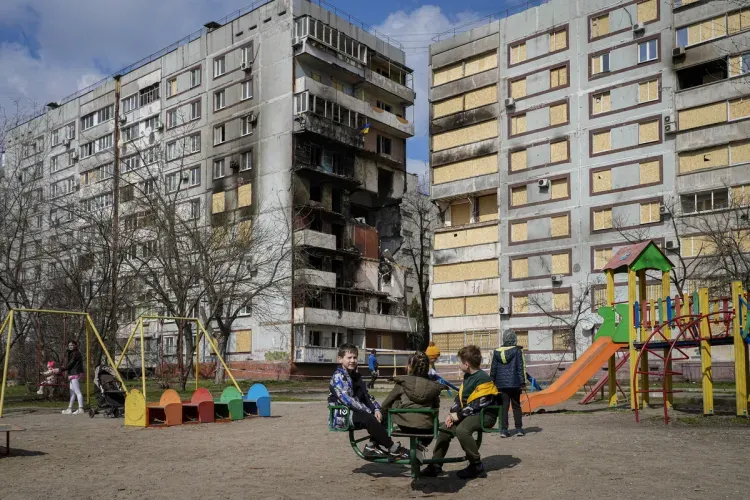
The forced displacement and militarisation of Ukrainian minors represent a long-term humanitarian crisis that has escalated since the initial Russian military interventions in Crimea and the Donbas in 2014. Following the full-scale invasion in February 2022, Ukrainian state bodies, humanitarian NGOs, and international human rights observers documented systematic efforts by Russian authorities to relocate children from orphanages, boarding schools, and displaced families in occupied cities such as Mariupol, Kherson, and Melitopol.
Upon arrival in the Russian Federation or occupied Crimea, many Ukrainian children were subjected to expedited citizenship procedures under decrees signed by President Vladimir Putin. These measures facilitated adoption into Russian families and enrollment in state-run educational facilities. Organizations such as the International Coalition for the Return of Ukrainian Children—supported by partner nations including Panama, Switzerland, and Cyprus—have worked alongside Ukrainian Commissioner for Human Rights Dmytro Lubinets and Children’s Rights Commissioner Daria Herasymchuk to track missing minors. However, as displaced minors who were taken as young teenagers reach the age of majority (18 years old), they become subject to Russia’s mandatory military conscription laws, converting displaced Ukrainian youth into military personnel within the Russian armed forces.
How This Development Can Affect Ukrainian Families, International Legal Bodies, and Global Foreign Policy
The conscription of displaced Ukrainian children into the Russian armed forces carries profound geopolitical, legal, and psychological implications for affected families, global judicial agencies, and foreign diplomatic missions.
Impact on Ukrainian Families and Legal Advocacy Groups
For families of missing or displaced Ukrainian minors, the enlistment of abducted youth into the Russian army creates an immediate existential danger. Parents and legal guardians face severe psychological distress caused by the prospect of their children being deployed to the frontline to fight against their homeland. Humanitarian organizations documenting war crimes will face increased complexity in tracking young adults who have been integrated into military units, making legal verification, identity tracing, and post-war family reunifications far more difficult to execute.
Impact on International Legal Bodies and Enforcement Mechanisms
President Zelenskyy’s public disclosures will likely intensify pressure on the International Criminal Court, the United Nations, and European judicial bodies to expand their evidentiary scope. International prosecutors may introduce additional war crime charges against Russian military leadership regarding the forced conscription of protected populations under the Fourth Geneva Convention. The situation will also push the International Coalition for the Return of Ukrainian Children to demand third-party access (via neutral intermediary states such as Qatar or Saudi Arabia) to inspect military-age displaced youth held in Russian territory.
Impact on Global Diplomatic Policy and Sanctions Enforcement
On the diplomatic stage, evidence of Ukrainian youth being conscripted will serve as a key focal point for Kyiv during international summits and peace negotiations. Western allies and non-aligned nations facing diplomatic engagement with Moscow will be under heightened pressure to make the unconditional return of Ukrainian minors a prerequisite for bilateral agreements. Additionally, secondary sanctions targeting Russian educational administrators, youth military training organizations (such as Yunarmia), and regional adoption boards are expected to be expanded by the European Union and partner nations.