Key Points:
- Record Casualty Rates: Russian military forces suffered an estimated 54,000 casualties during October 2026, marking the highest monthly casualty total for Moscow’s forces since the onset of the conflict, according to official statements from Ukrainian President Volodymyr Zelenskyy and corroborated European government intelligence assessments.
- Unsustainable Manpower Losses: European intelligence evaluations shared with Bloomberg indicate that the proportion of Russian troops killed in action reached record levels in October, creating a personnel deficit that exceeds Russia’s current domestic recruitment capabilities.
- Territorial Loss and Operational Stagnation: Despite heavy personnel expenditures, Russian forces registered net territorial losses for the second consecutive month in October, failing to achieve strategically significant gains, according to battlefield tracking data from the Institute for the Study of War (ISW).
- Compounding Economic Pressure: The Russian domestic economy faces escalating systemic pressure driven by rising war expenditures, widening state budget deficits, Western financial sanctions, and targeted Ukrainian drone strikes against domestic oil refining infrastructure.
- Infra-Structure Bombardment Campaign: In response to front-line setbacks, Moscow has shifted operational focus toward heavy aerial bombardments of Ukrainian urban centres and energy infrastructure to break public morale before spring.
Moscow (Moscow News Daily) November 2, 2026 – Russian military operations in Ukraine faced mounting operational and economic strains on Monday, 2 November 2026, following intelligence reports confirming that Russian forces suffered a record 54,000 casualties during the month of October. As reported by senior international political reporter Alberto Nardelli of Bloomberg, European government intelligence assessments shared with Bloomberg corroborate figures released by Ukrainian President Volodymyr Zelenskyy, confirming that both total casualties and the proportion of troops killed in action reached their highest monthly levels of the conflict. Military analysts and intelligence officials report that Moscow’s current casualty rate has become structurally unsustainable, outstripping monthly troop recruitment capacity while failing to yield strategic territorial advances.
- Key Points:
- How severe are the recent Russian military casualty figures reported in October?
- What territorial gains or losses did Russian forces achieve in October?
- What economic pressures are currently impacting Russia’s war effort?
- How is Moscow altering its strategic approach ahead of the winter season?
- What political factors and international developments could influence the conflict’s outcome?
- Background of Russian Casualty Rates and Winter Campaign Strategies
- Russian Military Mobilization, Domestic Economy, and the Ukrainian Civilian Population
How severe are the recent Russian military casualty figures reported in October?
As reported by political correspondent Alberto Nardelli of Bloomberg, Ukrainian President Volodymyr Zelenskyy announced that Russian forces suffered 54,000 casualties throughout October 2026.
Independent European government assessments provided to Bloomberg corroborated President Volodymyr Zelenskyy’s statement, confirming that the monthly casualty figure and the ratio of fatalities among wounded personnel reached historic highs.
Analyzing the operational impact of these figures, Alberto Nardelli reported:
“Even if Putin gives little thought to casualties, the carnage isn’t just staggering but unsustainable, greater than the number of people that Russia is currently recruiting.”
Military logisticians highlight that the rate of attrition across active frontline sectors in Eastern and Southern Ukraine now exceeds the Russian Ministry of Defence’s monthly enlistment drive, creating net personnel deficits across frontline infantry formations.
What territorial gains or losses did Russian forces achieve in October?
As reported by Alberto Nardelli of Bloomberg, citing battlefield mapping data from the Institute for the Study of War (ISW), Russian forces lost net ground in October for the second consecutive month.
Despite maintaining high operational intensity and heavy artillery usage, Moscow achieved fewer total territorial advances in 2026 compared to 2025, incurring significantly higher personnel and equipment costs without securing strategically critical urban centers or transport hubs.
Data compiled by the Institute for the Study of War confirms that Ukrainian counter-attacks successfully recaptured localized positions, leaving Russian offensives stalled across multiple operational axes heading into the winter period.
What economic pressures are currently impacting Russia’s war effort?
As reported by financial and political correspondents for Bloomberg, the Russian state budget and domestic economy are experiencing compound pressures arising from prolonged military expenditures.
Key economic pressure points highlighted in intelligence evaluations include:
- Escalating Defense Expenditures: High direct spending on military hardware, troop compensation, and casualty payouts straining state reserves.
- Widening Fiscal Deficits: Decreasing state revenue streams alongside mounting budget deficits.
- International Sanctions: Cumulative trade and financial sanctions restricting access to high-technology components and capital markets.
- Refinery Infrastructure Damage: Ukrainian long-range drone strikes targeting domestic Russian oil refineries, disrupting domestic fuel supply chains and export revenues.
Despite public assertions from Russian President Vladimir Putin claiming economic resilience and successful military progression, economic indicators demonstrate increasing systemic vulnerability.
How is Moscow altering its strategic approach ahead of the winter season?
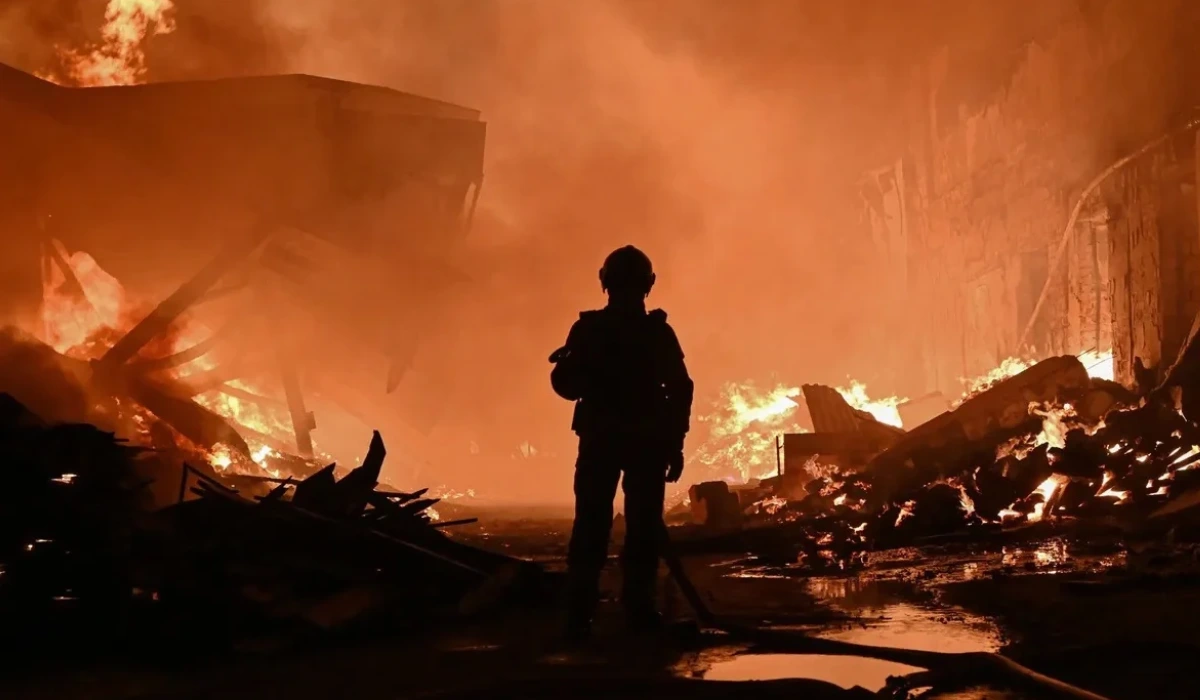
As reported by Alberto Nardelli of Bloomberg, Russian military command has shifted tactical focus toward intensified long-range aerial bombardments targeting Ukrainian civilian population centers and energy infrastructure.
The strategic objective of the campaign is to degrade Ukrainian civilian morale, strain municipal utilities, and strengthen Moscow’s diplomatic leverage ahead of potential springtime negotiations.
Evaluating Ukraine’s defensive capacity, Alberto Nardelli noted that while Kyiv has successfully intercepted jet-powered attack drones, Western partners have failed to deliver necessary volumes of air-defense missile interceptors, leaving municipal power grids exposed to ballistic and cruise missile strikes ahead of freezing winter temperatures.
What political factors and international developments could influence the conflict’s outcome?
As reported by Bloomberg political analysts, international diplomatic developments and upcoming electoral events in key allied nations maintain significant leverage over the war’s trajectory.
Political considerations shaping the conflict include:
- US Midterm Elections: Political shifts following the US midterms, where potential shifts in Congressional control could alter foreign aid authorizations and military supply pipelines.
- Diplomatic Engagements: Evolving international diplomatic efforts and statements from figures including Donald Trump regarding negotiated settlements.
- European Air Defense Pledges: The speed and volume of European air-defense deliveries to protect Ukrainian infrastructure against winter strike packages.
Both Russian and Ukrainian forces enter the winter season facing operational hardship, with battlefield posture at the end of the winter period expected to dictate future strategic leverage.
Background of Russian Casualty Rates and Winter Campaign Strategies
Since the commencement of full-scale military operations in February 2022, the Russian Armed Forces have relied heavily on artillery saturation and massed infantry advances to break fortified Ukrainian lines. This tactical doctrine resulted in high personnel losses throughout major engagements in Bakhmut, Avdiivka, and Vuhledar. To maintain manpower levels without executing politically sensitive mass mobilization orders in major western cities such as Moscow and Saint Petersburg, the Kremlin introduced financial incentives, regional contract bonuses, and penal recruitment programs.
However, by late 2026, the cumulative toll of sustained offensive operations, combined with Ukraine’s deployment of precision cluster munitions, FPV drone swarms, and defensive fortification networks, escalated Russian monthly casualties to historic highs. Concurrently, winter conditions in Eastern Europe historically impose severe logistical challenges, reducing troop mobility, increasing equipment failure rates, and exposing personnel without adequate winter supply lines to non-combat cold injuries.
Russian Military Mobilization, Domestic Economy, and the Ukrainian Civilian Population
The record casualty rates and economic headwinds documented in October 2026 are predicted to produce severe operational, economic, and humanitarian consequences for both Russian state stability and the Ukrainian civilian population throughout the winter of 2026–2027.
For the Russian military command and domestic populace, unsustainable personnel losses exceeding 50,000 per month will likely force President Vladimir Putin to choose between curtailing offensive operations or ordering an official, compulsory wave of national mobilization. Forced mobilization or further diversion of civilian labor into the defense sector is predicted to deepen labor shortages across Russia’s industrial and agricultural sectors, driving up domestic inflation and widening fiscal budget deficits heading into 2027.
For the Ukrainian civilian population, Russia’s strategic pivot toward heavy infrastructure bombardment during winter will result in widespread rolling power outages, heating disruptions, and municipal water shortages. If Western allies fail to rapidly supply specialized air-defense interceptor missiles, urban centers across Ukraine will face heightened humanitarian strain, testing civilian resilience and municipal emergency services through the coldest months of the year.