Key Points
- High-Level Bilateral Delegation: A Ho Chi Minh City Party Committee delegation led by Deputy Party Secretary Dang Minh Thong concluded an official four-day diplomatic visit to Moscow, Russia, spanning 4–7 November 2026.
- Focus on Transport & Smart City AI: Ho Chi Minh City requested technical expertise and knowledge sharing from Moscow officials regarding metro network expansion, urban traffic management, digital government solutions, and the integration of artificial intelligence (AI) into public services.
- Updating Strategic Accord: Vietnamese officials proposed updating the foundational 2003 bilateral cooperation agreement between Ho Chi Minh City and Moscow to reflect emerging priorities in technology, logistics, and smart infrastructure.
- Legislative and Economic Tie-Ups: Delegations proposed establishing a formal partnership mechanism between the Moscow City Duma and the Ho Chi Minh City People’s Council, alongside strengthening linkages in high-tech agriculture, pharmaceuticals, and trade.
- Reciprocal Support & Future Visits: Moscow City Duma Chairman Alexey Shaposhnikov reaffirmed Russia’s commitment to urban collaboration and announced plans for an official visit to Vietnam in the near future.
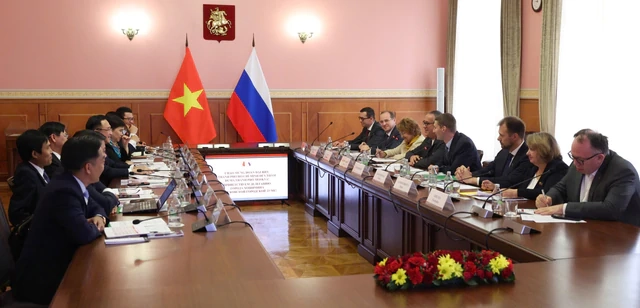
Moscow (Moscow News Daily) November 8, 2026 – Ho Chi Minh City has formally approached the municipal administration of Moscow to request technical assistance and expertise in urban metro expansion, traffic optimization, and artificial intelligence integration for city governance. As reported by Tuoi Tre News and domestic press agencies on Sunday, 8 November 2026, the strategic request was submitted during an official four-day diplomatic mission to the Russian capital from 4 to 7 November by a senior delegation of the Ho Chi Minh City Party Committee, led by Deputy Party Secretary Dang Minh Thong. During bilateral talks with Moscow City Duma Chairman Alexey Shaposhnikov, Vietnamese representatives proposed updating the 2003 municipal cooperation framework between the two metropolises to prioritize digital twin technology, automated public transit systems, and high-tech industrial links.
- What Specific Urban Infrastructure and AI Proposals Were Raised in Moscow?
- How Did Moscow Legislative Leaders Respond to Ho Chi Minh City’s Proposals?
- What Technical Meetings and Cultural Engagements Were Conducted During the Visit?
- Background of the Particular Development After the News
- How This Development Can Affect Ho Chi Minh City Residents, Urban Planners, and Technology Sector
What Specific Urban Infrastructure and AI Proposals Were Raised in Moscow?
As reported by Tuoi Tre News, Deputy Party Secretary Dang Minh Thong detailed Ho Chi Minh City’s intention to leverage Moscow’s urban management track record to accelerate Vietnam’s largest commercial center into a modernized smart city.
During high-level discussions held on 6 November 2026 at the Moscow City Duma, Thong highlighted the Russian capital’s achievements in public transit engineering, municipal digital transformation, and automated public administration.
Specifically, the Vietnamese delegation called on Moscow authorities to share technical frameworks for:
- Metro and Urban Railway Planning: Sharing design, operational, and structural expertise as Ho Chi Minh City expands its mass rapid transit (MRT) grid to alleviate chronic ground traffic congestion.
- Artificial Intelligence and Traffic Management: Applying big data, predictive AI models, and real-time digital twins to monitor city traffic, infrastructure strain, environmental parameters, and public service delivery.
- Digital Governance Systems: Implementing automated digital government portals to streamline municipal administrative tasks for citizens and commercial enterprises.
As reported by Tuoi Tre News, Deputy Party Secretary Dang Minh Thong urged both municipal administrations to increase working-level exchanges and update their existing 2003 cooperation agreement to reflect modern technological and economic realities.
How Did Moscow Legislative Leaders Respond to Ho Chi Minh City’s Proposals?
According to reporting by Tuoi Tre News, Moscow City Duma Chairman Alexey Shaposhnikov welcomed the Vietnamese proposals and affirmed Moscow’s readiness to deepen practical ties between both cities.
Shaposhnikov highlighted the historical friendship connecting Vietnam and the Russian Federation, noting that legislative and administrative cooperation between municipal assemblies forms a vital pillar of bilateral relations.
As reported by Tuoi Tre News, Alexey Shaposhnikov stated that he was prepared to lead a parliamentary delegation on an official visit to Vietnam in the near future to advance local-level agreements with Ho Chi Minh City.
In addition to legislative tie-ups, Thong called for structured support to connect research institutions and commercial enterprises operating across several high-value sectors:
- Science, technology, and software innovation.
- Urban infrastructure and multi-modal logistics networks.
- Healthcare services, pharmaceutical manufacturing, and high-tech agriculture.
To institutionalize these projects, the Vietnamese delegation advocated creating a direct cooperation and exchange mechanism connecting the Moscow City Duma and the Ho Chi Minh City People’s Council.
What Technical Meetings and Cultural Engagements Were Conducted During the Visit?
As reported by Tuoi Tre News, the Ho Chi Minh City delegation engaged in targeted working sessions on 5 November with specialized departments within the Moscow municipal government.
These included high-level briefings with:
- Moscow Department for External Economic and International Relations: Focusing on bilateral trade expansion, investment incentives, and industrial partnerships.
- Moscow Department of Information Technology: Reviewing big data architecture, citywide sensor networks, and digital twin software used to manage Moscow’s municipal services.
- Moscow Metro Management: Examining technical operations, signal systems, passenger throughput strategies, and station integration models.
- Moscow Export Center: Exploring commercial channels for Vietnamese and Russian goods, tourism promotion, and joint economic ventures.
Alongside official policy negotiations, the Vietnamese delegation paid homage at the President Ho Chi Minh monument in Moscow, conducted a working session at the Vietnamese Embassy in the Russian Federation, and met with executives from the Hanoi-Moscow Cultural and Trade Center (Incentra) and the Vietnamese Business Association in Moscow.
Background of the Particular Development After the News
The strategic outreach by Ho Chi Minh City to Moscow comes at a critical juncture in southern Vietnam’s urbanization. As Vietnam’s primary economic locomotive with a population exceeding nine million residents, Ho Chi Minh City has faced severe urban infrastructure pressures, including traffic congestion, environmental flooding, and rising demands on public utilities. While the city opened its initial urban railway segments, municipal authorities are pursuing a major rapid transit expansion plan aimed at constructing an interconnected metro network spanning multiple lines by 2035.
Concurrently, Moscow has undergone an extensive municipal modernization program over the past decade. The Moscow Metro system is globally recognized for its operational efficiency, high passenger capacity, and rapid expansion, including the completion of the Big Circle Line. Furthermore, Moscow’s Department of Information Technology has deployed comprehensive smart city frameworks, integrating facial recognition, automated traffic light synchronization, digital twin mapping, and centralized electronic municipal services. By seeking to update their 2003 cooperation agreement, Ho Chi Minh City aims to bypass preliminary development stages by adopting proven technological frameworks directly from Moscow’s municipal operators.
How This Development Can Affect Ho Chi Minh City Residents, Urban Planners, and Technology Sector
The prospective implementation of Moscow’s urban management solutions in Ho Chi Minh City will generate noticeable operational and structural effects across various civic sectors.
Impact on Ho Chi Minh City Commuters and Public Transit Users
For the millions of daily commuters in Ho Chi Minh City, absorbing Moscow’s metro management practices and smart traffic technology will lead to improved public transit reliability. Integrating AI-driven traffic monitoring can optimize traffic light cycles at major bottlenecks, reducing daily transit times and easing congestion on primary arterial roads. Long-term technical alignment with Moscow Metro operators could also accelerate the rollout and operational integration of upcoming metro lines.
Impact on Municipal Urban Planners and Civil Engineers
For urban planners and infrastructure managers in Vietnam, adopting digital twin technologies and big data analytics will revolutionize municipal governance. Civil engineers will gain access to real-time predictive modeling for flood control, road maintenance, and public utility distribution, allowing the city administration to transition from reactive maintenance to automated, data-driven preventative management.
Impact on Bilateral Trade and Technology Enterprises
For technology firms, software developers, and logistics operators in both Russia and Vietnam, updating the 2003 bilateral agreement opens direct commercial channels. Russian smart-city technology vendors and AI developers will find expanded export opportunities in Southeast Asia, while Vietnamese agricultural, pharmaceutical, and technology enterprises will benefit from streamlined trade channels, joint ventures, and regulatory support facilitated by the Moscow Export Center and municipal legislative bodies.