
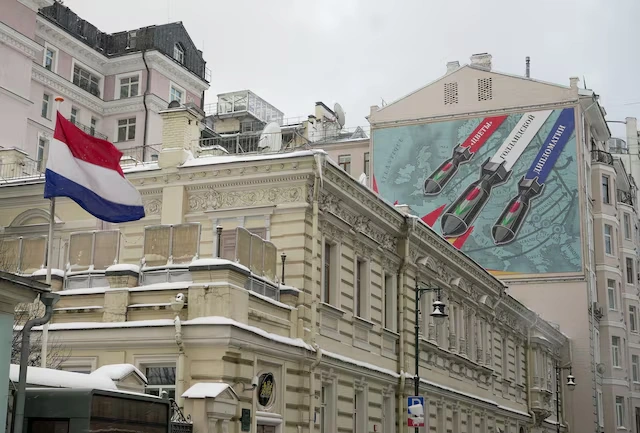
- Mural Near Dutch Embassy in Moscow: A large mural on the side of an apartment building near the Dutch embassy in Moscow depicts three missiles topped with red tulips flying over Europe alongside the slogan “The flowers of Dutch diplomacy”, which the Dutch Foreign Ministry said was painted months earlier rather than after the recent Crimean Bridge strike.
- Destinus Statement on Crimean Bridge Attack: Dutch-headquartered aerospace and defence startup Destinus—founded by Russian-born entrepreneur Mikhail Kokorich—told Reuters earlier in November 2026 that its missiles were the only foreign-made weapons used in a major Ukrainian attack on Russia’s bridge to Crimea that halted road traffic while leaving the rail section operating.
- Diplomatic Clash Over Involvement and Kyiv Embassy Damage: Russia’s embassy in the Netherlands labelled Destinus’s remark a “confession” and asked whether The Hague had openly joined the war alongside Kyiv, while two days after the bridge strike minor damage hit the Dutch embassy in Kyiv during a Russian attack, prompting The Hague to summon the Russian ambassador.
- The Hague’s Response on International Law and “Stoking Fear”: Dutch Foreign Minister Tom Berendsen stated that Ukraine determines how approved Dutch exports are deployed under international law and dismissed Russian accusations of direct Dutch involvement as an effort to “stoke fear” and weaken support for Ukraine, while the Russian ambassador in the Netherlands expressed regret over the Kyiv incident and repeated warnings about diplomatic safety in Kyiv.
Moscow (Moscow News Daily) November 27, 2026 – Executive Summary: A large mural depicting three missiles with red tulips and the slogan “The flowers of Dutch diplomacy” appeared near the Dutch embassy in Moscow, which the Dutch Foreign Ministry noted was created months before a Dutch-based company said its missiles were used in an attack on the Crimean Bridge. Reported across Reuters (with contributions from Anthony Deutsch and text by Andrew Osborn), The Moscow Times, Meduza and Vijesti, the dispute follows minor damage to the Dutch embassy in Kyiv and a diplomatic summons in The Hague.
- What Did Destinus Say About the Crimean Bridge Attack and How Did Moscow React?
- How Did the Incident Near the Dutch Embassy in Kyiv Unfold and What Did Tom Berendsen Say?
- How Do the Key Developments, Statements and Claims Compare?
- Background of the Particular Development After the News
- How This Development Can Affect Diplomats, Defence Suppliers and Ukraine Support
As reported by Reuters (with contributions from Anthony Deutsch and text by Andrew Osborn) on 26 November 2026, a giant mural suggesting the Netherlands is guilty of military aggression was painted on a wall near the Dutch embassy in Moscow before a Dutch-based company said in mid-November that its missiles had been used in a major attack on Russia’s bridge to Crimea, according to the Dutch Foreign Ministry.
Positioned on the side of an apartment building near the diplomatic mission in Moscow, the mural shows three missiles bearing red tulips flying across Europe above the slogan “The flowers of Dutch diplomacy”. Who painted the mural has not been established, and the Dutch Foreign Ministry stated that it was created months ago rather than in reaction to the recent strike on the bridge linking mainland Russia with Crimea.
What Did Destinus Say About the Crimean Bridge Attack and How Did Moscow React?
Reporting by Reuters on 26 November 2026, The Moscow Times on 18 and 20 November 2026, and Meduza on 19 November 2026 details the company’s statement regarding the bridge strike and the response from Russian diplomats in the Netherlands:
- Destinus’s Statement on the Crimean Bridge Strike: According to Reuters reporting on 26 November 2026, Destinus—a Dutch-headquartered startup founded by Russian-born entrepreneur Mikhail Kokorich—told Reuters earlier in November 2026 that its missiles were the only foreign-made weapons used in the Ukrainian attack on the Crimean Bridge. As reported by Reuters, the strike disrupted road traffic across the bridge while leaving a railroad segment operational.
- Russian Embassy’s “Confession” Claim in The Hague: Following Destinus’s statement, the Russian embassy in the Netherlands described the remarks as a “confession” and questioned whether The Hague had openly joined the conflict in Ukraine on Kyiv’s side. As reported by The Moscow Times on 18 and 20 November 2026, the Russian embassy also argued that it was becoming increasingly difficult to view the Netherlands as a mere bystander as The Hague deepened its involvement, and separately cited a provision of the Geneva Conventions regarding civilians taking part in hostilities after Dutch newspaper NRC reported on Destinus employees’ activities in Ukraine.
How Did the Incident Near the Dutch Embassy in Kyiv Unfold and What Did Tom Berendsen Say?
Coverage by Reuters on 26 November 2026, The Moscow Times on 20 November 2026, and Meduza on 19 November 2026 outlines the damage near the Dutch diplomatic compound in Kyiv, the summoning of Russia’s envoy in the Netherlands, and Dutch Foreign Minister Tom Berendsen’s remarks:
- Minor Damage in Kyiv and Summoning of the Ambassador: Two days after the bridge strike, the Dutch embassy in Kyiv sustained minor damage when a projectile landed near the building during a Russian attack on the Ukrainian capital, prompting the Dutch government to summon the Russian ambassador in the Netherlands for talks. No embassy staff were injured.
- Statements by the Russian Ambassador and Tom Berendsen: According to Reuters reporting on 26 November 2026, the Russian ambassador in the Netherlands stated that he had expressed regret while repeating warnings that it was unsafe for diplomats to remain in Kyiv, where he said Moscow was attacking military targets. Speaking to reporters—and to Dutch broadcaster RTL, as reported by The Moscow Times on 20 November 2026—Dutch Foreign Minister Tom Berendsen called the incident in Kyiv unacceptable, stated that Ukraine decides how to use weapons approved by the Netherlands for export in accordance with international law, and characterised Russian claims of Dutch involvement as an attempt to “stoke fear” and undermine support for Ukraine.
How Do the Key Developments, Statements and Claims Compare?
A structured summary compiles the elements reported across Reuters and accompanying coverage:
| Element or Issue | Reported Detail | Source / Attribution |
| Moscow Mural | Depicts three missiles with red tulips over Europe and the slogan “The flowers of Dutch diplomacy” on an apartment wall near the Dutch embassy; Dutch Foreign Ministry said it was painted months ago, origin unclear | Reuters (Anthony Deutsch; Andrew Osborn); Dutch Foreign Ministry |
| Crimean Bridge Strike Claim | Dutch-headquartered startup Destinus (founded by Russian-born Mikhail Kokorich) told Reuters its missiles were the only foreign-made weapons used; road traffic halted while rail stayed operational | Reuters; Destinus |
| Kyiv Embassy & Envoy Summons | Projectile landed near the Dutch embassy in Kyiv two days later during a Russian attack, causing minor damage with no injuries; The Hague summoned the Russian ambassador, who expressed regret and repeated safety warnings for Kyiv | Reuters; The Moscow Times; Meduza |
| Dutch Policy Stance | Arms exports do not make the Netherlands a party to the war; Ukraine decides deployment of approved exports under international law; Moscow’s claims aim to “stoke fear” and weaken support for Ukraine | Dutch Foreign Minister Tom Berendsen; Reuters |
Background of the Particular Development After the News
Relations between the Netherlands and Russia have faced sustained strain since Moscow’s full-scale invasion of Ukraine in February 2022, marked by diplomatic expulsions, sanctions disputes, and disagreements over Western military and financial assistance to Kyiv.
The Kerch Strait bridge—commonly referred to as the Crimean Bridge—opened in 2018 to link Russia’s Krasnodar region with the Crimean peninsula and has been the target of repeated strikes and security measures during the conflict, while foreign embassies in Kyiv have periodically faced risks from aerial strikes across the Ukrainian capital.
How This Development Can Affect Diplomats, Defence Suppliers and Ukraine Support
Escalating rhetoric and incidents involving diplomatic missions and defence-industry claims carry practical implications across several groups:
1. Dutch and Russian Diplomatic Missions
For diplomatic personnel in Moscow, Kyiv and The Hague, heightened friction increases scrutiny over embassy security protocols, official communications and bilateral summonses as both sides contest legal and political responsibility.
2. European Defence Contractors and Export Regulators
For defence companies headquartered in Europe and national export-control authorities, public attribution of hardware used in high-profile strikes intensifies legal, reputational and security considerations around supply chains, testing and compliance with international law.
3. Policymakers and Public Debate on Support for Ukraine
For European governments and audiences following the conflict, conflicting narratives from Moscow and The Hague test public messaging around military aid, escalation risks and continued backing for Ukraine.