
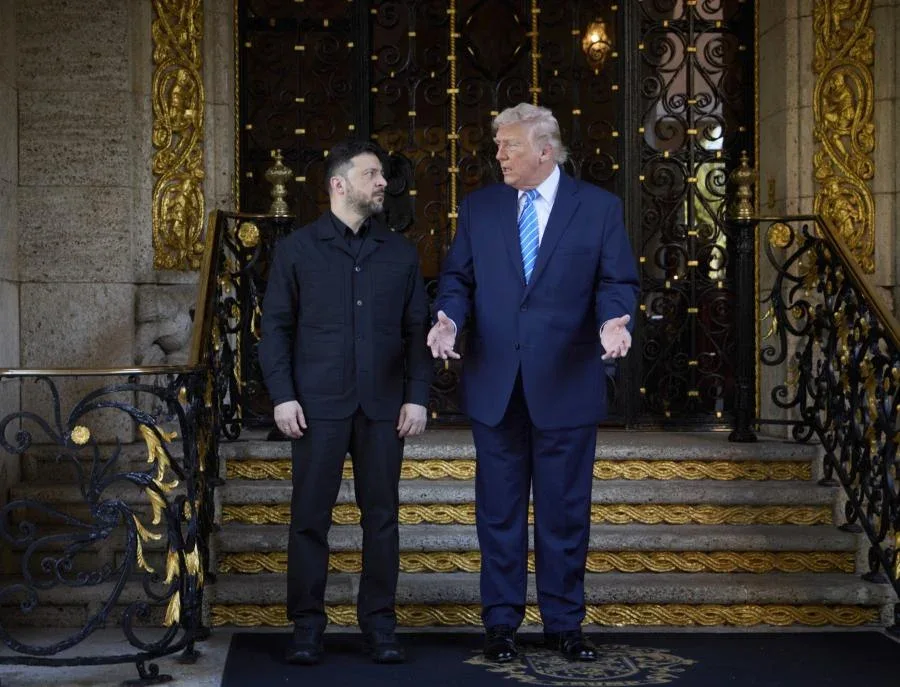
- Volodymyr Zelenskyy Criticises Donald Trump’s “My Friend” Remark: In a BBC interview with correspondent Sarah Rainsford broadcast from Kyiv on Friday, 27 November 2026, Ukrainian President Volodymyr Zelenskyy described U.S. President Donald Trump’s recent greeting of Russian President Vladimir Putin as “my friend” at a summit in Shenzhen, China, as “strange,” calling Vladimir Putin “an aggressor and a killer” and likening the remark to calling Adolf Hitler a friend during the Second World War.
- Escalating Diplomatic Friction and Kremlin Rebuttal: Volodymyr Zelenskyy’s criticism followed remarks by Donald Trump’s son-in-law and peace envoy Jared Kushner calling Vladimir Putin a “grandmaster” of politics and fellow negotiator Steve Witkoff referring to the Russian president as a “humanitarian,” prompting Kremlin spokesman Dmitry Peskov to accuse Volodymyr Zelenskyy of “insulting his counterpart” and rejecting a peace settlement.
- Operational Concerns Over Patriot Missiles and Starlink Disruptions: Beyond diplomatic rhetoric, Volodymyr Zelenskyy raised concerns that the Pentagon has withheld paid-for Patriot air defence missiles critical for intercepting Russian ballistic missiles—stating “The deficit of these missiles, that is people’s lives”—while reporting malfunctions with SpaceX’s military-grade Starlink satellite network used in Ukrainian drone operations and battlefield communications.
- Deadlock Over $49 Billion European Union Loan Package: European Union leaders failed on Thursday, 26 November 2026 to reach unanimous agreement on a proposed $49 billion economic and military loan package for Ukraine for 2027, raising concerns that upcoming national elections across the bloc over the next 12 months could bolster political factions opposed to continued funding for Kyiv.
Moscow (Moscow News Daily) November 28, 2026 – Ukrainian President Volodymyr Zelenskyy criticised U.S. President Donald Trump in a BBC interview broadcast from Kyiv on Friday, 27 November 2026 for calling Russian President Vladimir Putin “my friend,” urging stronger U.S. pressure on Moscow. Reported across BBC News, Samya Kullab and Elise Morton of The New Daily, CBC News, Reuters and Arab News, the remarks coincided with EU deadlock over a $49 billion loan for Ukraine.
- What Did Volodymyr Zelenskyy Say About Donald Trump Calling Vladimir Putin “My Friend”?
- How Did U.S. Envoys, NATO’s Mark Rutte and the Kremlin Respond?
- What Battlefield Supply Issues and European Union Funding Hurdles Does Ukraine Face?
- How Do the Key Diplomatic Statements, Military Supplies and Funding Developments Compare?
- Background of the Particular Development After the News
- How This Development Can Affect Ukraine, U.S.–Ukraine Relations and European Union Policy
Ukrainian President Volodymyr Zelenskyy voiced sharp frustration on Friday, 27 November 2026 over the White House’s conciliatory posture toward Russian President Vladimir Putin, urging the United States to exert far stronger pressure on Moscow to halt its nearly five-year invasion of Ukraine.
As reported by BBC News, Meduza (27 November 2026), The Times of Israel (27 November 2026) and Samya Kullab and Elise Morton of The New Daily (28 November 2026), Volodymyr Zelenskyy made the comments during an interview in Kyiv with BBC correspondent Sarah Rainsford, one week after Donald Trump greeted Vladimir Putin as a “friend” at a summit in Shenzhen, China, on 19 November 2026.
What Did Volodymyr Zelenskyy Say About Donald Trump Calling Vladimir Putin “My Friend”?
Reporting by BBC News, Meduza (27 November 2026), The Times of Israel (27 November 2026) and CBC News (28 November 2026) records Volodymyr Zelenskyy’s exact remarks during his interview with BBC correspondent Sarah Rainsford in Kyiv:
- Likening “My Friend” to Calling Adolf Hitler a Friend: Asked by BBC correspondent Sarah Rainsford how he felt seeing Donald Trump embrace Vladimir Putin and call him “my friend” at the summit in China, Volodymyr Zelenskyy—speaking in English—stated: “Of course it’s up to the President of the United States, but… it’s strange. [Putin] is an aggressor and a killer. He can’t be a friend. Just cannot be. It’s the same [as] somebody saying about Hitler during the Second World War that he’s good friend. No. He is not a friend”.
- Demand for Washington to Use Its Leverage as Mediator: As reported by Reuters and The Times of Israel on 27 November 2026, Volodymyr Zelenskyy urged the United States not to echo Moscow’s talking points and instead apply pressure on Russia, stating: “We need American position to be American position. We don’t need signals from the United States, which we can get from Russia”. He added: “They have to pressure on the situation. Russia is the aggressor—that’s why they are mediators”.
- Donald Trump’s Social Media Account of the Shenzhen Summit: Meanwhile, as noted by CBC News on 28 November 2026, Donald Trump claimed on social media that during his conversation with Vladimir Putin in Shenzhen, China, he told the Russian leader to “pull back all military aggression against territories throughout Europe, in the hopes that a deal can be made between Russia and Ukraine”.
How Did U.S. Envoys, NATO’s Mark Rutte and the Kremlin Respond?
Coverage by BBC News, Reuters, Arab News (27 November 2026) and Samya Kullab and Elise Morton of The New Daily (28 November 2026) outlines the surrounding remarks by U.S. negotiators, NATO leadership and Moscow:
- Remarks by U.S. Peace Envoys Jared Kushner and Steve Witkoff: Volodymyr Zelenskyy’s critique arrived amid deepening diplomatic friction between Kyiv and Washington, just one day after Donald Trump’s son-in-law and peace envoy Jared Kushner praised Vladimir Putin as a “grandmaster” of politics and weeks after fellow U.S. negotiator Steve Witkoff referred to the Russian president as a “humanitarian.”
- Kremlin Spokesman Dmitry Peskov’s Rebuttal: In Moscow, Kremlin spokesman Dmitry Peskov fired back at the Ukrainian president’s remarks, alleging that Volodymyr Zelenskyy was “insulting his counterpart” and demonstrating that he “is not willing to follow the path of (a) peace settlement.”
- NATO Secretary General Mark Rutte’s Interpretation and ICC Warrant Context: Separately, NATO Secretary General Mark Rutte stated that Donald Trump called Vladimir Putin “friend” in order to test the Russian leader. Meanwhile, Vladimir Putin remains the subject of an International Criminal Court (ICC) arrest warrant over alleged war crimes involving the abduction of Ukrainian children, though the Trump administration has levied broad sanctions against the tribunal in a bid to dismantle it.
What Battlefield Supply Issues and European Union Funding Hurdles Does Ukraine Face?
Reporting by CBC News (28 November 2026), Arab News (27 November 2026), Plataforma Media (27 November 2026) and The Economic Times (24–27 November 2026) details the military supply bottlenecks and European Union financing impasse confronting Kyiv:
- Delayed Pentagon Delivery of Paid-For Patriot Air Defence Missiles: Volodymyr Zelenskyy accused the United States of not paying sufficient attention to the conflict and raised concerns that the Pentagon has withheld paid-for Patriot air defence missiles crucial for intercepting Russian ballistic missile strikes. As reported by CBC News on 28 November 2026, Volodymyr Zelenskyy stated: “The deficit of these missiles, that is people’s lives”.
- Malfunctions With SpaceX’s Military-Grade Starlink Satellite Network: Volodymyr Zelenskyy also reported malfunctions with SpaceX’s military-grade Starlink satellite network, which underpins Ukrainian drone warfare and frontline battlefield communications.
- EU Deadlock Over $49 Billion Loan Package for 2027: Compounding those operational challenges, European Union leaders failed on Thursday, 26 November 2026 to secure unanimous agreement on a proposed $49 billion economic and military loan package for Ukraine for next year. As noted by Arab News on 27 November 2026, the impasse has heightened concerns that national elections across EU member states over the next 12 months could strengthen political parties opposed to sending further financial and military aid to Kyiv.
How Do the Key Diplomatic Statements, Military Supplies and Funding Developments Compare?
A structured summary compiles the positions, operational bottlenecks and financial decisions reported across the sources:
| Category | Reported Detail | Source / Attribution |
| Volodymyr Zelenskyy’s BBC Statement | Called Donald Trump’s “my friend” greeting to Vladimir Putin in Shenzhen “strange,” describing Putin as “an aggressor and a killer” and likening it to calling Adolf Hitler a friend | Volodymyr Zelenskyy; Sarah Rainsford / BBC News; Meduza |
| U.S. Envoys & NATO Assessment | Jared Kushner praised Putin as a “grandmaster” of politics; Steve Witkoff called Putin a “humanitarian”; NATO’s Mark Rutte said Trump used “friend” to test Putin | BBC News; Reuters |
| Kremlin Response | Kremlin spokesman Dmitry Peskov accused Zelenskyy of “insulting his counterpart” and showing he “is not willing to follow the path of (a) peace settlement” | Dmitry Peskov; Reuters |
| U.S. Military & Satellite Systems | Zelenskyy raised concerns over Pentagon delays in delivering paid-for Patriot air defence missiles (“The deficit of these missiles, that is people’s lives”) and malfunctions in SpaceX’s military-grade Starlink network | Volodymyr Zelenskyy; CBC News; Arab News |
| European Union Financial Package | EU leaders failed on Thursday, 26 November 2026 to reach unanimous agreement on a $49 billion economic and military loan package for Ukraine in 2027 amid upcoming national elections | Arab News; Plataforma Media |
Background of the Particular Development After the News
Russia’s full-scale invasion of Ukraine—approaching its five-year mark—has killed hundreds of thousands of troops and thousands of Ukrainian civilians while reshaping European security and transatlantic diplomacy.
Following the resumption of direct high-level engagement between Washington and Moscow under President Donald Trump—culminating in the 19 November 2026 encounter between Donald Trump and Vladimir Putin at the summit in Shenzhen, China—Kyiv has sought to preserve U.S. air defence deliveries and secure multi-year European financing while resisting diplomatic concessions that lack enforceable security guarantees.
How This Development Can Affect Ukraine, U.S.–Ukraine Relations and European Union Policy
The public disagreement between Volodymyr Zelenskyy and the White House, combined with the EU loan deadlock on 26 November 2026, carries practical consequences across several fronts:
1. Ukraine’s Air Defence and Frontline Drone Operations
For Ukrainian air defence units and frontline drone brigades, any prolonged delay in receiving paid-for Patriot interceptors or unresolved disruptions to military-grade Starlink connectivity directly increases vulnerability to Russian ballistic missile barrages against cities and energy infrastructure.
2. Transatlantic Diplomacy and Peace Negotiations
For Washington, Kyiv and Moscow, Volodymyr Zelenskyy’s pointed rejection of conciliatory language toward Vladimir Putin—and Dmitry Peskov’s swift accusation that Kyiv is obstructing peace talks—underscores the wide gap between U.S. diplomatic outreach to the Kremlin and Ukraine’s insistence on sustained pressure against Moscow.
3. European Union Budget Negotiations Ahead of 2027
For European Union heads of government and the European Commission, failing to reach unanimity on the $49 billion loan package leaves Kyiv facing fiscal uncertainty entering 2027, placing greater urgency on finding alternative legal or budgetary mechanisms before national election cycles across Europe further complicate consensus.