Key Points
- GECF Leaders Convene in Moscow: Russian President Vladimir Putin hosted world energy leaders and heads of delegation at the 8th Summit of Heads of State and Government of the Gas Exporting Countries Forum (GECF) in Moscow on Tuesday, 27 October 2026.
- Bilateral Engagement with Venezuela: During the summit proceedings, President Vladimir Putin met with Venezuela’s Vice President for Economy Calixto Ortega Sanchez to reinforce strategic energy, trade, and financial ties between the two heavily sanctioned nations.
- Focus on Global Gas Market Stability: The high-level international gathering centered on securing long-term gas supply infrastructure, countering unilateral economic sanctions, and fostering cross-border payment mechanisms independent of Western financial clearing systems.
- Strengthening Energy Coalitions: The Moscow summit highlighted the growing alignment between major global natural gas producers across Eurasia, Latin America, Africa, and the Middle East in managing global energy transit and pricing stability.
- Financial and Currency Cooperation: Discussions highlighted existing direct mutual payment systems operating between Moscow and Caracas, enabling cross-border trade transactions settled directly in Russian rubles and local currencies.
MOSCOW (Moscow News Daily) October 27, 2026 – Russian President Vladimir Putin hosted the plenary session and high-level meetings of the 8th Summit of Heads of State and Government of the Gas Exporting Countries Forum (GECF) in Moscow on Tuesday, 27 October 2026. The gathering brought together world energy leaders and international delegations to address global natural gas market stability, infrastructure security, and cross-border commercial cooperation. On the sidelines of the plenary session, President Putin held direct bilateral discussions and exchanged greetings with Venezuela’s Vice President for Economy Calixto Ortega Sanchez. The encounter underscored ongoing efforts by major sovereign energy exporters to strengthen economic partnerships, advance multi-currency trade mechanisms, and navigate global supply chain realignment.
- Key Points
- What Took Place During President Vladimir Putin’s Meeting with Venezuela’s Calixto Ortega Sanchez at the Moscow Gas Summit?
- How Does the Gas Exporting Countries Forum Address Current Global Energy Dynamics?
- Background of the Particular Development
- Prediction: How This Development Can Affect Global Energy Markets and International Financial Intermediaries
What Took Place During President Vladimir Putin’s Meeting with Venezuela’s Calixto Ortega Sanchez at the Moscow Gas Summit?
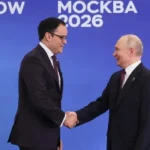
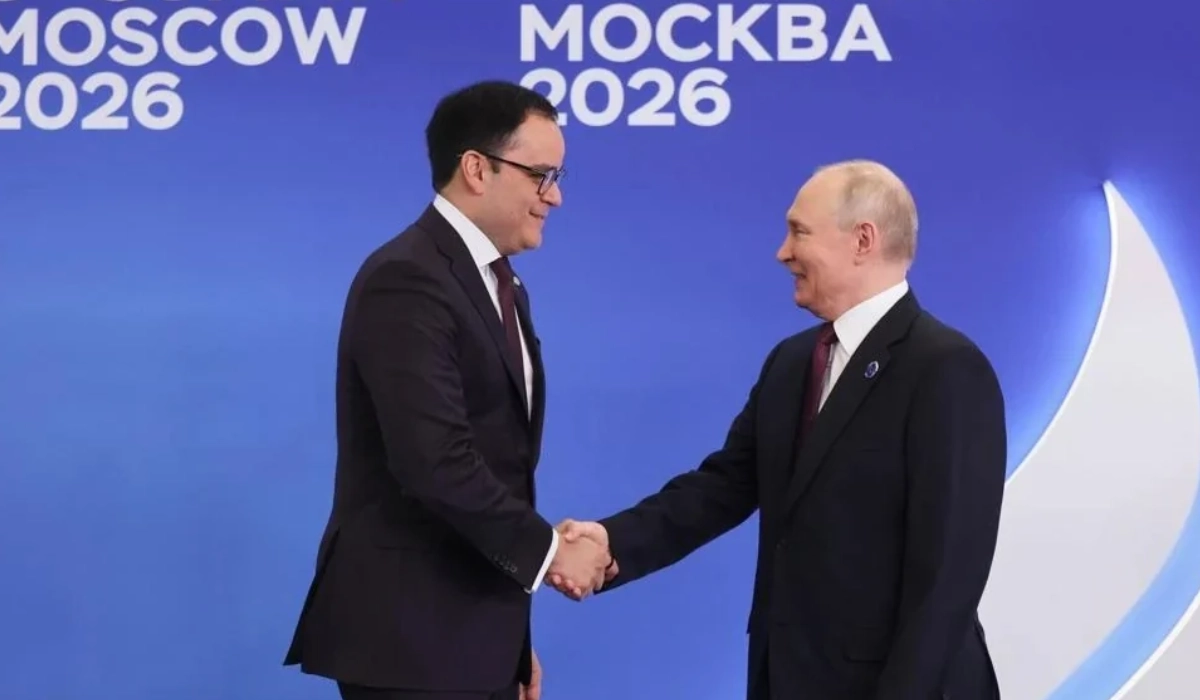
As reported by photojournalists Pavel Bednyakov and political correspondents attending the international gathering for the Associated Press, Russian President Vladimir Putin met directly with Venezuela’s Vice President for Economy Calixto Ortega Sanchez during the proceedings of the Summit of Heads of State and Government of the Gas Exporting Countries Forum in Moscow on Tuesday, 27 October 2026.
The two representatives shared a formal handshake and conducted discussions on bilateral economic priorities, focusing on energy sector cooperation and sovereign trade mechanisms.
As reported by official state media outlets covering the Kremlin proceedings, the meeting emphasized the deep strategic partnership between Moscow and Caracas within the GECF framework.
Speaking regarding the ongoing financial integration between the two partner nations during related economic forum discussions, Calixto Ortega Sanchez previously highlighted that direct monetary mechanisms are already fully operational between the countries. As reported by event recorders, Calixto Ortega Sanchez stated: “There is already a turnover of roubles in Venezuela, and we have a foreign exchange market. This offers the ability to purchase the local currency, and to conduct transactions in roubles. We have entrepreneurs from Venezuela and government agencies which can also make payments in roubles. This is already a reality”.
Addressing the strategic nature of bilateral relations, Alexander Shchetinin, Director of the Latin American Department at the Ministry of Foreign Affairs of the Russian Federation, noted: “Russia and Venezuela are steadfast strategic partners. At the heart of this partnership lies the dialogue that was forged between our leaders”. Shchetinin added that “no underhand scheming or sanctions have broken either us, or the Venezuelans. On the contrary, they have helped our peoples, our governments, our businesspeople find the inner strength needed to boost domestic production”.
How Does the Gas Exporting Countries Forum Address Current Global Energy Dynamics?
The Gas Exporting Countries Forum represents a primary international governmental organization comprising the world’s leading natural gas producing nations. Member states collectively control a vast majority of the world’s proven natural gas reserves, liquefied natural gas (LNG) export capacity, and pipeline transmission networks.
During the 8th GECF Summit in Moscow, participating heads of state, energy ministers, and senior delegates addressed systemic challenges affecting the global energy trade. Key agenda items included maintaining long-term supply contract stability, financing heavy gas infrastructure projects, and insulating international energy transit from unilateral economic sanctions and political interference.
Representing Venezuela’s economic leadership, Jose Felix Rivas Alvarado, Sectoral Vice President of Economy, commented on the historical impact of external financial restrictions on sovereign economies. As reported by forum transcribers, Jose Felix Rivas Alvarado stated: “When it comes to attempts at isolation, sanctions and blockades, communications are what suffer first of all. We are administering a country which has maintained friendly ties with your nation for more than 25 years. There are historical roots to our friendship”.
From the Russian commercial banking perspective, Vladimir Padalko, Vice President of the Chamber of Commerce and Industry of the Russian Federation, emphasized the critical importance of independent payment rails. As reported by official reporters, Vladimir Padalko stated: “The most important thing we have is the ability to move money in both directions. We do not have this luxury with any other country in Latin America, and we must take advantage of it”.
Background of the Particular Development
The Gas Exporting Countries Forum (GECF) was established to provide a platform for cooperation, information exchange, and policy coordination among major natural gas producing countries. Headquartered in Doha, Qatar, the forum includes member nations such as Russia, Venezuela, Algeria, Bolivia, Egypt, Equatorial Guinea, Iran, Libya, Nigeria, Qatar, and Trinidad and Tobago.
In recent years, global gas markets have undergone profound restructuring due to geopolitical tensions, supply chain realignments, and expanding LNG infrastructure. Both Russia and Venezuela hold some of the world’s largest proven hydrocarbon reserves—Russia possessing the largest natural gas deposits globally and Venezuela holding the largest proven crude oil reserves alongside substantial natural gas fields. Following extensive Western economic sanctions targeting the financial and energy sectors of both nations, Moscow and Caracas have increasingly synchronized their diplomatic, commercial, and financial strategies. The 8th GECF Summit in Moscow serves as a critical venue for both governments to solidify alternative financial clearing systems, optimize gas technology sharing, and coordinate production strategies across non-Western economic blocks.
Prediction: How This Development Can Affect Global Energy Markets and International Financial Intermediaries
The high-level proceedings and bilateral agreements resulting from the GECF Summit in Moscow are expected to influence several key stakeholder groups within global commodity trading and international finance:
- Global Natural Gas Traders and Energy Analysts:
Continued strategic alignment among GECF member states—particularly major players like Russia, Iran, Qatar, and Venezuela—will enforce greater price stability and supply coordination in long-term natural gas contracts. Analysts can expect GECF nations to resist pressure to abandon long-term indexing in favor of volatile spot market pricing, providing predictable revenues for sovereign producers while complicating procurement strategies for Western import markets. - International Banking and Clearing Networks:
The successful expansion of ruble-denominated trade and direct national currency clearing between Russia and Latin American partners like Venezuela will further accelerate the creation of parallel financial architectures. Financial intermediaries operating outside Western jurisdictions are likely to expand multi-currency clearing platforms to service trade in gas, agricultural commodities, and industrial equipment, reducing dependency on Western banking networks. - Emerging Market Energy Infrastructure Developers:
Increased technical and financial cooperation between Russian state energy firms and developing GECF member states will likely accelerate cross-border pipeline, gas-to-power, and LNG re-gasification infrastructure projects across South America, Asia, and Africa. Sovereign energy authorities in developing nations may increasingly leverage Russian technology and joint financing packages to expand domestic energy access without relying on Western capital markets.