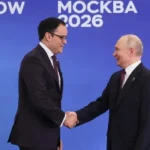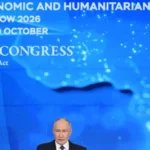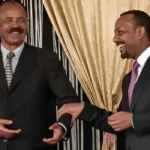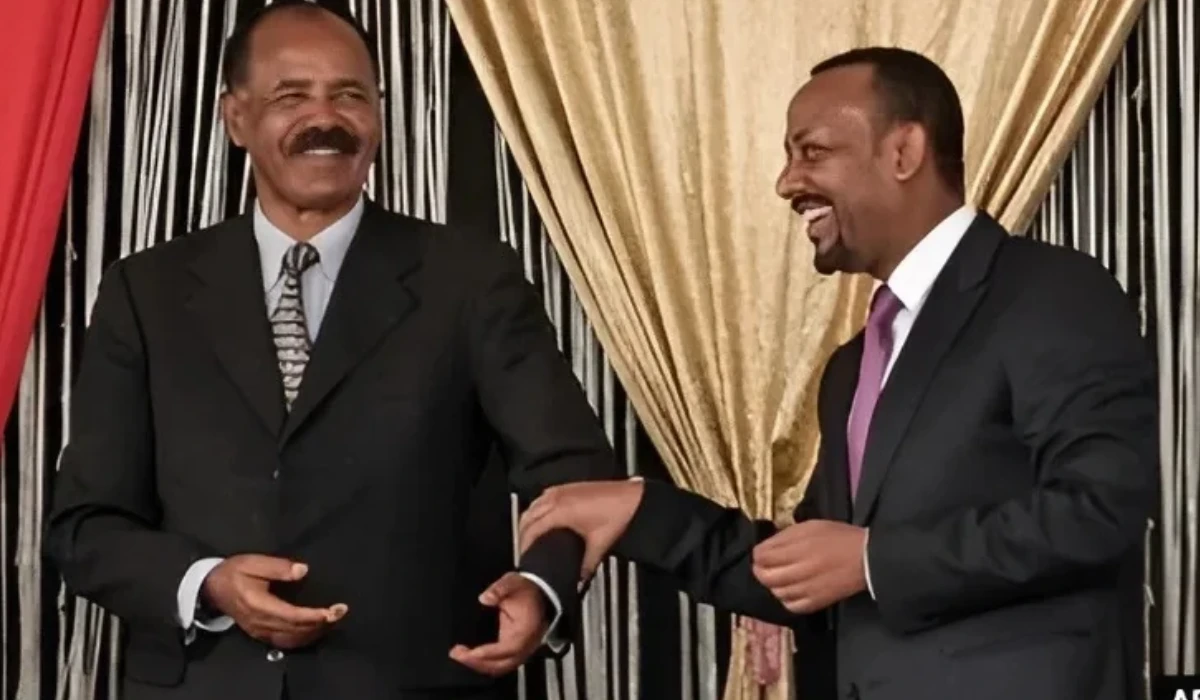
- Diplomatic Convergence in Moscow: Eritrean President Isaias Afwerki and Ethiopian Prime Minister Abiy Ahmed are attending the Russia-Africa Summit in Moscow simultaneously despite a recent total collapse of bilateral relations.
- Severe Diplomatic Severance: The meeting follows Ethiopia’s expulsion of ten Eritrean diplomats and the closure of its embassy in Asmara, which prompted Eritrea to retaliate by formally severing all diplomatic ties.
- Collapse of 2018 Peace Accord: The diplomatic rupture effectively nullifies the landmark 2018 peace deal that previously earned Prime Minister Abiy Ahmed the Nobel Peace Prize.
- Accusations of Regional Coalitions: Ethiopia has accused Eritrea, Egypt, and Sudan of funding and backing a rebel coalition intended to destabilise and overthrow Abiy Ahmed’s administration.
- Strategic Standoff Over Red Sea Access: Tensions remain exceptionally high over unresolved border disputes and Ethiopia’s insistence on securing direct sovereign access to the Red Sea, which Eritrea views as an existential security threat.
- Kremlin Mediation Offer: Russian Foreign Minister Sergey Lavrov confirmed Moscow’s readiness to offer its “good offices” as a neutral mediator to facilitate talks between the two Horn of Africa leaders.
- Military-Technical Dependencies: Both nations maintain strong defense ties with Moscow, with significant portions of both the Ethiopian and Eritrean air forces reliant on Russian-manufactured Sukhoi fighter jets.
Moscow (Moscow News Daily) October 28, 2026 – The Russia-Africa Summit in Moscow is hosting an unprecedented diplomatic standoff as Eritrean President Isaias Afwerki and Ethiopian Prime Minister Abiy Ahmed attend the same venue despite the complete collapse of bilateral relations. Following Ethiopia’s expulsion of Eritrean diplomats and Eritrea’s total severance of ties, the leaders remain deeply divided over Red Sea sovereign access and cross-border security accusations. The Kremlin has offered its mediation services to broker peace, leveraging deep military and diplomatic ties with both nations. However, significant geopolitical hurdles, including Eritrea’s alignment with an anti-Ethiopian regional bloc, pose major obstacles to reconciliation.
- Why Are Abiy Ahmed and Isaias Afwerki Meeting in Moscow Amid Broken Relations?
- What Lies Behind the Kremlin’s Geopolitical Calculations in Inviting Both Rivals?
- Can Russian Mediation Resolve the Horn of Africa Crisis?
- What Are the Core Obstacles Impeding Peace Between Ethiopia and Eritrea?
- Background of the Horn of Africa Conflict and Recent Diplomatic Developments
- How This Geopolitical Standoff Will Impact Regional Audiences and Stakeholders
Why Are Abiy Ahmed and Isaias Afwerki Meeting in Moscow Amid Broken Relations?
As reported by Mwangi Maina of The Eastleigh Voice, Eritrean President Isaias Afwerki and Ethiopian Prime Minister Abiy Ahmed are attending the Russia-Africa Summit in Moscow, creating what regional observers describe as one of the most awkward diplomatic choreographies of the year. The physical presence of both leaders in the same venue at the same time represents a diplomatic scenario that would be entirely unthinkable in either Addis Ababa or Asmara. However, in Moscow, Russian President Vladimir Putin is actively hosting both adversaries simultaneously.
As documented by Mwangi Maina of The Eastleigh Voice, the presence of these two bitter rivals in Russia highlights the complex realities of modern global summitry. Just weeks prior to the summit, Ethiopia formally expelled ten Eritrean diplomats from its territory and officially closed its embassy in Asmara. In immediate response to these measures, Eritrea retaliated by formally severing all diplomatic ties with Ethiopia.
As observed by Mwangi Maina of The Eastleigh Voice, this total severance of relations has effectively killed the historical 2018 peace agreement between the two nations—a deal that had previously won Prime Minister Abiy Ahmed the Nobel Peace Prize. Since the breakdown, Ethiopia has publicly accused Eritrea, alongside Egypt and Sudan, of backing and supplying a rebel coalition designed to topple Abiy’s government. Furthermore, both nations remain locked in a highly tense standoff over sovereign Red Sea access and long-standing, unresolved territorial borders.
What Lies Behind the Kremlin’s Geopolitical Calculations in Inviting Both Rivals?
As reported by Mwangi Maina of The Eastleigh Voice, the fundamental question surrounding the event is why Russia chose to invite two active adversaries to the same diplomatic summit. As explained by Maina, the answer is directly linked to the Kremlin’s wider African strategy. By bringing both Abiy and Isaias to the exact same table, Vladimir Putin is executing a calculated diplomatic point: demonstrating that Moscow remains a capable global power able to convene bitter rivals even as Western nations attempt to isolate Russia internationally.
As noted by analysts quoted by Mwangi Maina of The Eastleigh Voice, Russia does not necessarily prioritize healing the internal political fractures of the Horn of Africa. Instead, Moscow’s primary focus revolves around projecting international influence and securing long-term strategic partnerships across the African continent.
As reported by Mwangi Maina of The Eastleigh Voice, Moscow currently maintains deep historical and political ties with both leaders. Isaias Afwerki’s government maintains a fiercely anti-Western foreign policy stance and has experienced long-term diplomatic isolation, whereas Abiy Ahmed’s administration has continually forged operational alliances with Russia under the expanded BRICS umbrella. Both Ethiopia and Eritrea have consistently offered diplomatic backing to Russia in major international forums, which includes repeatedly voting against United Nations General Assembly resolutions that called for the immediate withdrawal of Russian military forces from Ukraine.
Furthermore, as highlighted by Mwangi Maina of The Eastleigh Voice, the military-technical cooperation between Moscow and both Horn of Africa nations remains substantial. Both the Ethiopian and Eritrean air forces rely heavily on Russian-manufactured equipment, running significant portions of their operational fleets on Russian-made Sukhoi fighter jets.
Can Russian Mediation Resolve the Horn of Africa Crisis?
As reported by Mwangi Maina of The Eastleigh Voice, Moscow’s strategic ambitions during the summit extend far beyond hosting a standard photo-opportunity. The Kremlin has formally announced its readiness to utilize its “good offices” to directly mediate and facilitate the restoration of diplomatic relations between the two neighboring adversaries.
As quoted by Russian state media and reported by Mwangi Maina of The Eastleigh Voice, Russian long-serving Foreign Minister Sergey Lavrov stated: “If they show interest, whether now, tomorrow, or the day after tomorrow, Russia will strive to host and facilitate the meeting”. Sergey Lavrov recalled that Russia had previously offered to act as a completely neutral platform for both Ethiopia and Eritrea to negotiate their bilateral relations.
As analyzed by Mwangi Maina of The Eastleigh Voice, this official mediation offer transforms the Russia-Africa Summit from a conventional economic and diplomatic forum into a high-stakes geopolitical venue. By attempting to position itself as an indispensable peacemaker within the Horn of Africa, Moscow is executing a strategic maneuver to demonstrate its immunity to Western isolation while simultaneously attempting to secure long-term strategic leverage in the Red Sea—one of the world’s most critical maritime corridors.
What Are the Core Obstacles Impeding Peace Between Ethiopia and Eritrea?
As reported by Mwangi Maina of The Eastleigh Voice, despite Russia’s mediation offers, the reality on the ground between both nations remains treacherous. The diplomatic rift separating Prime Minister Abiy Ahmed and President Isaias Afwerki is both deeply personal and structurally ingrained.
As detailed by Mwangi Maina of The Eastleigh Voice, Ethiopia’s government is actively demanding sovereign, direct access to the Red Sea, treating the matter as a core issue of long-term national security. Conversely, Eritrea—which fought a devastating border war with Ethiopia from 1998 to 2000—views any Ethiopian naval ambitions or sovereign coastal demands as an existential threat to its national territory. As a consequence of the recent collapse of their 2018 peace agreement, the overall trust deficit between Asmara and Addis Ababa is absolute.
Additionally, as reported by Mwangi Maina of The Eastleigh Voice, Eritrea is currently strategically aligned with the “El-Alamein quartet”—a regional diplomatic alliance consisting of Egypt, Sudan, Somalia, and Eritrea. This alliance was explicitly established to contain Ethiopian regional ambitions. As Maina points out, pulling Asmara away from this regional bloc will present severe diplomatic hurdles. To achieve a breakthrough, Vladimir Putin would need to offer both leaders massive, ironclad incentives that neither can refuse, such as major arms deals, security guarantees, or substantial economic lifelines.
Background of the Horn of Africa Conflict and Recent Diplomatic Developments
The present crisis between Ethiopia and Eritrea is rooted in decades of complex territorial, political, and strategic disputes. Eritrea officially gained independence from Ethiopia in 1993 following a multi-decade war of independence. However, unresolved border issues led to a full-scale border war between 1998 and 2000, which resulted in tens of thousands of casualties and placed both nations in a state of prolonged “no war, no peace” deadlock.
A dramatic diplomatic breakthrough occurred in 2018 when newly appointed Ethiopian Prime Minister Abiy Ahmed accepted an international boundary commission’s ruling and signed a historic peace agreement with Eritrean President Isaias Afwerki. This agreement reopened borders, restored telecommunications, re-established diplomatic missions, and earned Abiy the 2019 Nobel Peace Prize. During the subsequent Tigray war from 2020 to 2022, Eritrean military forces fought alongside Ethiopian federal troops against the Tigray People’s Liberation Front (TPLF).
However, relations rapidly deteriorated following the signing of the November 2022 Pretoria cessation of hostilities agreement between the Ethiopian government and the TPLF, which excluded Asmara. Tensions escalated sharply when Ethiopia began publicly emphasizing its need for direct, sovereign access to the Red Sea, culminating in Ethiopia signing a memorandum of understanding with the breakaway region of Somaliland for coastline access. In response, Eritrea forged tighter diplomatic and security ties with Egypt, Somalia, and Sudan. The friction reached a breaking point weeks prior to the Moscow summit, when Ethiopia expelled ten Eritrean diplomats, leading Eritrea to formally sever all diplomatic connections.
How This Geopolitical Standoff Will Impact Regional Audiences and Stakeholders
The ongoing confrontation between Ethiopia and Eritrea, combined with the outcome of Russia’s mediation attempts in Moscow, carries significant consequences for multiple key audiences across the Horn of Africa and the international community:
- For the Ethiopian and Eritrean Public: Citizens in both countries face heightened risks of militarization, economic disruption, and regional instability. The total breakdown of diplomatic channels eliminates bilateral trade, cross-border movement, and family reunifications that briefly flourished following the 2018 peace deal. If border skirmishes reignite, local populations along the shared frontier face potential displacement and renewed humanitarian distress.
- For the Horn of Africa and the El-Alamein Quartet (Egypt, Sudan, Somalia): The formal alignment of Eritrea with Egypt, Sudan, and Somalia creates a formidable containment ring around Ethiopia. A failure to de-escalate tensions in Moscow could push Ethiopia to rely more heavily on unilateral security measures or alternative coastal agreements, further straining relations with Mogadishu and Cairo and increasing the risk of a multi-nation regional proxy conflict.
- For Commercial Shipping and Red Sea Maritime Trade: As one of the world’s primary global shipping corridors, the Red Sea remains highly vulnerable to political instability along its coastline. Heightened military posture between Ethiopia and Eritrea, combined with regional navies operating in nearby waters, raises insurance premiums for commercial vessels and risks disrupting international supply chains traversing the Bab-el-Mandeb Strait.
- For Russian Foreign Policy and Western Diplomatic Blocs: If Moscow succeeds in brokering even a preliminary dialogue or de-escalation agreement between Abiy and Isaias, Vladimir Putin will solidify Russia’s standing as an indispensable security broker in East Africa, undermining Western diplomatic influence in the region. Conversely, if both leaders reject Russian mediation and maintain their hostile standoff, it will underline the strict limitations of Russian summitry in resolving deeply entrenched, existential regional conflicts.