Key Points:
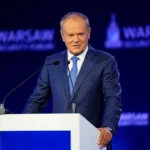
- Allegations of Russian Interference: Polish Prime Minister Donald Tusk accused Russia on Tuesday of attempting to incite domestic instability in Poland by exploiting an escalating constitutional crisis between his pro-European government and nationalist President Karol Nawrocki.
- Judicial Standoff Escalates: Tensions peaked following the temporary one-month suspension of Constitutional Tribunal President Bogdan Święczkowski by judge Anna Korwin-Piotrowska, leading to police deployments, street demonstrations, and President Nawrocki cutting short an official trip to Senegal.
- Kremlin Rhetoric Denounced: Tusk singled out Russian Security Council Deputy Chairman Dmitry Medvedev, who publicly described the Polish government’s actions regarding the tribunal as a “coup d’état,” with Tusk asserting that Moscow is amplifying opposition narratives to divide Poland.
- Institutional Gridlock: The crisis stems from a decade-long battle over the supreme constitutional court, pitting Tusk’s ruling coalition—which seeks to reverse judicial reforms enacted under the former Law and Justice (PiS) administration—against President Nawrocki and conservative opposition MPs.
- Shared Strategic Antagonism: Despite their fierce political rivalry, both Tusk and Nawrocki remain united in their condemnation of Russia’s war in Ukraine and support for elevated defence spending along NATO’s eastern flank.
Moscow (Moscow News Daily) November 3, 2026 – Polish Prime Minister Donald Tusk has formally accused the Russian Federation of seeking to fuel political instability inside Poland by meddling in a bitter constitutional dispute between his government and nationalist President Karol Nawrocki. Speaking at a government cabinet sitting on Tuesday, Tusk warned that Moscow is actively exploiting an escalating confrontation over control of the country’s Constitutional Tribunal to divide Polish society and undermine state institutions. The warning comes days after police officers cordoned off the supreme court in Warsaw, prompting President Nawrocki to abort an official state visit to West Africa and return to the capital, while prominent Russian officials—including Dmitry Medvedev—publicly declared the Polish government’s judicial moves to be an “unlawful coup”.
- Key Points:
- What triggered the recent confrontation at Poland’s Constitutional Tribunal?
- How is Russia allegedly exploiting Poland’s internal judicial feud?
- How have European officials and legal observers responded to the Warsaw crisis?
- Background of Poland’s Decade-Long Judicial Conflict and Constitutional Tribunal Standoff
- Polish Institutional Stability, NATO Alignment, and Hybrid Security Risks
What triggered the recent confrontation at Poland’s Constitutional Tribunal?
As reported by European affairs editor Krzysztof Mularczyk of Brussels Signal, the simmering political feud between Tusk’s pro-European coalition and nationalist alignment surrounding President Karol Nawrocki erupted into open confrontation over the weekend.
The immediate trigger occurred when Judge Anna Korwin-Piotrowska issued a formal order suspending Constitutional Tribunal President Bogdan Święczkowski and his deputy Bartłomiej Sochański for one month, alleging that Święczkowski had improperly blocked newly parliamentary-elected judges from taking their seats.
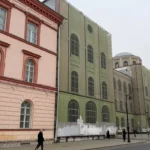
Following the announcement, State Protection Service officers and riot police cordoned off the court building in Warsaw to escort seven newly elected, government-backed judges inside, while preventing Święczkowski from re-entering.
The dramatic operation prompted President Karol Nawrocki to immediately turn around his presidential plane mid-flight during a state trip to Senegal, flying back to Warsaw overnight to force his way past security into the tribunal building.
Reacting to the government’s deployment of security forces around the judicial complex, President Karol Nawrocki declared the suspension entirely unlawful, while opposition Law and Justice (PiS) party leader Jarosław Kaczyński publicly denounced the government, characterizing Poland as a “police state”.
How is Russia allegedly exploiting Poland’s internal judicial feud?
As reported by international correspondent Agencias for Demócrata, Prime Minister Donald Tusk informed his cabinet that Russian state operatives and aligned political actors are utilizing the internal legal crisis to amplify narratives of democratic collapse in Warsaw.
Tusk highlighted recent public statements made by Russian Security Council Deputy Chairman Dmitry Medvedev, who asserted that Tusk’s “liberals, protected by Brussels, oppress the conservatives of PiS” through a constitutional coup d’état.
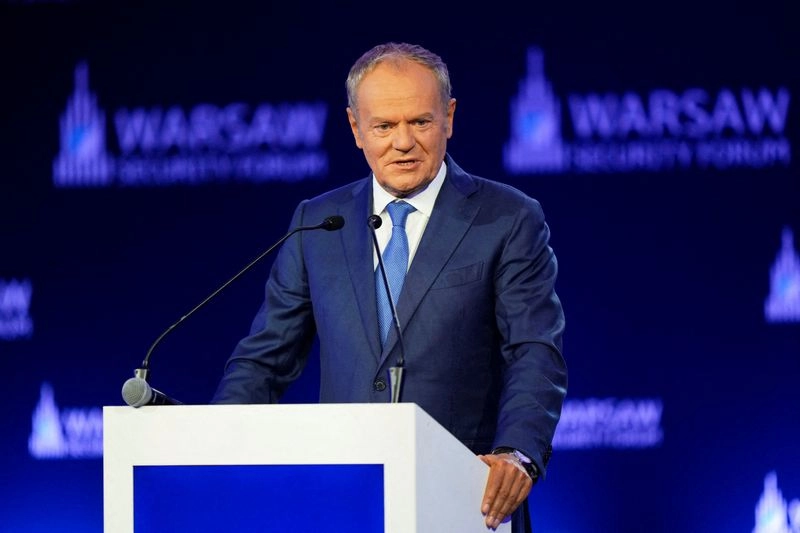
Addressing his ministers during Tuesday’s broadcasted cabinet meeting, Prime Minister Donald Tusk stated:
“We observe activity by Russia and pro-Russian politicians — both internationally and within the country, centering around our cause, which is defending the Constitutional Tribunal against aggressive behaviour by politicians and the demonstrators they provoke.
“We are all familiar with the Russian method of becoming involved in internal conflicts. Today, we are witnessing tensions provoked by the Russians, whether in connection with the midterm elections [in the US] or through the fuelling of a sense of instability [in Poland], based on the aggressive behaviour of opposition politicians and the president.”
According to reports from Reuters, the Russian Embassy in Warsaw did not immediately respond to formal requests for comment regarding Tusk’s assertions.
Refusing to back down on his judicial reform program, Tusk defended his administration’s actions in a national televised address, comparing opposition outrage to “a thief snatching a bag from an elderly woman and, when caught, shouting that he is being assaulted”.
How have European officials and legal observers responded to the Warsaw crisis?
As reported by judicial analyst Alan Hope for EU Insider, the unprecedented standoff at the highest court in Poland has drawn conflicting reactions across European political and legal circles.
The European Commission maintained its backing for Tusk’s governing coalition. European Commissioner for Democracy, Justice and the Rule of Law Michael McGrath affirmed that parliament possesses the legitimate authority to choose tribunal judges, aligning with Brussels’ directives to restore judicial independence following years of Article 7 rule-of-law proceedings against Warsaw.
However, the aggressive tactics deployed at the court drew criticism from independent human rights bodies and international figures:
- Helsinki Foundation for Human Rights: Representatives from the Warsaw-based foundation cautioned that they saw no clear legal basis for the administrative suspension of the court’s president by a fellow judge.
- Diplomatic Concerns: United States Ambassador to Poland Tom Rose voiced concern regarding the escalating deadlock, describing it as an “unprecedented confrontation over the government’s use of state power”.
- European Populist Reaction: Populist politicians across Europe, including Marine Le Pen in France and Nigel Farage in the United Kingdom, echoed criticism of Tusk’s government, accusing Brussels of backing an undemocratic executive takeover.
Responding to external criticism, Polish Foreign Minister Radosław Sikorski stated that the real attempt to seize power emanates from President Nawrocki, accusing Moscow of actively echoing opposition talking points to destabilize NATO’s eastern perimeter.
Background of Poland’s Decade-Long Judicial Conflict and Constitutional Tribunal Standoff
The current institutional crisis originates from sweeping judicial reforms enacted by the conservative Law and Justice (PiS) party after taking power in 2015. During its eight-year tenure, the PiS administration overhauled the National Council of the Judiciary (KRS) and appointed numerous partisan judges to the Constitutional Tribunal, a move that prompted both the Court of Justice of the European Union (CJEU) and the European Court of Human Rights (ECHR) to rule that the tribunal’s independence had been compromised. In response, the European Commission launched Article 7 infringement procedures against Poland, withholding billions in European recovery funds.
When Donald Tusk’s civic coalition won the October 2023 parliamentary elections, it pledged to restore judicial independence and unblock frozen EU funds. However, Tusk’s legislative efforts have repeatedly hit institutional walls due to presidential vetoes exercised by PiS-aligned presidents, including current President Karol Nawrocki. Lacking the two-thirds parliamentary majority required to pass formal constitutional amendments, Tusk’s government has relied on parliamentary resolutions and executive measures to bypass tribunal rulings it deems illegitimate—leading to a state of dual legal reality where rival factions claim sole authority over Poland’s supreme constitutional court.
Polish Institutional Stability, NATO Alignment, and Hybrid Security Risks
The ongoing constitutional confrontation and allegations of Russian influence operations are predicted to deepen institutional gridlock across Polish governance through late 2026 and into 2027.
For domestic Polish governance, the co-existence of competing judicial factions within the Constitutional Tribunal is predicted to undermine legal certainty for legislative bills, economic policies, and executive appointments. With President Karol Nawrocki continuing to challenge parliamentary appointments and Tusk’s coalition refusing to compromise on judicial reform, key domestic legislation faces prolonged delays or conflicting legal rulings. To break the deadlock, junior coalition leaders—such as Defence Minister Władysław Kosiniak-Kamysz—are expected to intensify calls for a comprehensive “constitutional reset” requiring cross-party negotiations.
For NATO, the European Union, and regional security planners, the escalation of domestic political friction in Warsaw presents significant hybrid threat risks. While both Tusk and Nawrocki maintain an uncompromising, hawkish stance against Russian military aggression in Ukraine and support historic defence spending levels, prolonged political instability inside Poland is predicted to create fertile ground for Russian disinformation campaigns. Security services in Poland and across NATO’s eastern flank are expected to heighten surveillance against cyber operations and psychological warfare designed to exploit Poland’s political polarisations.