Key Points
- Loss of European Allies: The year 2026 has witnessed political downfalls for two of Russian President Vladimir Putin’s closest allies in Europe: Hungary’s Viktor Orban in April, and Serbian leader Aleksandar Vucic, whose party lost decisively following student-led anti-corruption protests.
- Kremlin Reaction to Serbia: As reported by political analyst and journalist Steve Gutterman in his weekly review for RFE/RL, Kremlin spokesman Dmitry Peskov played down the electoral blow in Belgrade, stating that the Kremlin hopes new political forces will maintain existing policies regarding sanctions against Moscow, adding that “it takes two to tango.”
- Prospects for Trilateral Talks: Expected US-brokered trilateral talks on ending the war in Ukraine—dormant since the outbreak of the US-Israeli conflict with Iran in February—are slated to resume in Abu Dhabi next month, though analysts remain deeply skeptical of immediate breakthroughs.
- Hardline Stance on Donbas: According to independent reporting by Farida Rustamova and Howard Amos in their newsletter Vlast, officials in regular contact with Vladimir Putin indicate that the Russian leader believes military escalation will force Kyiv into territorial concessions regarding the Donbas region.
- Transatlantic Friction: Recent weeks saw severe friction between Washington and Kyiv, sparked by US President Donald Trump’s criticism of Ukrainian strikes on Russian diesel facilities, a temporary restriction on Starshield satellite speeds, and the US waiving of new sanctions.
- Nordic Diplomatic Outreach: In a significant break from diplomatic isolation, Finnish President Alexander Stubb and Norwegian Prime Minister Jonas Gahr Støre held a rare 90-minute telephone conversation with Vladimir Putin on October 27, 2026, though the Kremlin readout emphasized rigid historical grievances.
- Severe Wartime Casualties: Amid ongoing diplomatic maneuvers, violence on the ground escalated, highlighted by an October 29 Russian drone strike on the main railway station in Dnipro that killed at least 13 people and wounded several others.
MOSCOW (Moscow News Daily) October 29, 2026 – Russian President Vladimir Putin faces a challenging geopolitical landscape as 2026 brings the electoral defeat of key European allies in Hungary and Serbia, alongside intense fighting and complicated preparations for upcoming US-brokered peace talks in Abu Dhabi. Reported by Steve Gutterman of RFE/RL, the Kremlin is navigating mounting domestic and international pressures, including student-led pro-democracy movements in the Balkans, escalating military strikes on Ukrainian energy infrastructure, and friction between Washington and Kyiv over energy agreements and military communications support. While European leaders attempt to re-engage diplomatic channels through recent talks led by Nordic representatives, analysts suggest Moscow remains locked into its territorial demands in the Donbas.
- Key Points
- What does the fall of European allies mean for Vladimir Putin’s geopolitical standing?
- Why are analysts skeptical about upcoming US-brokered trilateral peace talks?
- How are international bodies and Ukrainian officials responding to ongoing military strikes?
- Background of the particular development
- How this development can affect European security, Ukrainian defense, and Russian diplomatic strategy
What does the fall of European allies mean for Vladimir Putin’s geopolitical standing?
The year 2026 has eroded the network of friendly regimes upon which Moscow has historically relied in Central and Eastern Europe. As reported by Steve Gutterman of RFE/RL, Russia has seen the political downfall of two of the closest figures President Vladimir Putin counted as allies west of Belarus.
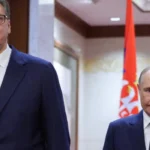
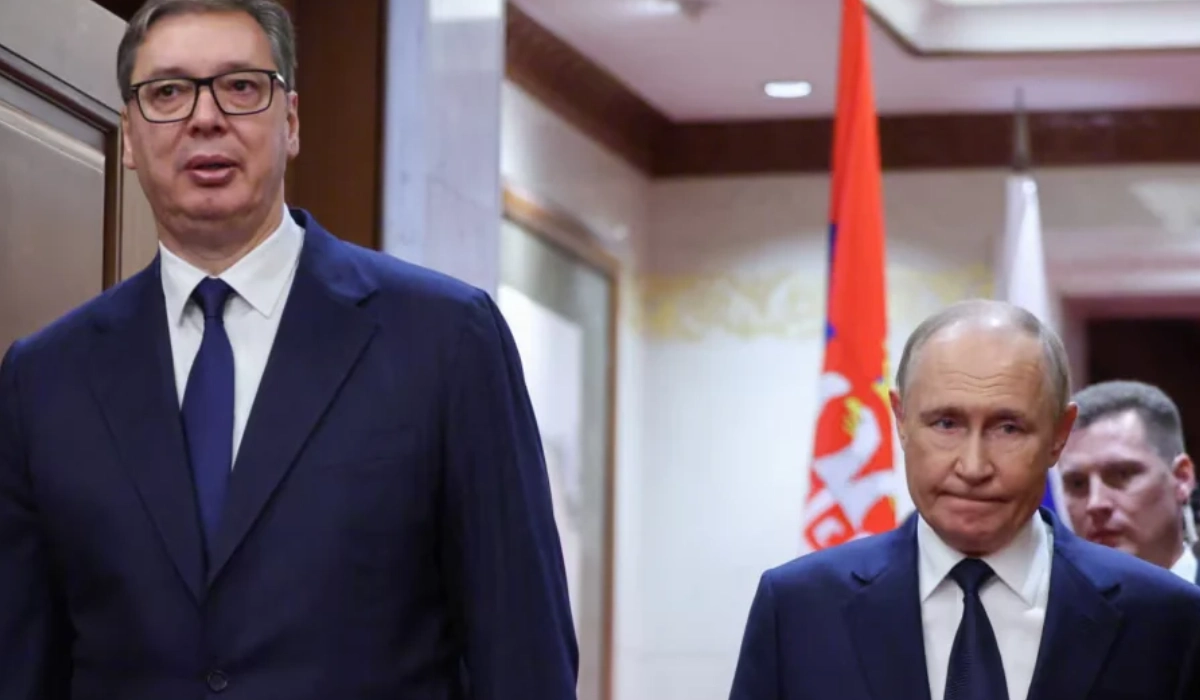
In April, Hungarian Prime Minister Viktor Orban’s ruling party was voted out of power, terminating the tenure of a leader who famously declared to Putin, “I am at your service.” This week, Serbian political structures experienced a parallel seismic shift. The party of former Serbian President Aleksandar Vucic lost decisively to a coalition fueled by two years of student-led street protests centered on the rule of law.
Reacting to the Serbian election results on social media platform X, Ruth Deyermond, a Russia expert at King’s College London, observed: “Putin’s not having his best year.” This sentiment was echoed after Vucic conceded defeat while alleging that his opponents were executing outside directives designed to destabilize a sovereign state.
In response to the political transition in Belgrade, Kremlin spokesman Dmitry Peskov maintained a composed public posture. As reported by RFE/RL, Dmitry Peskov stated that the Kremlin hopes “these new political forces will understand that cooperation with Russia is in Serbia’s interests,” implicitly urging the incoming administration to preserve existing policies opposing sanctions against Moscow. Acknowledging the diplomatic uncertainty, Peskov added: “Russia will continue to do everything we can to foster the development of our relations with Belgrade. But, as you know, it takes two to tango.”
Meanwhile, regional analysts noted that the nature of the Serbian protest movement posed unique challenges to Moscow’s traditional influence playbook. Writing on X, Ivana Stradner, a research fellow at the US-based Foundation for Defense of Democracies, noted: “Serbia’s student movement is ideologically diverse: pro-Western, pro-Russian, and neutral voices coexist. What united them was the demand to restore the rule of law. By focusing on democracy rather than foreign policy, they avoided Vucic’s strategy of using geopolitics to polarize society.”
While the incoming Serbian government is not expected to immediately reverse Belgrade’s sanctions policy, Leading Student List candidate Ilija Srdanovic indicated in an October 27 interview with RFE/RL that the country’s stance could be reviewed through open public debate. Stradner warned that Moscow would likely attempt to preserve its structural leverage through entrenched intelligence ties and energy dependence, though the victory of a peaceful, rule-of-law movement via free elections represents a development that historically triggers deep apprehension within the Kremlin.
Why are analysts skeptical about upcoming US-brokered trilateral peace talks?
Against the backdrop of diplomatic shifts in Europe, military campaigns in eastern Ukraine have continued to exact heavy tolls. Despite minor territorial gains, Russian forces have encountered stiff Ukrainian resistance, throwing obstacles in the path of Moscow’s core objective: capturing the remaining unconquered portions of the Donbas region.
These battlefield realities have raised questions regarding the viability of expected trilateral peace talks, brokered by the United States, which are slated to resume in Abu Dhabi next month following a hiatus prompted by the outbreak of the US-Israeli war with Iran in February. However, regional analysts express overwhelming skepticism regarding the likelihood of substantive progress.
As reported by Steve Gutterman of RFE/RL, journalists Farida Rustamova and Howard Amos wrote in their October 23 newsletter Vlast that officials maintaining regular contact with Putin report the Russian leader “increasingly believes military escalation and intensified air attacks will force Kyiv to make concessions in the coming months.” Rustamova and Amos added: “They do not think Putin intends to make any compromises in ongoing peace negotiations brokered by Washington.”
This uncompromising outlook intersects with recent friction in Washington-Kyiv relations. Tensions surged after US President Donald Trump publicly criticized Ukrainian President Volodymyr Zelenskyy on October 10, asserting that Kyiv had passed up multiple opportunities for a settlement and stating that Ukraine should “get a new leader.” President Donald Trump also demanded that President Volodymyr Zelenskyy halt Ukrainian drone and missile strikes targeting Russian oil refineries, which Washington blamed for driving up domestic US diesel prices.
Compounding these strains, the White House announced an agreement with Moscow to release Russian diesel supplies to international markets, and subsequently waived harsher pending sanctions against Russia. Furthermore, Ukrainian authorities reported disruptions in US intelligence sharing regarding early-warning air tracking, alongside a tense period where Starshield—the military-grade satellite communication system manufactured by Elon Musk’s SpaceX, vital for frontline Ukrainian logistics and drone defense—operated at restricted speeds.
Despite these strains, communication channels have partially stabilized, with early-warning feeds and Starshield bandwidth returning to normal levels ahead of the planned November negotiations in Abu Dhabi. While discussions involving US envoy Steve Witkoff, Ukrainian leadership, and European partners continue, and localized humanitarian cease-fires—promoted by US First Lady Melania Trump and Pope Leo to evacuate residents from the besieged southern city of Oleshky—show occasional promise, substantive peace remains elusive.
Summarizing Moscow’s calculus, Tatyana Stanovaya, a senior fellow at the Carnegie Russia Eurasia Center, observed: “Moscow sees little scope for substantive progress towards its goals at present, but views trilateral talks as a way to prepare the ground for an eventual settlement on its terms.”
Offering a slightly more constructive perspective during an October 25 podcast, analyst and author Mark Galeotti suggested that the evolving peace framework shows tentative promise. As reported by RFE/RL, Mark Galeotti noted that leaks indicate proposals under discussion have “moved away from the original plan, which was clearly way, way too Russia-friendly,” shifting toward arrangements that combine vital security guarantees for Ukraine with terms appealing enough to halt hostilities.
Nevertheless, Galeotti highlighted the enduring obstacle: “At the moment, both sides seem locked in” regarding the contested portions of the Donetsk region. Galeotti concluded: “I certainly don’t think we’re going to have peace before spring…. If nothing else, Putin will think, ‘Let’s have another winter hammering the Ukrainians.’”
How are international bodies and Ukrainian officials responding to ongoing military strikes?
While diplomatic preparations for the Abu Dhabi talks proceed, the humanitarian cost of the conflict continues to draw severe international condemnation. Ukrainian officials routinely classify sustained Russian aerial bombardments of civilian zones and energy grids as acts of terrorism.
Corroborating these assessments, the UN’s Independent International Commission of Inquiry on Ukraine issued a comprehensive report on October 26, establishing that Russian authorities have committed systematic war crimes and crimes humanity through deliberate attacks on civilians and vital civilian infrastructure in violation of international law.
The human toll of these tactics was underscored on October 29, when a Russian drone strike targeted the central railway station in the major Ukrainian city of Dnipro. According to local officials, the direct strike killed at least 13 people and wounded several others. Responding to the tragedy, President Volodymyr Zelenskyy issued an urgent appeal, stating that “fair and decisive actions by America and Europe are needed against Russian escalation.”
Background of the particular development
The complex diplomatic and military dynamics unfolding in late 2026 are rooted in the protracted trajectory of the Russia-Ukraine war, which entered its full-scale phase in February 2022. For years, the conflict has been characterized by high-attrition trench warfare in the Donbas, severe economic sanctions imposed by Western coalitions, and shifting geopolitical alignments across the Global South and Europe.
The political erosion of pro-Russian sentiment in Eastern Europe—marked by Viktor Orban’s electoral defeat in Hungary and Aleksandar Vucic’s setback in Serbia—reflects a broader vulnerability in Moscow’s strategy of maintaining buffer states through political patronage. Simultaneously, the transition in US administration leadership and the push toward expedited, Washington-backed settlement frameworks have created an urgent diplomatic crossroads. With the reactivation of trilateral talks in Abu Dhabi, both Moscow and Kyiv are positioning themselves militarily and diplomatically to dictate the terms of any future ceasefire, ensuring that the winter months of 2026–2027 will be critical in shaping the eventual geopolitical architecture of Eastern Europe.
How this development can affect European security, Ukrainian defense, and Russian diplomatic strategy
The convergence of shifting political regimes in the Balkans, stalled peace negotiations, and intensified winter military campaigns will carry significant ramifications across multiple international stakeholders:
- For Ukrainian Citizens and Frontline Defenders: The continuation of relentless aerial assaults on critical infrastructure—exemplified by the tragic strike in Dnipro—ensures that Ukraine’s civilian population faces severe humanitarian hardship. Ukrainian forces will remain heavily reliant on resilient logistics, restored satellite communication networks, and steady Western air-defense provisions to endure the winter months while navigating intense pressure from Washington to engage in territorial compromise.
- For European Union and NATO Security Architecture: The loss of friendly political footholds in Hungary and Serbia weakens Moscow’s diplomatic leverage within continental Europe, reinforcing the rule of law and democratic accountability in the Balkans. However, European capitals remain anxious about being marginalized by US-led bilateral deals, prompting active diplomatic outreach—such as the recent Nordic initiative by Finland and Norway—to secure a permanent seat at the negotiating table.
- For the Kremlin and Russian Foreign Policy: Despite suffering diplomatic setbacks with the ouster of key European allies, Moscow appears committed to a strategy of military attrition. Believing that prolonged winter bombardment will fracture Western resolve and compel Kyiv into accepting Russian terms in the Donbas, the Kremlin views forthcoming talks in Abu Dhabi primarily as a tactical mechanism to advance its strategic objectives rather than a genuine venue for reciprocal compromise.